
A HELOC works best for phased or uncertain renovation scope, when you’re not sure exactly what the total cost will be. A home improvement loan (an unsecured personal loan) works best for smaller projects under roughly $10,000 where speed matters more than the lowest possible rate. A home equity loan fits a single, clearly priced project where you want a fixed payment and know the number going in.
The decision rule is simple: match your project’s size and cost certainty to the product’s structure. Fixed cost, one draw, want predictability? Home equity loan. Ongoing or unclear scope? HELOC. Small job, no interest in touching your equity? Home improvement loan.
- NARI advises skipping equity products for jobs under about $10,000, since closing costs eat the savings.
- The IRS allows mortgage interest deductions only when loan funds buy, build, or substantially improve the home securing the debt.
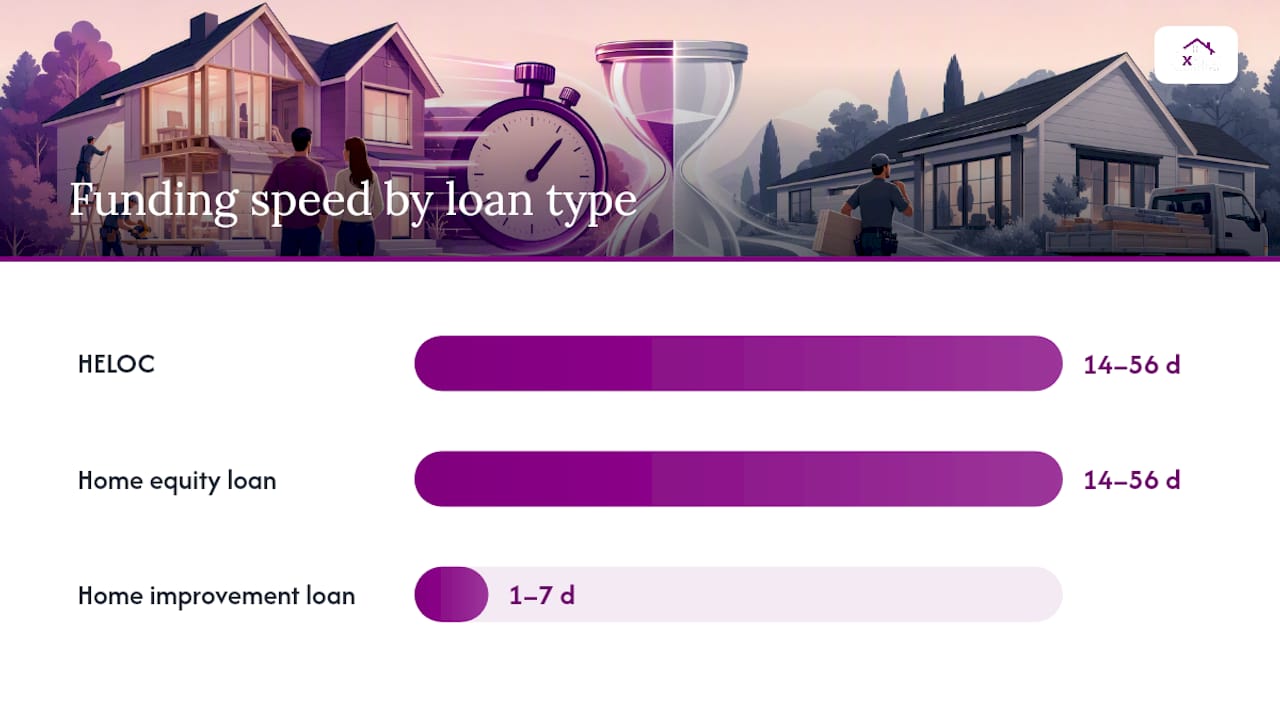
- Home improvement loans often fund in days, while HELOCs and home equity loans typically take two to eight weeks.
Key Takeaways
Matching your renovation’s size and cost certainty to the right loan structure saves more money than chasing the lowest advertised rate.
| Point | Details |
|---|---|
| Match product to project | Fixed-scope work fits a home equity loan; uncertain or phased work fits a HELOC; small jobs fit a home improvement loan. |
| Collateral changes the risk | HELOCs and home equity loans put your house on the line; home improvement loans don’t, but cost more. |
| Watch closing costs | Equity products can run 2% to 5% in closing costs, which can erase savings on small projects. |
| Tax deduction has conditions | Interest is deductible only when funds buy, build, or substantially improve the home securing the loan. |
| Axeniaconstruction supports the process | Axeniaconstruction builds lender-ready, itemized estimates and structures payment schedules around your chosen financing type. |
Table of Contents
- Home Equity Line of Credit vs. Home Improvement Loan: What’s the Difference?
- How Do These Loans Compare Side by Side?
- Which Financing Fits Your Renovation Scenario?
- What Does a $50,000 Renovation Cost Each Month?
- What Fees and Tax Rules Should You Expect?
- What Do Lenders Require, and How Long Does Approval Take?
- What Other Financing Options Should You Consider?
- How Do You Build Your Lender Shortlist?
- Get Lender-Ready Estimates for Your Renovation
- Where to Verify These Numbers
- Sources
Home Equity Line of Credit vs. Home Improvement Loan: What’s the Difference?
A HELOC is a revolving credit line secured by your home, similar to a credit card with a much larger limit and a lower rate. You draw what you need during a set period, usually 5 to 10 years, then repay what you borrowed, and the rate is typically variable.
A home equity loan hands you one lump sum at closing, secured by the same collateral: your home. The rate is fixed, the payment never changes, and the term usually runs 5 to 30 years.
A home improvement loan is an unsecured personal loan. No lien on your house, which means faster approval, but lenders charge more for that lack of collateral, with rates commonly running 7% to 36% depending on credit.
The collateral distinction matters more than any other factor here:
- HELOCs and home equity loans are second mortgages. Miss enough payments, and the lender can foreclose.
- Home improvement loans do not put your home at risk if you default; however, missing payments can hurt your credit and lead to collections.
How Do These Loans Compare Side by Side?
| Dimension | HELOC | Home Equity Loan | Home Improvement Loan |
|---|---|---|---|
| Structure | Revolving credit line | Lump sum | Lump sum |
| Rate type | Variable | Fixed | Fixed |
| Collateral | Home (second mortgage) | Home (second mortgage) | None (unsecured) |
| Foreclosure risk | Yes | Yes | No |
| Typical borrowing limit | Up to 80%–85% CLTV | Up to 85% CLTV | Based on income and credit, usually capped lower |
| Closing costs | 2%–5% of line amount | 2%–5% of loan amount | Minimal or none |
| Funding speed | 2–8 weeks | 2–8 weeks | Often 1 day to 1 week |
| Best use | Projects with phased or uncertain scope | One fixed-price project | Small or urgent jobs |
Mortgage interest on a HELOC or home equity loan is deductible only when the money buys, builds, or substantially improves the home securing the loan, and the debt has to stay within the IRS mortgage-debt cap. Use the loan for a vacation or to pay off credit cards, and that deduction disappears.
The real risk split runs in two directions. Equity products put your house at stake if payments stop. HELOCs add a second danger: payment shock, when the draw period ends and the loan converts to a fully amortizing repayment schedule that can nearly double your monthly bill overnight.
Pro Tip: Run the math on closing costs before assuming the equity product is cheaper. A $15,000 kitchen refresh financed through a HELOC with $600 in closing costs and an appraisal fee can cost more overall than a personal loan with a slightly higher rate but zero upfront fees.
Which Financing Fits Your Renovation Scenario?
Start with two questions: do you have equity to tap, and do you know the final cost? The answers point you toward the right product faster than any rate comparison.
- Under $10,000 (new fixtures, paint, small repairs): a home improvement loan or a 0% APR credit card promo usually beats an equity product once you factor in closing costs.
- $10,000 to $50,000 (bathroom remodel, roof replacement): a home equity loan makes sense if the scope and price are locked, since you get a fixed payment on a known number.
- $50,000 and up (kitchen overhaul, major addition): compare a home equity loan against cash-out refinancing or a renovation-specific mortgage, since rate differences compound fast at this size.
- Phased projects (renovate one room per year, or work that expands as you go): a HELOC’s draw flexibility fits better than committing to a lump sum you might not fully need yet.
- Emergency repairs (burst pipe, storm damage): speed wins. A home improvement loan or a 0% card can get contractors on-site in days, not weeks.
- Planning to sell within a year or two: minimize new debt on the house. A smaller unsecured loan avoids complicating your payoff at closing.
Pro Tip: If your renovation scope isn’t fully bid out yet, don’t lock into a lump-sum loan. A home renovation project planning guide can help you nail down a realistic budget before you commit to any financing structure.
What Does a $50,000 Renovation Cost Each Month?
Assume a $50,000 kitchen remodel financed three ways, each with illustrative terms only, since actual quotes vary by lender and credit profile.
- Home equity loan: fixed rate around 8%, 15-year term. Monthly payment: roughly $478.
- HELOC: variable rate around 9%, interest-only during a 10-year draw period. Monthly payment during the draw: roughly $375, then the payment rises sharply once principal repayment begins.
- Home improvement loan: fixed rate around 12%, 5-year term. Monthly payment: roughly $1,112.
The home equity loan wins on monthly cost for this size project, assuming you have the equity and a locked scope. The HELOC looks cheapest upfront, but that low interest-only payment is deceptive. The home improvement loan costs the most per month but skips the appraisal, the lien, and the weeks-long closing process.
These figures are illustrative only. Get written quotes from at least three lenders before assuming any of these numbers apply to your situation.
What Fees and Tax Rules Should You Expect?
Every financing option carries costs beyond the interest rate, and some of them catch homeowners off guard at closing.
- Closing costs: 2% to 5% of the loan amount for HELOCs and home equity loans, covering appraisal, title search, and origination.
- Origination fees: common on home improvement loans too, often 1% to 8% of the loan amount, deducted before funds hit your account.
- Early termination fees: some HELOC lenders charge a penalty if you close the line within the first two to three years.
- Prepayment penalties: rare on personal loans but worth confirming, since paying off early should never cost extra.
On the tax side, mortgage interest on home equity debt is deductible only when the funds buy, build, or substantially improve the home securing the loan, and the deduction is subject to the current mortgage-debt cap. A new roof qualifies. Consolidating credit card debt does not. Talk to a tax professional before assuming any interest is deductible.
Financial commentator Dave Ramsey takes a harder line than most lenders: he advises against tapping home equity for renovations at all, favoring cash savings or debt-free phased work instead, since equity products put the house itself at risk if payments slip.
That’s a conservative view worth weighing, especially for homeowners who’ve watched a home equity line balloon into payment shock after the draw period ends.
What Do Lenders Require, and How Long Does Approval Take?
Lenders evaluate equity products and personal loans differently, and knowing the thresholds ahead of time saves you a rejected application.
Credit score expectations run roughly 680 or higher for HELOCs and home equity loans, though some lenders go lower with compensating factors. Debt-to-income ratio typically needs to stay under 43%.
Have these ready before you apply:
- Two recent pay stubs and W-2s or 1099s
- Most recent mortgage statement
- Proof of homeowner’s insurance
- A signed contractor estimate or contract for larger projects
Timelines vary by product:
- Home improvement loan: often 1 to 7 days
- HELOC or home equity loan: typically 2 to 8 weeks, appraisal included
A renovation loan application guide walks through the paperwork lenders ask for most often, which shortens back-and-forth during underwriting.
How Contractors Sequence Payments Around These Loans
Lump-sum financing pairs naturally with milestone-based invoicing: deposit, rough-in, finish, close-out. A HELOC pairs better with phased draws tied to completed work stages, since you only pull funds as each phase wraps.
- A lender-ready estimate should break out labor, materials, and permits line by line, not as one number.
- Change orders need documentation immediately, since they affect how much you draw and when.
- Time contractor invoices to land right after a lender disbursement clears, not before, to avoid cash-flow gaps.
Pro Tip: Homeowners who arrive with a detailed, itemized scope of work tend to clear underwriting faster, since the lender isn’t guessing at what the money covers.
What Other Financing Options Should You Consider?
Equity products and personal loans aren’t the only paths to a funded renovation.
- 0% APR credit card promos work for projects under $5,000 you can pay off before the intro period ends.
- Cash-out refinance makes sense if current mortgage rates are near or below your existing rate, since you’re not sacrificing a low rate to access equity.
- FHA Title I loans and renovation mortgages like FHA 203(k) or Fannie Mae HomeStyle bundle renovation costs into a purchase or refinance, useful for major remodels tied to a home purchase.
- Contractor financing occasionally beats bank rates for specific trades, but always compare total cost, not just the monthly payment.
Get quotes from at least three lenders regardless of which path you’re leaning toward. Total cost and timing vary more than most homeowners expect.
How Do You Build Your Lender Shortlist?
Run through this checklist before picking up the phone:
- Confirm your project scope and get at least two contractor bids.
- Calculate your combined loan-to-value to see how much equity you can actually access.
- Check whether your planned use qualifies for the mortgage interest deduction.
- Compare full APRs and total interest paid, not just the advertised rate.
- Confirm closing costs and any prepayment or early-termination penalties in writing.
When you call lenders, ask directly:
- What’s the draw schedule, and are interest-only draws allowed?
- Is there a rate floor or ceiling on the variable rate?
- What fees apply beyond the advertised APR?
Ask your contractor: what’s the deposit schedule, and how are change orders priced? A contract review guide helps you spot vague payment terms before you sign anything.
A contractor’s view on matching financing to timeline
Renovation work stalls most often when funding and construction schedules don’t sync. Match your financing structure to your project’s actual pace, whether that’s one lump payment or a phased draw, and loop your contractor in before you sign any loan paperwork.

Get Lender-Ready Estimates for Your Renovation
Whichever financing path fits your project, the paperwork only works if your estimate is detailed enough for a lender to approve on the first pass. Axeniaconstruction builds itemized, lender-ready estimates for kitchen remodels, bathroom renovations, additions, and whole-home projects across the DC, Maryland, and Virginia area, so you’re not scrambling to fill gaps mid-underwriting.

Our team structures payment schedules around how you’re financing the work, whether that means milestone billing for a lump-sum home equity loan or phased draws tied to a HELOC. We handle residential renovations, general contracting, and full project timeline planning, and we’ll walk through your scope before you ever talk to a lender. Ready to see what your project actually costs? Request an estimate from Axenia Construction and get numbers a lender can act on.
Where to Verify These Numbers
- Bankrate breaks down rate ranges and funding speed for each loan type.
- The Mortgage Reports covers CLTV limits and structural differences between HELOCs and home equity loans.
- NARI offers contractor-industry guidance on matching loan type to project scale.
- Experian compares approval speed and total cost across products.
Rates, terms, and lender rules shift often, so confirm current numbers with a live quote before you commit.
This article is general information, not a substitute for advice from a qualified financial advisor. Consult a qualified financial professional about your own circumstances before acting on anything here.
Sources
- Home Equity Loan Vs. Home Improvement Loan | Bankrate
- HELOC vs Home Equity Loan: Which Is Better?
- Home improvement loan vs home equity loan vs HELOC | NARI
- HELOC vs Home Improvement Loan vs Personal Loan (2026) | PermitDeck
- Home Equity Loan vs. Home Improvement Loan | Experian