
Yes, federal construction contracts can be set aside for WOSB and EDWOSB firms when the Small Business Administration designates the NAICS code as underrepresented and the Rule of Two is satisfied. Confirm or complete your certification through MySBA Certifications, verify your SAM.gov designation, and start searching solicitations by eligible NAICS code. In certain construction NAICS, sole-source awards are also possible under FAR 19.1506 once dollar thresholds and procedural conditions are met.
TL;DR:
- Check each solicitation’s NAICS code against the SBA’s current eligible list and your SAM.gov profile; size limits vary by code and receipts.
- Certification requires at least 51% women’s ownership and control, annual SAM.gov profile updates, and recertification every five years for long term contracts.
- A WOSB set aside depends on a contracting officer expecting at least two responsible firms to bid competitively at a fair market price.
- EDWOSB firms, and some WOSBs, may qualify for sole source awards in designated codes, subject to dollar thresholds and procedural conditions.
- Contracting officers verify status through SAM.gov or DSBS, and the SBA allows 15 days to resolve a pending certification before award.
Table of Contents
- What a WOSB Set-Aside Means for Your Construction Business
- Which Construction NAICS Codes Qualify for WOSB Set-Asides
- Certification and Verification: MySBA, TPCs, and Staying Eligible
- How Contracting Officers Decide to Set Aside a Construction Contract
- Sole-Source Rules, Thresholds, and Clauses That Affect Your Bid
- Finding WOSB Construction Opportunities and Preparing a Competitive Bid
- How We Prepare for and Deliver Set-Aside Construction Work
- What We Think Women-Owned Firms Get Wrong About Set-Asides
- How We Support WOSB Firms and Federal Contracting Officers
- FAQ
- Sources
What a WOSB Set-Aside Means for Your Construction Business
A set-aside restricts competition for a specific contract to firms that hold a particular certification, so only verified WOSB or EDWOSB concerns can submit offers once a contracting officer applies that restriction. This matters for construction bidders because it removes you from competing against every general contractor in the country and puts you in a smaller, qualified pool.
WOSB and EDWOSB are related but distinct. A WOSB certification applies broadly, while EDWOSB status requires the owner to meet additional economic disadvantage criteria and opens the door to sole-source awards in NAICS codes the SBA has flagged as substantially underrepresented. For construction firms, that distinction can decide whether you are only eligible for full-and-open set-asides or also eligible for sole-source consideration.
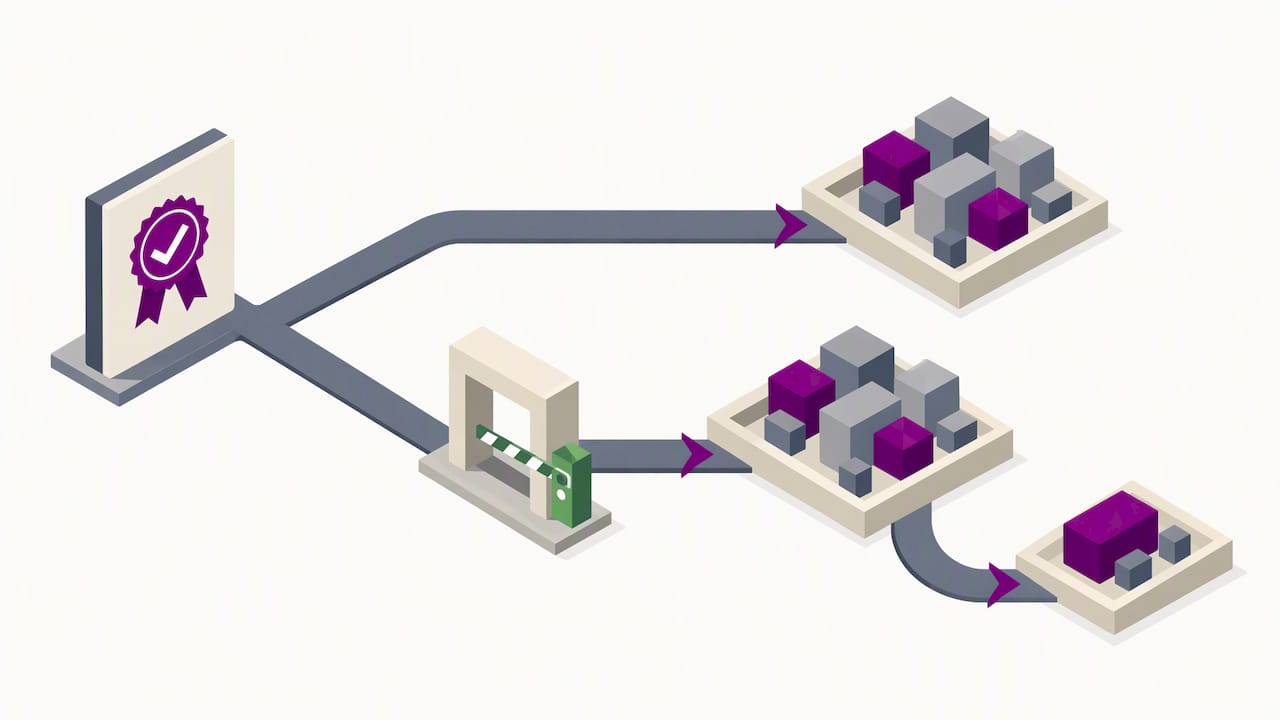
WOSB status is not exclusive. Your firm can hold WOSB certification alongside 8(a), HUBZone, or Service-Disabled Veteran-Owned Small Business status, and contracting officers may consider multiple set-aside authorities before choosing one.
Size standards still apply regardless of certification type:
- Each construction NAICS code carries its own small business size threshold, usually measured by average annual receipts.
- Your firm must fall under that threshold for the specific NAICS code listed in the solicitation, not just under a general small business definition.
- A firm that qualifies as small under one construction NAICS code may not qualify under another, so check the size standard tied to each opportunity.
Which Construction NAICS Codes Qualify for WOSB Set-Asides
The SBA publishes a list of NAICS codes eligible for WOSB and EDWOSB contracting, and several construction codes appear on it regularly. Commonly designated codes include:
- 236115 (New single-family housing construction) and 236116 (New multifamily housing construction).
- 236117 (New housing operative builders) and 236118 (Residential remodelers).
- 236210 (Industrial building construction) and 236220 (Commercial and institutional building construction).
- 237110 (Water and sewer line construction) and 237120 (Oil and gas pipeline construction).
- 237130 (Power and communication line construction), 237310 (Highway, street, and bridge construction), and 237990 (Other heavy and civil engineering construction).
Designations change periodically, so confirm current eligibility against the SBA’s published list before you build a bid strategy around a specific code. When you find a solicitation, cross-check the NAICS code listed there against your firm’s registered NAICS codes in SAM.gov, and confirm your average annual receipts fall under that code’s size standard rather than assuming one size limit applies across your whole business.
Certification and Verification: MySBA, TPCs, and Staying Eligible
Certification is the gate that determines whether a contracting officer can even consider your offer on a set-aside. The process runs through MySBA Certifications, the SBA’s centralized portal for WOSB and EDWOSB applications.
- Apply directly through MySBA Certifications or obtain approval from an SBA-approved third-party certifier (TPC), then upload that approval into your MySBA profile.
- Submit proof of ownership and control, including documentation that at least 51% of the business is owned and controlled by women who are U.S. citizens.
- Confirm your SAM.gov registration reflects an active WOSB or EDWOSB designation, or shows a pending application status in the Dynamic Small Business Search (DSBS), so contracting officers can find and verify you.
- Update your SAM.gov profile annually and recertify every five years if you hold a long-term contract, since eligibility is reassessed at defined intervals rather than only at the time of award.
Firms that certified through a TPC before October 2020 should check whether that certification carries forward automatically or requires a fresh upload into MySBA, since older approvals sometimes need to be re-confirmed in the newer system.
Before you start, gather your articles of organization or incorporation, proof of citizenship for each owner, personal financial information for owners claiming economic disadvantage, and your most recent tax returns. Having these ready cuts weeks off the review timeline.
Pro Tip: Set a recurring calendar reminder for your SAM.gov annual update, since a lapsed registration can make you invisible to contracting officers even if your WOSB certification itself is still valid.
How Contracting Officers Decide to Set Aside a Construction Contract
Contracting officers rely on the Rule of Two: if they reasonably expect at least two responsible small businesses, including WOSB or EDWOSB firms, will submit competitive offers at a fair market price, they can restrict the acquisition to that group. This expectation is built on market research, not guesswork, which is one reason a complete and current SAM and DSBS profile matters so much.
FAR Subpart 19.15 lays out the mechanics:
- FAR 19.1505 governs standard set-aside procedures, including how a contracting officer documents the decision to restrict competition to WOSB or EDWOSB concerns.
- FAR 19.1506 addresses sole-source awards and the conditions under which a contracting officer can bypass full competition entirely.
- If a WOSB or EDWOSB set-aside produces no acceptable offers from eligible firms, the contracting officer must withdraw the set-aside and consider other small business authorities before opening it to full and open competition.
- SBA’s Procurement Center Representatives (PCRs) can recommend using the WOSB program on a given acquisition and can appeal a contracting officer’s decision not to set aside a contract that otherwise meets the criteria.
Sole-Source Rules, Thresholds, and Clauses That Affect Your Bid
Sole-source awards under FAR 19.1506 are available for EDWOSB and, in some cases, WOSB concerns once the acquisition falls under a designated NAICS code and specific dollar thresholds are met. Before a contracting officer can evaluate your offer on either a set-aside or sole-source basis, they must verify your certification status in SAM or DSBS, and the SBA has established a 15-day window to resolve a pending certification so the award is not delayed indefinitely.
A well-maintained SAM and DSBS profile is a practical competitive advantage: contracting officers depend on that visibility during market research, and a firm whose profile is current and complete is materially more likely to be surfaced and considered during a set-aside evaluation.
A few clauses show up repeatedly in WOSB and EDWOSB construction solicitations and deserve attention before you submit a proposal:
- FAR 52.219-29 and 52.219-30 notify offerors of the WOSB or EDWOSB set-aside status and the representations required to qualify.
- FAR 52.219-14, limitations on subcontracting, caps how much of the contract value you can pass to subcontractors, which directly shapes how you staff and price the work. Our guide to selecting compliant subcontractors walks through how to structure teams within that limit.
- Davis-Bacon wage requirements apply to most federal construction contracts over the statutory threshold, and getting wage determinations wrong is one of the more common compliance missteps we see; our Davis-Bacon explainer breaks down what contractors need to track.
Finding WOSB Construction Opportunities and Preparing a Competitive Bid
SAM.gov is the primary place to search live solicitations, and setting up saved searches by NAICS code and keyword means new opportunities land in your inbox instead of requiring daily manual searches. Agency procurement forecasts, published separately by many departments, can also show upcoming construction work months before it hits SAM.gov as a formal solicitation.
Once you find a relevant opportunity, work through a short sequence before you commit time to a proposal:
- Confirm your WOSB or EDWOSB certification is active in MySBA and reflected correctly in SAM.gov.
- Verify the solicitation’s NAICS code matches your certified eligibility and that you meet the associated size standard.
- Review the solicitation for bonding requirements, wage determinations, and subcontracting limitation clauses before pricing the work.
- Assemble past performance references that match the scope and dollar value of the work being solicited.
- Submit a schedule of values and pricing that reflects the actual labor and material costs under any applicable Davis-Bacon wage determination.
Teaming makes sense when a solicitation’s bonding capacity or scope exceeds what you can comfortably carry alone, but SBA joint-venture rules require the WOSB partner to perform a meaningful share of the work for the arrangement to preserve set-aside eligibility.
Pro Tip: Build your past performance file before you need it. Reviewing recent commercial work in advance saves scrambling when a short-turnaround solicitation appears.
How We Prepare for and Deliver Set-Aside Construction Work
As a general contractor, we bring government contracting and design-build experience to the federal projects we pursue, and that track record shapes how we approach every proposal. Our experience as a woman-owned construction company in Maryland informs how we organize compliance documentation from day one rather than assembling it under deadline pressure.
We keep certification records, bonding documentation, and past performance summaries current year-round, which means a solicitation’s turnaround window does not catch us flat-footed. When a contract’s scope and subcontracting limitations call for it, we structure our subcontractor relationships to stay within FAR 52.219-14 thresholds while still bringing in specialized trades. For smaller task orders or facility fit-outs, pursuing the work independently often makes sense; for larger scopes that exceed our bonding comfort, we evaluate teaming arrangements that let a WOSB partner perform a substantial, defined share of the work.
What We Think Women-Owned Firms Get Wrong About Set-Asides
The most common mistake we see is treating certification as the finish line instead of the starting point. Firms spend weeks gathering documents for MySBA, get approved, and then wait for contracts to appear instead of actively building NAICS-specific search alerts and relationships with contracting officers who manage relevant acquisitions.
The conventional advice tends to overweight the certification paperwork and underweight the market research contracting officers actually rely on. A completed SAM and DSBS profile is not a formality: it is the mechanism by which your firm gets surfaced during the Rule of Two analysis in the first place. A perfectly certified firm with a thin or outdated SAM profile can be invisible at the exact moment a contracting officer is deciding whether two WOSB firms exist to justify a set-aside.
Our honest read: prioritize profile completeness and past performance documentation before you chase every open solicitation. A smaller number of well-matched, well-documented bids beats a scattershot approach, especially in construction, where bonding capacity and wage compliance leave little room for a rushed proposal.
— Arienne
How We Support WOSB Firms and Federal Contracting Officers
We built our government contracting practice around compliance discipline suited for federal construction work: organized documentation, clear subcontracting structures, and realistic scheduling from day one.
Our services align with common federal construction scope requirements including government contracting, design-build, tenant buildout, and commercial construction.
Whether you need a teaming partner, a prime contractor with government experience, or help organizing compliance documentation for a pending proposal, we are glad to talk through where your project stands. Visit our Government Contracting page to see our approach, or review our full service offerings to find the right fit for your next federal scope.
FAQ
What is the difference between EDWOSB and WOSB?
A WOSB certification applies to any small business that is at least 51% owned and controlled by women, while EDWOSB status requires the owners to also meet specific economic disadvantage criteria. EDWOSB status matters most for construction firms because it opens eligibility for sole-source awards in NAICS codes the SBA has designated as substantially underrepresented.
Where can I find SDVOSB contracts?
Service-Disabled Veteran-Owned Small Business opportunities are listed on SAM.gov alongside WOSB and other small business set-asides, searchable by NAICS code and set-aside type. Firms pursuing both SDVOSB and WOSB eligibility should confirm each certification separately, since the programs have distinct documentation and verification requirements.
What is the rule of two in government contracting?
The Rule of Two requires a contracting officer to set aside an acquisition for small businesses, including WOSB and EDWOSB concerns, when they reasonably expect at least two responsible small businesses will submit competitive offers at a fair market price. The SBA has also proposed expanding this rule to multiple-award contracts, which would broaden opportunity for small construction firms if finalized.
What qualifies as a small business set aside?
A small business set-aside restricts competition for a federal contract to firms that meet the size standard for the solicitation’s NAICS code, and a set-aside can be further narrowed to a specific certification like WOSB, EDWOSB, HUBZone, or 8(a). Contracting officers determine eligibility using SAM.gov and DSBS verification before evaluating any offers under a set-aside.
How do I stay eligible for a WOSB set-aside during a multi-year contract?
Eligibility is not a one-time check: firms must keep their SAM.gov profile updated annually and recertify their WOSB or EDWOSB status at defined intervals during a long-term contract. Letting a SAM registration lapse can affect your standing on an active contract even if your underlying certification documents remain valid.
Sources
For the most current rules, consult the SBA’s WOSB program page, the eligible NAICS list, and FAR Subpart 19.15 directly, since eligibility and procedures can change. Firms pursuing state-level licensure alongside federal certification may also find this contractor certification checklist useful for understanding parallel state requirements.
- Women-Owned Small Business Federal Contract program | U.S. Small Business Administration
- Acquisition