A full deck replacement in Maryland typically costs a variable amount per square foot installed, which means total project costs vary widely depending on size and material. Pressure-treated wood sits at the lower end, composite decking at the higher end, and cedar lands in between. Permits, ledger repairs, and footing work tied to Maryland’s frost depth requirements often push the final number above the initial estimate.
TL;DR:
- Treated wood lasts 10 to 15 years and needs sealing every 1 to 2 years; composite lasts 25 to 30 years with minimal upkeep.
- Replacing only the walking surface may be permit exempt in some cases, but ledger, joist, stair, railing, or elevation changes generally require permits and inspections.
- Budget for footings at Maryland’s roughly 30 inch frost depth and possible ledger rot, drainage corrections, engineered drawings, or separately billed disposal.
- Permit review takes two to six weeks, while installation takes three days to two weeks; environmental review near tidal waters can extend the schedule.
- Verify the contractor’s current MHIC license and get a written scope naming permit responsibility, footing depth, exclusions, change order pricing, and warranty terms.
Table of Contents
- 1. Typical Cost Ranges and Sample Deck Budgets
- 2. How Material Choice Shapes Cost, Lifespan, and Upkeep
- 3. Permits, MHIC Licensing, and County Fee Differences
- 4. How Long a Deck Replacement Takes from Quote to Final Inspection
- 5. Hidden Costs That Catch Maryland Homeowners Off Guard
- 6. How to Hire a Licensed Contractor in Maryland Without Overpaying
- 7. What We See on the Ground with Maryland Deck Projects
- 8. Our Take on Budgeting for a Deck Replacement
- Getting a Deck Quote from Our Rockville Team
- FAQ
- Sources
1. Typical Cost Ranges and Sample Deck Budgets
Material drives most of the price swing you will see on a quote, but labor and permitting stay fairly consistent across Maryland counties. Here is what installed pricing typically looks like per square foot:
- Pressure-treated wood: generally the most affordable option for replacements.
- Cedar: valued for natural appearance and improved rot resistance.
- Composite decking: usually the most expensive, with premium options at the higher end of cost.
Common deck sizes demonstrate cost variation: a smaller pressure-treated wood deck can be relatively modest in price, while larger cedar or composite decks typically require a higher budget when including materials, labor, and permits.
Most written quotes cover demolition and haul-away of the old structure, new footings, framing, decking boards, railings, and a standard permit application. They typically exclude electrical work for outdoor lighting or a hot tub circuit, engineered drawings for unusual designs, and any ledger or structural repair discovered once the old deck comes down. Ask your contractor to spell out what falls into each bucket before you sign.
2. How Material Choice Shapes Cost, Lifespan, and Upkeep
Picking a decking material is really a decision about how much you want to spend now versus how much time and money you want to spend maintaining it later. Pressure-treated wood costs the least upfront but asks the most of you over time.
- Pressure-treated wood: lasts 10 to 15 years with regular care and needs cleaning and a fresh sealant coat roughly every 1 to 2 years.
- Cedar: lasts 15 to 20 years, resists insects naturally, but still needs staining or sealing every 2 to 3 years to hold its color and prevent splintering.
- Composite: lasts 25 to 30 years with minimal upkeep beyond periodic washing, though the higher upfront cost takes longer to pay off against a wood deck’s lower price.
Maryland’s humid summers and freeze-thaw winters are tough on untreated or poorly sealed wood, and they create the conditions termites favor. Composite handles moisture swings and insect pressure better than either wood option, which is part of why it has become the default choice for homeowners who want to replace a deck once and be done with it for a long stretch.
Pro Tip: Schedule your deck’s annual cleaning and inspection for early spring, before Maryland’s humidity climbs, so small issues like loose fasteners or soft boards get caught before summer use.
3. Permits, MHIC Licensing, and County Fee Differences
Most Maryland deck replacements require a building permit, though the rules shift depending on scope and county. In Calvert County, for example, repairs or modifications to the deck’s structure, stairs, or railing require a permit, while replacing only the walking surface may be exempt in some cases, according to Calvert County’s residential deck guidance. Removing or reattaching the ledger, swapping joists, or changing the deck’s elevation almost always triggers a full permit and inspection, regardless of county.
- Montgomery County requires electronic permit applications with non-refundable filing fees charged at the time of submission, and the county’s permitting portal requires full payment before the permit is released.
- Baltimore County follows a similar workflow through its own online permit application, with issuance following technical review and fee payment.
- Electrical permits for deck lighting or a hot tub hookup are typically filed separately and add their own fee on top of the base building permit.
Any contractor you hire for deck work should carry a current Maryland Home Improvement Commission (MHIC) license. That license ties into the MHIC Guaranty Fund, which gives you a path to recover losses if a licensed contractor leaves a job unfinished or performs substandard work. Our guide to deck permits in Maryland walks through the documents counties typically ask for before approval.
4. How Long a Deck Replacement Takes from Quote to Final Inspection
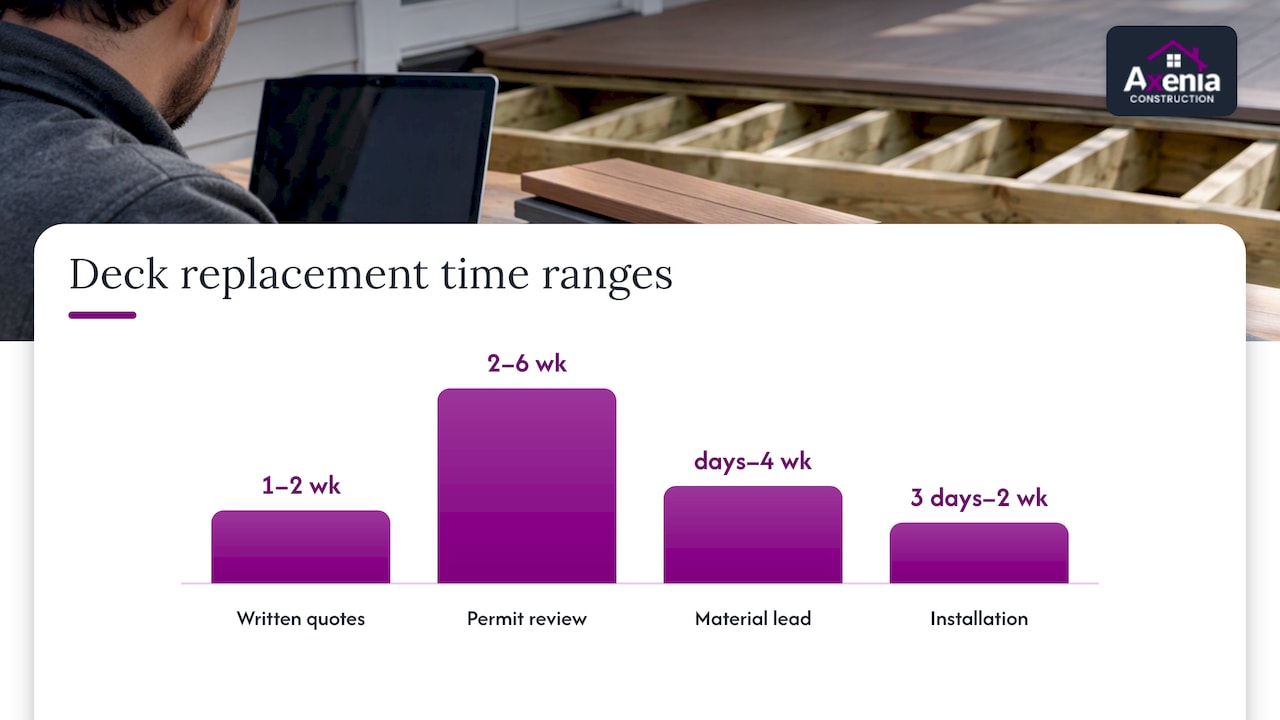
Getting two or three written quotes usually takes one to two weeks, and permit review adds another two to six weeks depending on the county and whether your design matches standard details. Material lead times run anywhere from a few days for pressure-treated lumber to three or four weeks for certain composite lines, and installation itself typically takes three days to two weeks depending on deck size and complexity.
Projects near tidal water can take longer. Properties within Chesapeake Bay Critical Area boundaries may face additional environmental review, which the Calvert County deck page flags as a common source of delay. Sticking to a county’s pre-approved standard deck details, rather than a custom design that needs engineered drawings, is one of the more reliable ways to keep your timeline on track. Our permit expediting service is built around shaving weeks off that review window when scheduling matters.
5. Hidden Costs That Catch Maryland Homeowners Off Guard
The number on your initial quote is rarely the final number, and the gap usually comes from what is underground or hidden behind the old ledger board.
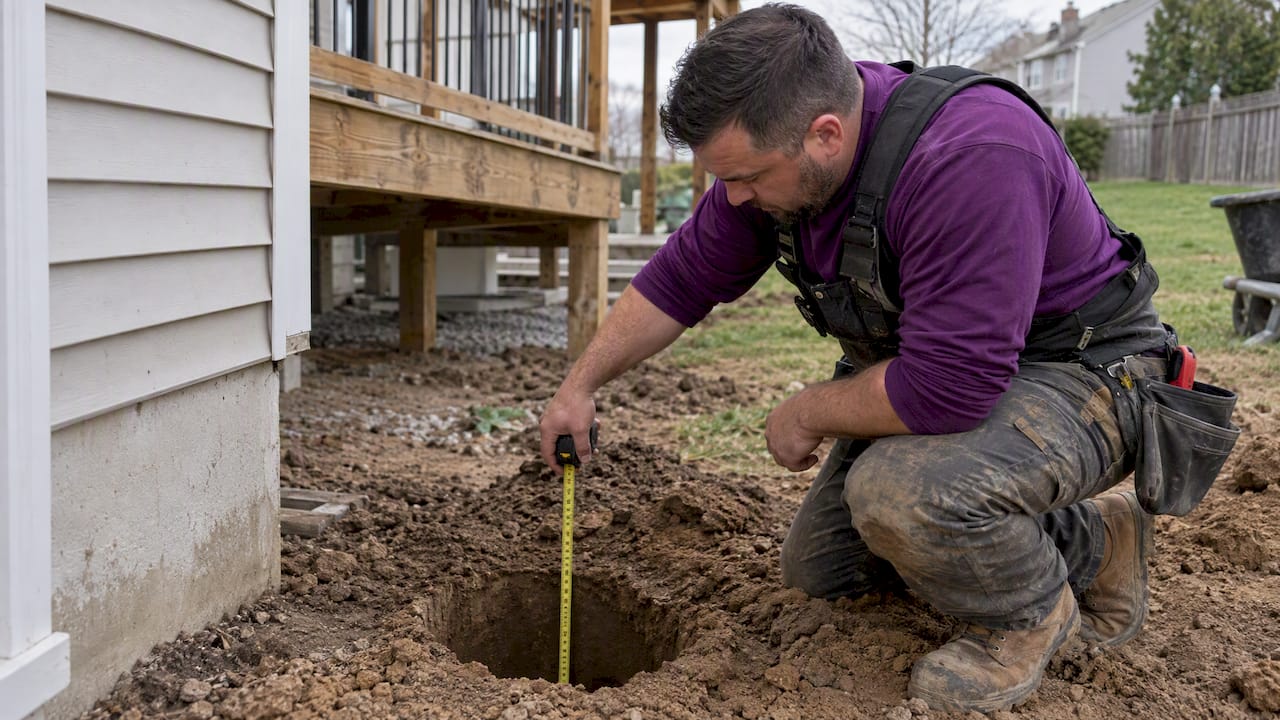
- Footings dug to frost depth: Maryland’s frost line typically sits around 30 inches, so footings that were adequate decades ago may need to be re-dug deeper to meet current code.
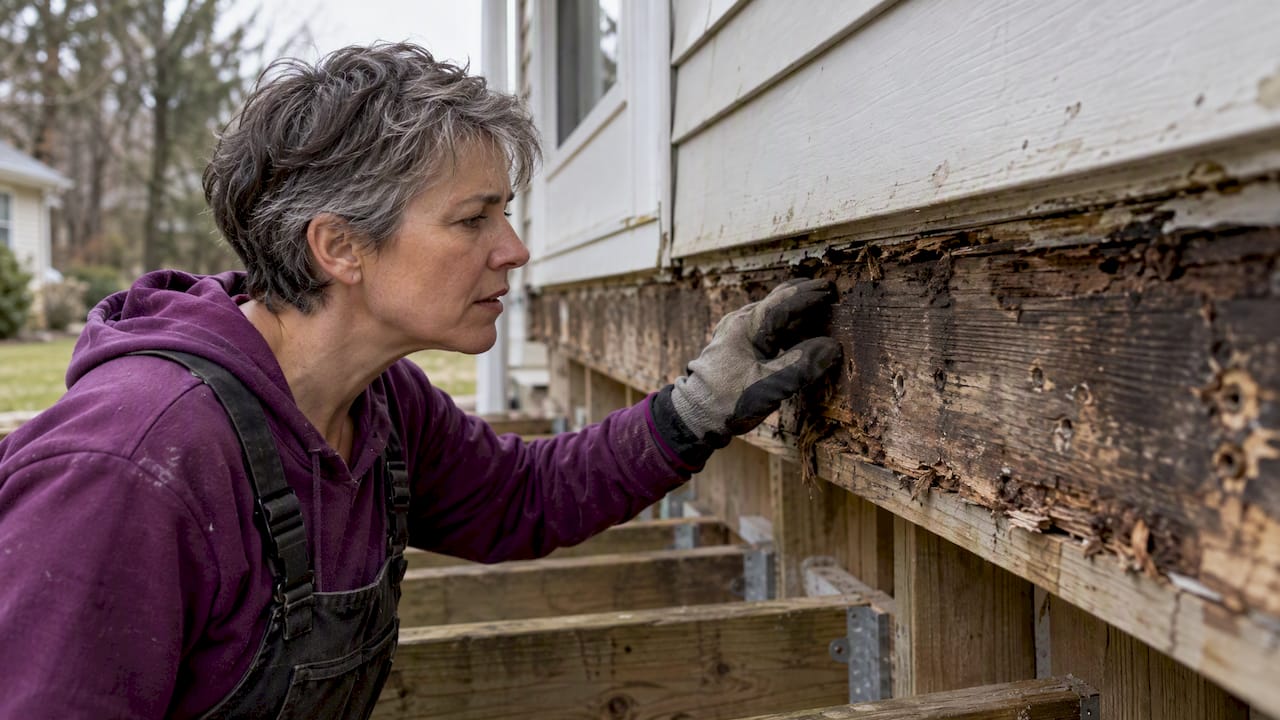
- Ledger board repair: rot behind the ledger where it meets the house is one of the most common surprises once old decking comes off.
- Soil and drainage issues: poor grading near the foundation sometimes needs correcting before new footings go in.
- Engineered or stamped drawings: roofed porches, screened structures, and hot tub installations often require an engineer’s stamp, which adds both cost and review time.
- HOA approval and demolition disposal: many Maryland communities require architectural sign-off before work starts, and haul-away fees for the old deck are sometimes billed separately.
A contractor’s cost breakdown for a typical deck repair shows that material and labor portions can vary widely depending on how much structural work is hidden beneath the surface, which is why a pre-demolition walkthrough matters more than the quote’s bottom line alone.
6. How to Hire a Licensed Contractor in Maryland Without Overpaying
Price matters, but the cheapest bid on a deck replacement often leaves out footings, ledger repair, or permit fees that show up later as change orders. A structured hiring process protects your budget better than chasing the lowest number.
- Confirm the MHIC license number directly on the Maryland Home Improvement Commission site rather than taking a contractor’s word for it.
- Ask for proof of insurance and bonding, and request two or three recent local references you can actually call.
- Get the scope in writing, including who files the permit, which materials are specified by brand and grade, and how change orders are priced.
- Ask about the warranty on both labor and materials, and get the timeline estimate in writing rather than a verbal range.
- Walk away from red flags: no MHIC number, a vague one-page scope, cash-only payment requests, or reluctance to put a schedule in writing.
Pro Tip: Ask every bidder the same specific question, “who pulls the permit and when,” and compare the answers side by side. It reveals more about a contractor’s process than the price alone.
7. What We See on the Ground with Maryland Deck Projects
Underbudgeting for what is hidden behind the old ledger board is the single most common pitfall we see on deck replacement projects.
8. Our Take on Budgeting for a Deck Replacement
The conventional advice to “get three quotes and pick the middle one” misses the real variable in Maryland deck pricing, which is permitting friction, not material cost. Two contractors bidding the same composite deck in the same county can land within a few dollars of each other per square foot, yet one of them builds in the time and cost of a proper permit submission while the other quietly assumes you will handle complications yourself.
We think homeowners should prioritize contractor process over sticker price. A written schedule that names who pulls the permit, how footing depth will be verified, and what happens if the ledger is rotten tells you more about your eventual total cost than a line-item comparison of lumber grades. The county fee schedules and MHIC license checks matter, but they are the floor of due diligence, not the ceiling. The homeowners who end up frustrated with their deck budget are rarely the ones who chose composite over pressure-treated wood. They are the ones who chose a contractor who never mentioned the frost-depth footing requirement until the invoice arrived.
— Arienne
Getting a Deck Quote from Our Rockville Team
We build and replace decks and porches in the Maryland, DC, and Northern Virginia area, and our team handles permit filing and documentation as part of every project rather than leaving it for you to manage separately.

When you request an on-site estimate, it helps to have a few things ready:
- A rough sense of your budget range and preferred material.
- Any existing survey or plat showing property lines near the deck.
- Photos of the current deck’s condition, especially around the ledger and stairs.
A professional quote includes a full scope of work, a permit timeline, and a written contingency allowance for site-specific surprises. You can see examples of our completed work on our deck builder page for Rockville or start the conversation through our Decks & Porches services page. If your project also involves maintenance planning once the new deck is in, Capital Pro Pressure Washing handles seasonal deck cleaning in the region, which pairs well with whichever material you choose.
FAQ
How much should a new deck cost per square foot?
In Maryland, the cost per square foot for a new deck varies by material choice, with pressure-treated wood generally less expensive and composite decking typically more costly, while cedar falls between these options.
What is the average cost per square foot to build a house in Maryland?
This figure is not covered by our research and varies significantly based on location, finishes, and home size, so we are not able to state a reliable number here. A licensed contractor can give you a site-specific estimate based on your lot and design.
Does deck replacement increase home value?
A well-built deck is widely considered a renovation that adds to a home’s appeal and usability, particularly when the material and design match the rest of the property. We do not have a sourced figure for the exact return on investment, so we would encourage you to weigh it as a quality-of-life improvement first and a value boost second.
What’s the average cost for a 20×20 deck?
A deck of that size in Maryland can vary widely in cost depending on material choice and any unexpected structural repairs, with pricings spanning a broad range when including footings, railings, and permits.
Sources
- Maryland Home Improvement Commission (MHIC) — Maryland Department of Labor
- Residential decks permit process — Montgomery County Department of Permitting Services
- Deck – Residential | Calvert County, MD