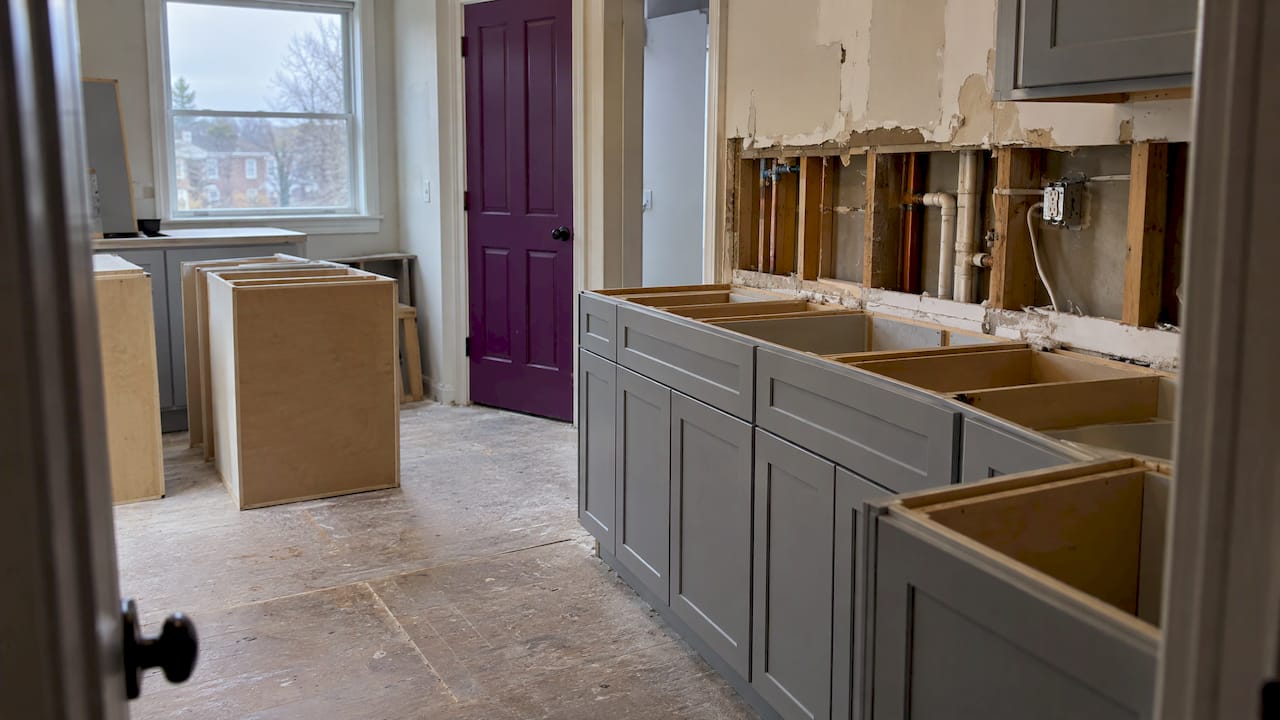
The best time to remodel a kitchen is the window when your cabinets and appliances have arrived, your contractor’s crew is free, and your household can live without a kitchen for a few weeks. In the DC region that usually means ordering in early fall, starting demolition in late winter or early spring, and finishing before the summer entertaining season. We are a general contractor in Rockville, and we plan kitchen projects backward from the date you want your kitchen back. Here is how to do it.
TL;DR
- There is no single best season. Winter is easiest for scheduling and may cost less, spring is mild but busy, summer is the busiest, and fall is a good time to order and plan.
- Start planning 6 to 12 months before you want to cook in the new kitchen. Cabinets are the item that most often sets the calendar.
- Most kitchen remodels take 6 to 12 weeks of on-site work, and material delays or labor shortages can stretch that.
- Pick your deadline first (a holiday, a sale of the house, a new baby), then count backward through design, permits, ordering and construction.
- Permits and design decisions happen before any demolition, so a signed contract in the fall can mean a late-winter start.
Table of Contents
- Why the calendar matters less than the sequence
- How long a kitchen remodel really takes
- Season by season in the DC region
- Order materials in sequence, not all at once
- Work backward from the date you care about
- Planning around kitchen downtime
- Cost: does timing change the price?
- Permits and local timing in Maryland, DC and Virginia
- Weather and humidity: what actually matters indoors
- Our perspective
- How we plan a kitchen remodel with you
- FAQ
- Sources
Why the calendar matters less than the sequence
Most articles on this topic pick a favorite season. Spring has long daylight and mild weather. Summer has the best weather for hauling materials in and out. Fall comes after summer travel and before the holidays. Winter is the off-season for many contractors.
All of those are true, and none of them decides your project. What decides it is the order in which things have to happen: design, permits, ordering, delivery, demolition, rough work, finishes, punch list. A kitchen remodel stalls when one of those steps is waiting on another, for example when demolition begins before the cabinets are confirmed, or when countertops cannot be measured because the base cabinets are not in yet.
So think of the season as a tiebreaker. First get the sequence right, then choose the season that fits your household and budget.
How long a kitchen remodel really takes
A 2025 survey reported by This Old House found that most kitchen remodels take 6 to 12 weeks of on-site work, and that material availability and labor shortages can extend that. Notice what that figure leaves out: the weeks of design, selections, permitting and ordering that come before the first day on site.
A realistic calendar for a full remodel looks like this:
| Phase | Typical duration | What happens |
|---|---|---|
| Planning and design | 4 to 8 weeks | Layout, budget, selections, drawings |
| Permits | A few weeks, varies by jurisdiction | Applications and review before structural, electrical, plumbing or mechanical work |
| Ordering and lead time | 4 to 12+ weeks | Cabinets, appliances, countertops, special-order tile |
| On-site construction | 6 to 12 weeks | Demolition through final punch list |
The planning, permitting and ordering phases can overlap, but they rarely disappear. That is why a project you decide on in May is unlikely to be finished in time for a July cookout.
If you want the phase-by-phase detail, our guide to kitchen renovation phases walks through each stage, and our home renovation timeline examples show how long full projects have run.
Season by season in the DC region
The Maryland, DC and Northern Virginia climate has four real seasons: humid summers, cold snaps in winter and a lot of rain in spring. Here is how each plays out for an interior kitchen project.
Winter: easiest scheduling, possible savings
Winter, roughly November through February, is the off-season for many remodelers. Crews are easier to book, and suppliers often run holiday promotions. One 2026 cost guide estimates off-season savings of 10 to 20% compared with peak months, with smaller savings likely in mild climates. Treat that as a general range, not a quote: your actual price depends on your design, your materials and your contract.
The tradeoffs are practical. You may be without a kitchen during the holidays if you start in November, and a cold-weather start means a delivery may need to come through a snowy week. Starting demolition in January or February avoids the holidays and puts you in a finished kitchen by spring.
Spring: mild weather, busy calendars
Spring is popular because the weather is easy and many homeowners want a new kitchen before summer. That popularity is the downside. Contractors, designers and suppliers fill up, and cabinets for a spring or early summer install need to be ordered months ahead. One cabinet supplier suggests that cabinets for a June installation are typically ordered by late March or early April, and that most cabinet lines deliver in about 4 to 8 weeks.
If spring is your goal, the real start date is the previous fall, when you sign, design and order.
Summer: good weather, tightest schedules
Summer is the peak season for remodeling. The advantage is that you can set up a temporary kitchen outside or in a garage, grill, and open windows for ventilation. The drawbacks are busy trades, tighter supplier schedules, and the need to order early. Families with school-age children often like a summer project because the house is empty less of the day, though a summer break also means kids are underfoot during construction. Weigh that against your own routine.
Fall: the planning season
Fall is a strong time to sign and order even if you do not demolish yet. You avoid the summer rush, and you can lock in selections before holiday backlogs. Some homeowners aim to finish just before Thanksgiving. That works only if you started in late summer, because a 6 to 12 week build plus lead times does not fit into a few weeks in October.
A practical pattern many homeowners find workable: sign and order in the fall, demolish in late winter, finish in spring. Cabinets and appliances arrive while the design and permits are completed, and the crew starts when the materials are on site.
Order materials in sequence, not all at once
The Renoversity guide to ordering renovation materials makes a point worth repeating: order by construction sequence. Cabinets come after the layout, appliance specifications, measurements and major construction details are confirmed. Countertops cannot be finally measured until the base cabinets are installed. Only the materials needed for early work have to be on site before demolition.
That has two consequences for timing:
- Cabinets and appliances drive the start date. Appliance dimensions affect cabinet openings, so choose appliances before you finalize cabinet orders.
- Countertops add a gap. After base cabinets are set, expect a pause for templating and fabrication. A kitchen with no countertops for a couple of weeks is normal, and your schedule should say so.
Lead times also move with the market, not only the calendar. A manufacturer’s learning center notes that custom cabinet lead times start at about 8 weeks and can rise, and that they cannot be guaranteed from one month to the next. Build in a buffer, and do not schedule a family event for the week after your estimated completion.
Work backward from the date you care about
Here is the simplest way to find your best time to remodel. Start with the date you want to be cooking again and subtract.
- Write down your deadline. A holiday, a graduation party, a move-in, a listing date.
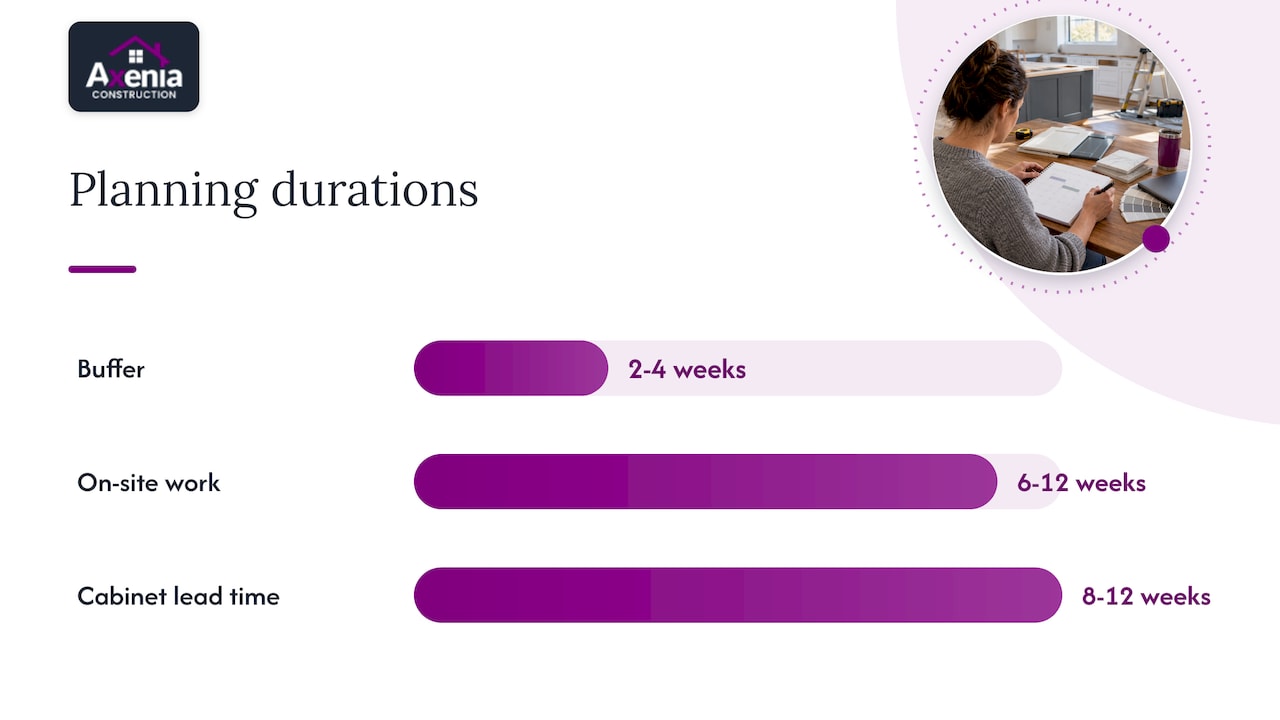
- Subtract a buffer of 2 to 4 weeks. Delays in deliveries, inspections or hidden conditions behind walls are common in older Maryland, DC and Virginia houses.
- Subtract on-site construction time. Use 6 to 12 weeks, depending on whether you are changing the layout, moving plumbing or gas lines, or only updating surfaces.
- Subtract lead time. Eight to twelve weeks is a safe planning number for cabinets, longer for custom work.
- Subtract permitting and design. Several weeks for design and selections, plus permit review in your county or city.
- The result is the date you need a signed contract.
For a Thanksgiving finish, that math often lands in late spring or early summer. For a spring finish, it lands in early fall. Many homeowners are surprised by how early the real start is.
Our kitchen remodel checklist turns these steps into a to-do list you can work through.
Planning around kitchen downtime
The season matters partly because of how you live. Before you pick a start month, think through the weeks without a working kitchen.
- Where will you cook? A microwave, a hot plate, a toaster oven and a slow cooker on a folding table in another room cover most meals. Summer adds the grill.
- Where will the dishes go? Plan a temporary spot with a utility sink, a bathroom sink or a bin for washing, and consider paper and compostable plates for the messiest weeks.
- Where will the food go? A small refrigerator in a dining room or garage keeps essentials close.
- How will you handle dust? Kitchen demolition and sanding spread fine dust. Ask your contractor how they will seal off the work area, and plan for doors to stay closed. Households with infants, asthma or older adults should talk with their doctor about what precautions suit them.
- What about pets and children? Tools, open walls and delivery traffic are a reason to set up a closed-off zone of the house.
- Do you have a busy period at work or at school? A project that overlaps your busiest weeks is harder to manage, since you will be the one answering questions about selections and approvals.
For a business or a rental property, downtime has a cost of its own. A restaurant, a break room or a managed rental unit may need work scheduled in off-peak weeks or in phases. If you are a property owner or realtor preparing a home for sale, count backward from the listing date and leave a buffer after the final inspection for cleaning and staging.
Cost: does timing change the price?
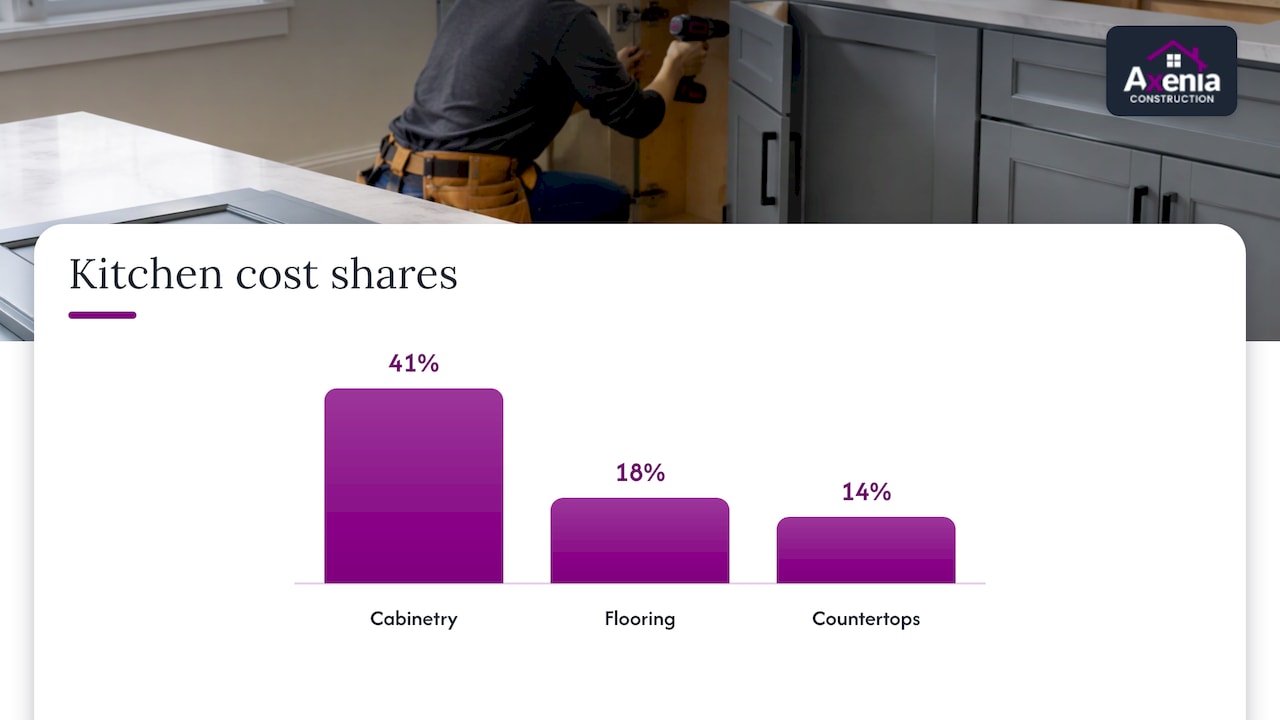
Timing can affect cost, but the larger drivers are your scope and materials. According to This Old House, a kitchen remodel ranges from $14,600 to $41,500, averaging about $27,000, or $75 to $250 per square foot. Cabinetry accounts for about 41% of the cost, flooring 18% and countertops 14%.
That tells you where timing matters most. Because cabinets are the biggest line, ordering them at a time when suppliers run promotions or have normal lead times will do more for your budget than the season of the demolition. The off-season savings range cited above, 10 to 20%, applies to a full project in a general way. On a $25,000 kitchen, the same guide’s example is a price of $20,000 to $22,500 for a November or January start, but it is an illustration, not a promise.
If you are deciding where to put a limited budget, our kitchen remodel budget planning guide covers allowances, contingency and what to fix first. The same survey data shows a minor remodel at about $27,492 recouping 96.1% of its cost, compared with 49.5% for a major remodel at about $79,982, which is useful if resale is part of the plan. Our kitchen remodel ROI guide goes deeper on that.
Permits and local timing in Maryland, DC and Virginia
A permit is a document from your county or city that allows work affecting structure, electrical, plumbing or mechanical systems, and it is reviewed and inspected by the local government. Review times and requirements differ between Montgomery County, Prince George’s County, the District of Columbia, Arlington, Fairfax and Alexandria. Check the current schedule on your jurisdiction’s official permitting page, because review times change with workload and the time of year.
The point for timing: permit review is part of your calendar, and it happens before demolition. Because we work in Maryland, DC and Northern Virginia and our approach includes local permitting expertise, we build permit steps into the schedule from the first week.
If the remodel includes insulation or wall work, plan for it too. Our guide on insulation upgrades during a remodel explains what to do and when, because open walls are the cheapest time to improve them.
Weather and humidity: what actually matters indoors
A kitchen remodel is mostly indoor work, so rain and snow matter less than for a deck or addition. What matters is delivery and conditions inside the house. Drywall compound, tile setting materials, hardwood flooring and cabinets all react to humidity and temperature, and your heating or cooling should be running normally while those trades work. One remodeling writer suggests ordering cabinets in fall and demolishing in late winter so that cabinets can acclimate while rough work is done under stable conditions.
The same advice notes that in hot, humid regions it makes sense to start tear-out after the Atlantic hurricane season, which NOAA lists as June 1 to November 30. For the DC area, tropical storms are an occasional concern for deliveries and for projects with an exterior component, so it is one more reason fall and winter starts are comfortable choices.
Our perspective
We see the calendar as a tool, not a rule. The best season is the one in which your design is finished, your permits are in motion and your materials are on the way, because that is when a crew can work without waiting.
That is why we begin with the date you care about and plan backward. As a women-owned general contractor in Rockville, we put meticulous project management and transparent communication at the center of every remodel, so you know what happens next and when.
Our design-build approach helps here. When design and construction are coordinated under one roof, selections, ordering and permits can move together, which is the best defense against the delays that push a project into the busy season.
Arienne
How we plan a kitchen remodel with you
Our kitchen and bath remodels service covers kitchens for homeowners in Maryland, DC and Virginia, and our design-build service brings design and construction together so the schedule is built into the plan from the start. If you want to know when your project should begin, the best step is to tell us the date you want your kitchen back. We will work backward with you and map the design, permit, ordering and construction steps. You can reach us through Axenia Construction.

If you are comparing proposals while you plan your timing, our guide to comparing renovation contractor bids shows what to look for in the schedule as well as the price. For a broader plan that includes more than the kitchen, see our home renovation project planning guide.
FAQ
What time of year is the cheapest to remodel a kitchen?
Late fall and winter, roughly November through February, are usually the cheapest months because demand is lower and suppliers often run promotions. One 2026 cost guide puts typical off-season savings at 10 to 20%, with smaller savings likely in milder climates. Your scope and material choices will affect the total more than the month.
How far in advance should I plan a kitchen remodel?
Plan 6 to 12 months ahead if you have a firm completion date. That gives you time for design, selections, permits and cabinet lead times, which can start at about 8 weeks and run longer for custom work. If your date is flexible, a shorter runway can work, but the start date will follow your material delivery.
Is it a bad idea to remodel a kitchen before the holidays?
It is risky if you start in the fall, because a 6 to 12 week build plus delays can run into Thanksgiving or December. If a holiday finish matters, sign and order in early summer so the work is done before the season. Otherwise, a late-winter start gives you the holidays in your current kitchen.
Is $10,000 enough for a kitchen remodel?
It can cover a limited update such as painting, new hardware, lighting or a countertop, but it is below the $14,600 low end of the full remodel range reported by This Old House. A full remodel with new cabinets, which are about 41% of typical costs, usually costs more. Our budget planning guide helps you decide what to prioritize.
How long will I be without a kitchen?
Most remodels take 6 to 12 weeks of on-site work. Your kitchen is usually unusable for most of that period, with a short pause after cabinets are set while countertops are fabricated. Plan a temporary kitchen setup before demolition starts.
Sources
- Kitchen Remodeling Trends and Tips for 2025, This Old House
- Home Renovation Trends and Tips 2025, This Old House
- Best Time of Year for Home Improvement Projects (2026)
- Kitchen Remodel Planning Timeline: When to Order Cabinets
- When Should I Order Materials for a Renovation?
- What is the Best Time of Year for a Kitchen Renovation?
- Best Time of Year to Remodel a Kitchen in Any Climate
- Tropical Cyclone Climatology, NOAA
Recommended
- Top Home Remodeling Tips in Maryland for 2026: Boost Value & Comfort
- Kitchen Remodeling in Bethesda, MD: Upgrade Your Home with Modern Design
- Luxury Kitchen Remodeling in Potomac, Maryland: Modern Design Trends That Increase Home Value
- Kitchen Remodeling in Alexandria, VA: Upgrade Your Home with Modern Design & Functionality