
What permit expediting in Maryland actually involves
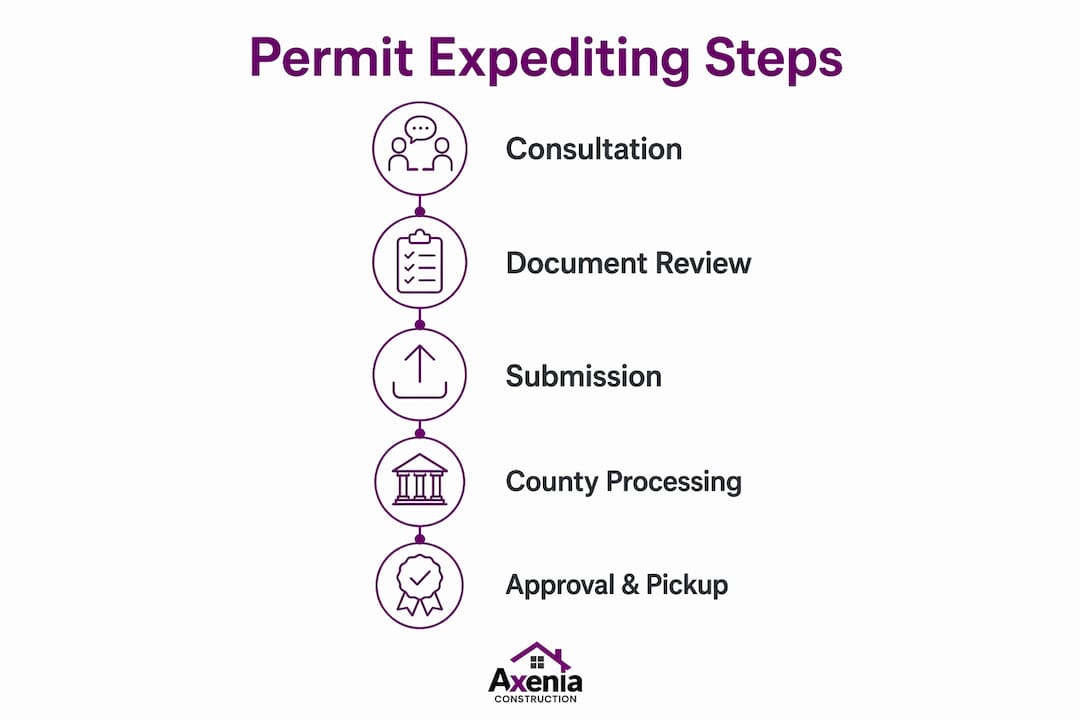
Permit expediting is the professional management of your permit’s full lifecycle, from local code research and document preparation through submission, agency coordination, and response to reviewer comments. It’s not a courier service or a shortcut. A qualified expediter reviews your plans before they ever reach a county desk, catching zoning conflicts, missing stamps, or incomplete calculations that would otherwise trigger a rejection cycle and cost you weeks.
Maryland projects that benefit most from professional permit management include:
- Commercial tenant improvements and ground-up construction
- Residential renovations and additions
- Trade permits (electrical, mechanical, plumbing)
- Sign permits and occupancy certificates
Fee structures vary by project scope. Most expediters offer a free initial consultation to assess complexity, then quote a fixed or project-based fee. That upfront conversation is where a good expediter earns their value: they tell you exactly what’s missing before you submit, not after a reviewer sends it back.
Pro Tip: Ask any prospective expediter whether their fee covers resubmittals. Some quote only the first submission, leaving you exposed if a reviewer requests corrections.
How Maryland’s county permit systems create real complexity
Maryland’s counties each operate independent permitting departments with their own portals, fee schedules, and review timelines. That fragmentation is the single biggest source of confusion for applicants who assume one process applies statewide.

Prince George’s County, for example, requires separate logins for two distinct platforms: Momentum handles permit applications and issuance, while ePlan (Project Dox) manages document uploads and reviewer comments. Missing a step in either system stalls your entire application. Montgomery County’s Department of Permitting Services offers a Permitting Dashboard that tracks turnaround times, but navigating its multi-agency review requirements still trips up unprepared applicants.
Key challenges across Maryland counties include:
- Different portal logins, workflows, and document naming conventions per county
- Review timelines that shift based on project type, season, and staffing
- Zoning, fire, and mechanical code conflicts that reviewers flag at different stages
- Policy updates that change submission requirements with little public notice
Pre-submittal quality control is where professional expediters prevent the most damage. Catching a code conflict before submission is a one-day fix. Catching it after a reviewer rejects your plans can mean a four-to-six-week reset.
Why professional expediting keeps Maryland projects on schedule
Hiring a professional expediter is especially important for commercial projects or any work that crosses multiple agency reviews. The value isn’t speed for its own sake. It’s accuracy on the first submission, which is what actually keeps your project on schedule.
Key benefits of working with a qualified expediter:
- First-time approval rates improve when pre-submittal reviews catch code conflicts early
- Administrative burden shifts away from your team to someone who manages portals daily
- Reviewer relationships matter: experienced expediters interpret comments accurately and respond with precision, avoiding back-and-forth that drags on for months
- County-specific knowledge means your expediter already knows Prince George’s Momentum workflow or Montgomery County’s multi-agency routing before your project starts
How to choose a permit expediter in Maryland
The right expediter knows your specific county’s system, not just permitting in general. Start by confirming they have direct experience with the county where your project sits. Someone fluent in Montgomery County’s DPS process may not know Prince George’s Momentum workflows at all.
Verify that your contractor holds a valid Maryland license through the Maryland contractor licensing database before signing anything. Beyond licensing, ask for references from projects similar in type and scope to yours. A commercial tenant improvement and a residential deck addition involve entirely different review paths, and your expediter’s track record should match your project.
Common challenges and delays in Maryland permit applications
Incomplete documentation is the most common reason applications stall. Reviewers across Maryland counties consistently flag missing engineer stamps, incomplete energy compliance calculations under the Maryland energy code, and zoning setback conflicts that weren’t caught before submission.
Digital system errors add another layer. Applicants who upload documents to ePlan without first completing the Momentum application create orphaned files that reviewers can’t access. County staffing gaps during peak seasons extend review queues further. A professional expediter monitors your application status actively and responds to comment letters within days, not weeks.
Legal and compliance considerations for permit expediting in Maryland
Every permit application in Maryland must reflect work performed by or under the supervision of a licensed contractor, and the expediter’s role is to facilitate that process, not to certify the work itself. Expediters do not replace the licensed design professionals (architects, engineers) whose stamps appear on submitted drawings.
Compliance with the International Building Code as adopted by Maryland, OSHA workplace safety standards, and county-specific zoning ordinances all remain the responsibility of the project team. An expediter helps you submit correctly and respond to comments accurately, but the underlying design must meet code.
Examples of successful permit expediting in Maryland counties
A commercial fit-out in Rockville required coordination across Montgomery County DPS, the fire marshal’s office, and the county health department simultaneously. A professional expediter managed all three review tracks, submitted coordinated responses to each agency’s comments within the same week, and kept the project’s construction start date intact.
For a residential addition in Prince George’s County, the expediter identified a rear setback conflict during pre-submittal review. The design team revised the plans before submission, avoiding a rejection that would have added weeks to the timeline. The permit issued on the first review cycle. That kind of outcome is what experienced general contractors in Maryland consistently point to as the clearest return on hiring professional permit help.
Axeniaconstruction works with residential and commercial clients across Maryland to manage permit applications with the same attention to detail we bring to every build. If your project is ready to move forward, explore our services or reach out directly to discuss your permit needs.

Key Takeaways
Professional permit expediting in Maryland reduces delays by combining pre-submittal code review, county-specific portal knowledge, and active agency coordination to improve first-time approval rates.
| Point | Details |
|---|---|
| Pre-submittal review prevents rejections | Catching zoning, fire, or mechanical conflicts before submission avoids multi-week reset cycles. |
| Maryland has multiple independent county systems | Each county uses its own portal, fee schedule, and review timeline, requiring county-specific expertise. |
| Prince George’s County uses two platforms | Momentum handles applications; ePlan manages documents and reviewer comments, each requiring a separate login. |
| Fee structures are project-based | Most expediters quote a fixed fee after a free consultation to assess project scope and complexity. |
| Licensing verification matters | Confirm your expediter and contractor hold valid Maryland licenses before signing any agreement. |