
A commercial construction contract is a legally binding agreement that defines how a project gets built, who pays for what, and who absorbs the risk when costs or timelines shift. Choosing the right type from the six dominant commercial contract types, including lump sum, cost-plus, Guaranteed Maximum Price (GMP), time and materials, unit price, design-build, and Integrated Project Delivery (IPD), directly shapes your project’s budget, schedule, and exposure to financial loss. Large commercial projects typically run 20% over schedule, with only 25% finishing within 10% of planned timelines. That statistic alone shows why the contract structure you choose matters before a single shovel hits the ground.
1. What are the types of commercial construction contracts?
The industry recognizes four core contract foundations for commercial projects, with lump sum, cost-plus with GMP variants, design-build, and IPD forming the backbone. Unit price and time and materials contracts round out the full picture for investors and business owners. Each type allocates cost risk, schedule risk, and design responsibility differently. Matching the contract type to your project’s scope clarity and risk tolerance is the single most important decision you make before breaking ground.
Construction contracts are not standalone documents. They integrate drawings, specifications, change orders, and permits as legally binding attachments. That means the contract you sign is only as strong as the supporting documents attached to it. Organizations like the American Institute of Architects (AIA) and the Associated General Contractors of America (AGC) publish standardized contract templates that commercial investors rely on to reduce ambiguity and legal exposure.

2. Lump sum contracts: fixed price, fixed responsibility
A lump sum contract, also called a fixed price contract, sets one total price for the entire project before construction begins. The contractor agrees to deliver the full scope of work for that price, regardless of actual costs. This structure transfers cost overrun risk directly to the contractor.
Key features of lump sum contracts include:
- Budget certainty: You know the total cost before signing, which simplifies financing and investor reporting.
- Risk transfer: The contractor absorbs cost overruns caused by labor, materials, or productivity issues.
- Competitive bidding: Multiple contractors can bid against the same defined scope, driving price competition.
- Change order exposure: Any scope change triggers a formal change order, which can add cost and delay.
The critical condition for a lump sum contract to work in your favor is a well-defined scope. Lump sum contracts require a clear scope; otherwise, contractors pad bids with contingencies to protect themselves from uncertainty. A vague scope on a lump sum project does not save you money. It costs you more because every contractor prices in the risk they cannot quantify.
Lump sum contracts work best for commercial tenant improvements, office fit-outs, and retail buildouts where drawings and specifications are complete before bidding. They are less suited for ground-up construction with evolving design or phased projects where scope will change.
Pro Tip: Before issuing a lump sum bid package, have your architect confirm that drawings are at least 90% complete. Incomplete documents are the leading cause of inflated bids and costly change orders.
3. How cost-plus and GMP contracts work
A cost-plus contract reimburses the contractor for all actual project costs, including labor, materials, subcontractors, and equipment, plus an agreed fee. That fee is either a fixed dollar amount or a percentage of total costs. This structure gives you full transparency into where your money goes.
Cost-plus contracts come in three main variations:
- Cost-plus fixed fee: The contractor’s profit is a set dollar amount, regardless of final project cost.
- Cost-plus percentage fee: The contractor earns a percentage of total costs, which can create an incentive to spend more.
- Cost-plus with GMP: A cost ceiling caps the owner’s total exposure. The contractor absorbs overruns above that cap.
The GMP variation is the most owner-friendly hybrid available. GMP contracts blend cost reimbursement with an owner-friendly cost cap, shifting overrun risk above the ceiling back to the contractor. Below the GMP, you pay actual costs plus the fee. Above it, the contractor pays. This structure rewards efficient contractors and protects owners from runaway budgets.
Cost-plus contracts suit projects where design is incomplete at the time of contracting, or where the scope is expected to evolve. Ground-up commercial developments, historic renovations, and complex mixed-use projects often use cost-plus or GMP structures because forcing a lump sum bid on an undefined scope produces unreliable numbers.
“The right contract type does not just define payment terms. It defines the relationship between owner and contractor for the entire duration of the project.”
Pro Tip: If you use a cost-plus percentage fee, negotiate a shared savings clause. If the project comes in under the GMP, split the savings between you and the contractor. This aligns incentives without sacrificing transparency.
4. What are time and materials and unit price contracts?
Time and materials (T&M) contracts pay the contractor for actual labor hours at agreed rates plus the cost of materials, with a markup. The scope does not need to be defined upfront. T&M contracts are ideal for emergency repairs and exploratory work where defining scope before starting is not practical.
Unit price contracts pay based on measured quantities of specific work items. The contractor sets a price per unit, such as per linear foot of pipe, per cubic yard of concrete, or per square foot of paving. The owner pays for the actual quantity installed, not an estimated total.
| Contract Type | Best Use Case | Cost Risk Holder |
|---|---|---|
| Time and materials | Emergency repairs, investigative work | Owner |
| Unit price | Infrastructure, highways, sewer lines | Shared |
| Lump sum | Well-defined tenant improvements | Contractor |
| Cost-plus GMP | Complex builds with evolving scope | Shared with cap |
Unit price contracts are standard in infrastructure projects like highways and sewer systems where quantities cannot be confirmed before construction begins. Both parties share quantity risk. If the actual quantity exceeds the estimate, the owner pays more. If it falls short, the owner pays less.
T&M contracts carry the highest cost risk for owners because there is no ceiling on total spend. They work well for small-scale commercial repairs, pre-construction investigations, and situations where stopping to define scope would cause more damage than proceeding.
Pro Tip: Always negotiate a not-to-exceed (NTE) cap on T&M contracts. Without a ceiling, costs can escalate quickly on projects where the scope expands as work progresses.
5. What is the design-build contract and how does it work?
A design-build contract places both design and construction responsibility under a single entity. You contract with one firm that manages the architect, engineers, and construction team together. This eliminates the traditional separation between design and construction that causes disputes in conventional delivery.
Key advantages of design-build for commercial investors include:
- Faster delivery: Design and construction phases overlap, compressing the overall project schedule.
- Single point of accountability: One contract, one entity responsible for both design errors and construction defects.
- Reduced disputes: The designer and builder are on the same team, so finger-pointing between them disappears.
- Budget alignment: The design-builder prices constructability into the design from day one.
The primary trade-off is reduced owner control over design decisions. In a traditional design-bid-build model, you approve every design detail before bidding. In design-build, the design-builder makes many of those decisions internally to maintain schedule. Understanding the design-build approach versus traditional contracting helps you decide which model fits your project’s priorities.
Design-build suits commercial projects where speed to market matters more than granular design control. Retail chains, hotel developers, and industrial facility owners frequently use design-build to cut months off delivery timelines.
Pro Tip: Write detailed performance specifications into your design-build contract. Define outcomes, not methods. Specify the quality standards, material grades, and system performance requirements you expect, and let the design-builder determine how to achieve them.
6. What is Integrated Project Delivery (IPD)?
Integrated Project Delivery is a contract structure that formally unites the owner, architect, general contractor, and key consultants under a single multi-party agreement. All parties share risk, reward, and decision-making authority from the earliest project phases. IPD is the most collaborative commercial contract type available.
IPD benefits for complex commercial projects include:
- Early contractor involvement: The general contractor contributes constructability input during design, reducing costly redesigns.
- Shared financial incentives: All parties earn more when the project performs well and absorb losses together when it does not.
- Faster problem-solving: Decisions happen in a unified team rather than across separate contracts and legal boundaries.
- Reduced waste: Coordinated planning across disciplines cuts rework and material waste significantly.
IPD suits highly complex or fast-track commercial projects where the cost of coordination failures is high. Large hospital campuses, university research facilities, and mixed-use urban developments have used IPD to manage complexity that would overwhelm traditional contract structures.
“IPD is not just a contract type. It is a project culture. If the relationships are not built on genuine trust and transparency, the contract alone cannot make it work.”
The drawback is the upfront investment. Establishing an IPD agreement requires more legal work, more stakeholder alignment, and more time before construction begins. For straightforward commercial projects, the overhead of IPD outweighs its benefits. Reserve it for projects where the cost of coordination failure is genuinely high.
Key takeaways
The contract type you choose for a commercial project determines who absorbs cost overruns, how schedule risk is managed, and how disputes get resolved before they become expensive.
| Point | Details |
|---|---|
| Match contract to scope clarity | Use lump sum only when drawings are complete; use cost-plus when scope will evolve. |
| GMP protects owner budgets | A Guaranteed Maximum Price caps owner exposure while maintaining cost transparency. |
| T&M needs a cost ceiling | Always negotiate a not-to-exceed cap on time and materials contracts to control spend. |
| Design-build compresses schedules | Single-entity responsibility reduces disputes and overlaps design with construction. |
| IPD suits complex projects | Integrated Project Delivery works best when coordination failure carries high financial risk. |
What I’ve learned about picking the right contract type
By Arienne
After working through dozens of commercial projects, the most expensive mistake I see investors make is forcing a lump sum contract onto a project where the design is not ready. The bid numbers look clean and certain on paper. Then the change orders start, and the “fixed price” becomes anything but fixed.
The contract type is not just a financial instrument. It signals to your contractor how you expect to work together. A GMP contract tells your contractor you want transparency. A lump sum tells them you want certainty. An IPD agreement tells them you want partnership. Each sends a different message, and experienced contractors respond accordingly.
Scheduling clauses deserve as much attention as payment terms. Critical Path Method (CPM) scheduling should be referenced explicitly in any commercial contract. CPM is required on most federal contracts and widely adopted by institutional lenders. Leaving it out of a commercial agreement creates ambiguity that costs money when delays happen.
Procurement lead times for specialty systems like curtain walls or elevators can run 16–40 weeks. If your contract does not address procurement timelines, a delayed equipment order can push your opening date by months with no contractual remedy. I always push clients to include procurement milestones as contractual deliverables, not just advisory notes.
The best commercial construction contracts are not the most complex ones. They are the ones that clearly match the project’s scope, risk profile, and the relationship you want with your contractor. Get that alignment right, and the rest of the project has a much better chance of going the way you planned.
— Arienne
How Axeniaconstruction supports your commercial project
Selecting the right contract structure is only the first step. Executing it well requires a general contractor who understands how each agreement type affects scheduling, procurement, and budget management in practice.
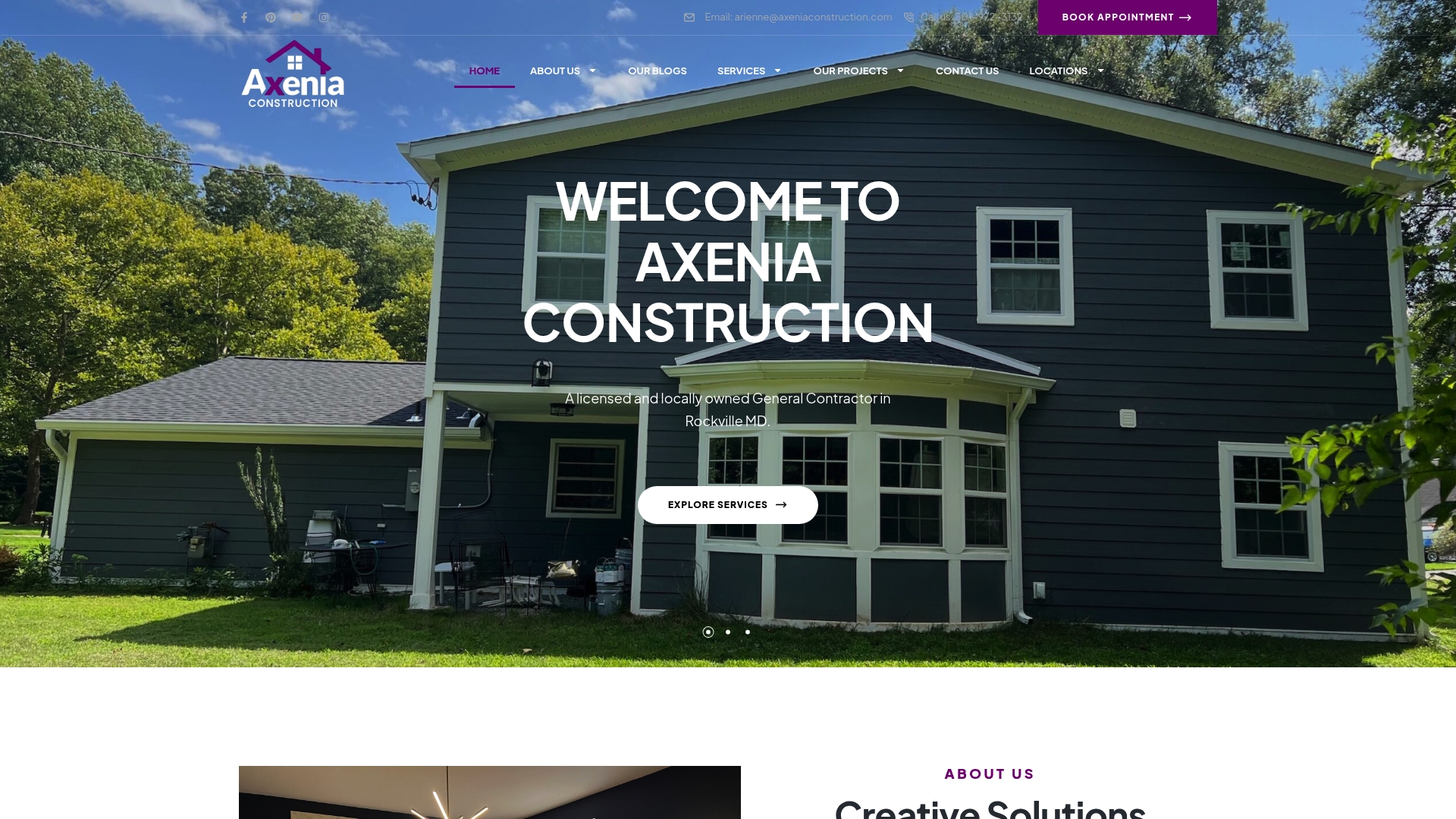
Axeniaconstruction works with commercial real estate investors and business owners across Maryland and the Washington DC area to structure projects that match their risk tolerance and delivery goals. Whether your project calls for a fixed-price agreement, a GMP structure, or a design-build approach, our team brings the experience to manage it from contract through closeout. Explore our commercial construction services or review our full general contracting capabilities to see how we can support your next project.
FAQ
What is a commercial construction contract?
A commercial construction contract is a legally binding agreement between an owner and a contractor that defines the project scope, payment terms, schedule, and risk allocation. It includes drawings, specifications, change orders, and permits as binding attachments.
What are the main types of commercial construction contracts?
The six primary commercial contract types are lump sum, cost-plus, Guaranteed Maximum Price (GMP), time and materials, unit price, and design-build, with Integrated Project Delivery (IPD) used on complex collaborative projects.
When should I use a lump sum contract?
Use a lump sum contract when your project drawings and specifications are complete before bidding. Incomplete scope documents lead contractors to add contingencies, which raises the final price above what a cost-plus structure would cost.
What is a Guaranteed Maximum Price contract?
A GMP contract reimburses actual costs plus a contractor fee up to a defined ceiling price. The contractor absorbs any cost overruns above that ceiling, giving owners budget protection while maintaining full cost transparency.
How does a commercial construction schedule affect the contract?
The commercial construction schedule defines contractual milestones and payment triggers. Referencing both a schedule of works and a CPM project schedule in the contract prevents ambiguity and gives both parties a clear basis for resolving delay disputes.