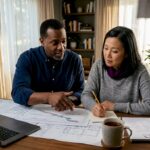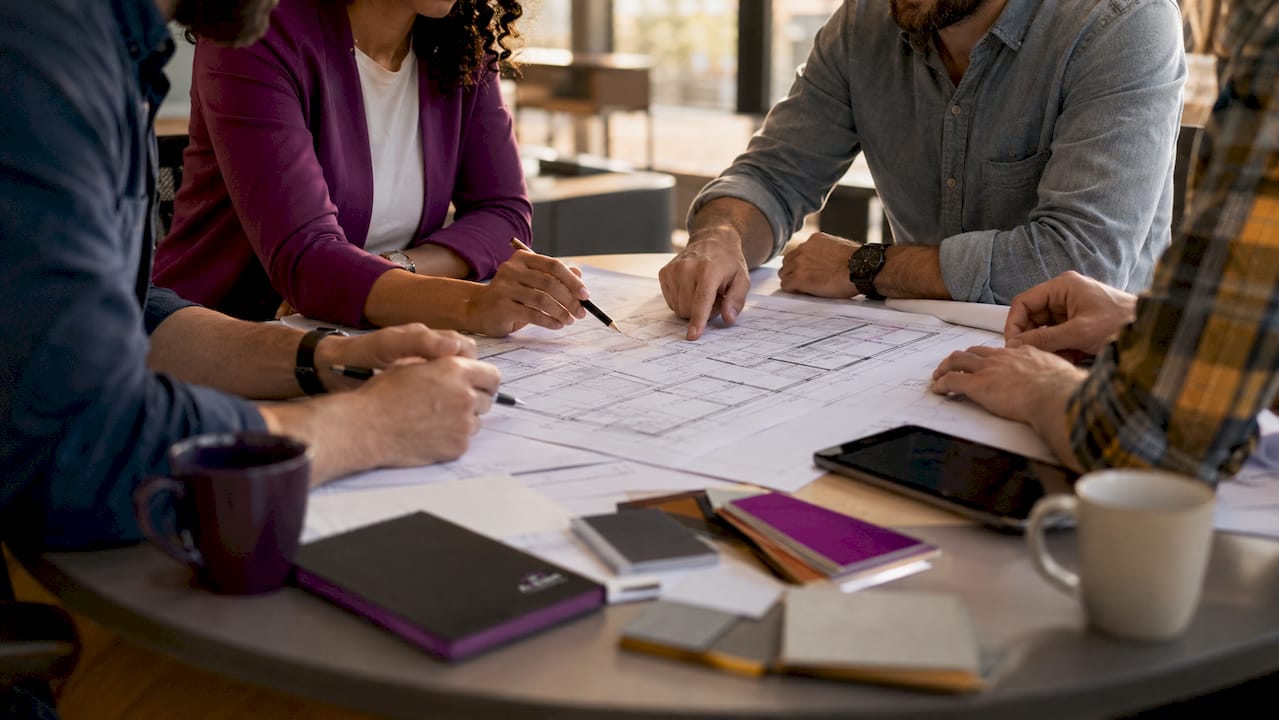
The design-build process is a project delivery method where a single entity handles both design and construction under one contract. That single-point responsibility is what separates it from every other delivery model in commercial and residential construction. The Design-Build Institute of America (DBIA) recognizes it as the fastest-growing delivery method in the industry, and design-build accounts for nearly 50% of all construction spending by 2028. That growth reflects a real shift in how homeowners and commercial developers want their projects managed: fewer handoffs, clearer accountability, and faster results.
What is the design-build process and how does it work?
The design-build method unites architects, engineers, and contractors under one contract with the owner. Instead of hiring a designer separately and then bidding the work to a contractor, you hire one integrated team that manages both. That team is responsible for every decision from the first sketch to the final inspection.
Design-build projects are typically 20–30% faster than traditional methods because design and construction phases overlap. A traditional linear process requires fully completed drawings before bidding even begins. Design-build eliminates that gap by allowing early site work and procurement to start while design details are still being finalized.
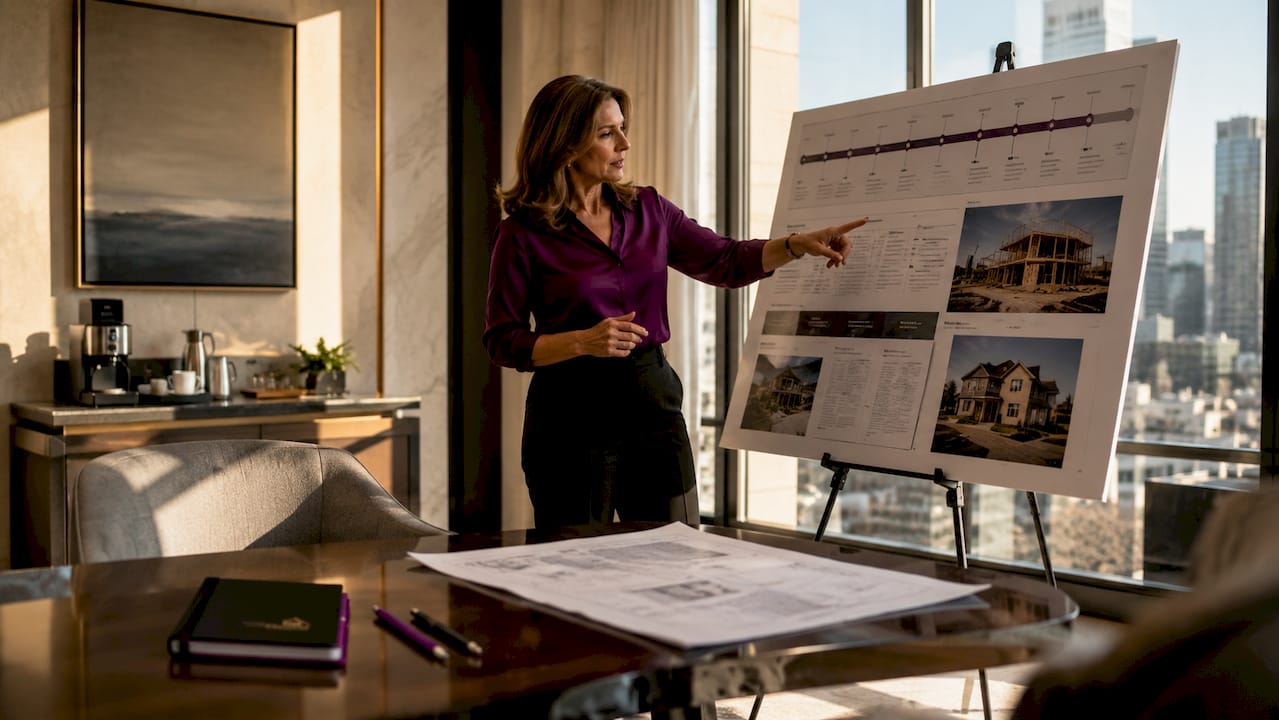
The industry term for this approach is “integrated project delivery,” and design-build is its most widely practiced form. You will hear both terms used interchangeably in commercial construction circles, but design-build specifically refers to the single-contract structure.
What are the main phases of the design-build process?
The design-build method follows five core phases: team selection, project planning and feasibility, design and constructability review, pricing, and construction with closeout. Each phase builds on the last, and several can run in parallel.
1. Team selection
You choose your design-build firm based on qualifications, past work, and cultural fit. This is the most consequential decision you will make. The right team shapes every phase that follows.
2. Project planning and feasibility
The team works with you to define scope, budget, and schedule. Owner involvement is highest here. Critical cost and performance decisions occur before construction begins, which means your input at this stage directly controls project outcomes.
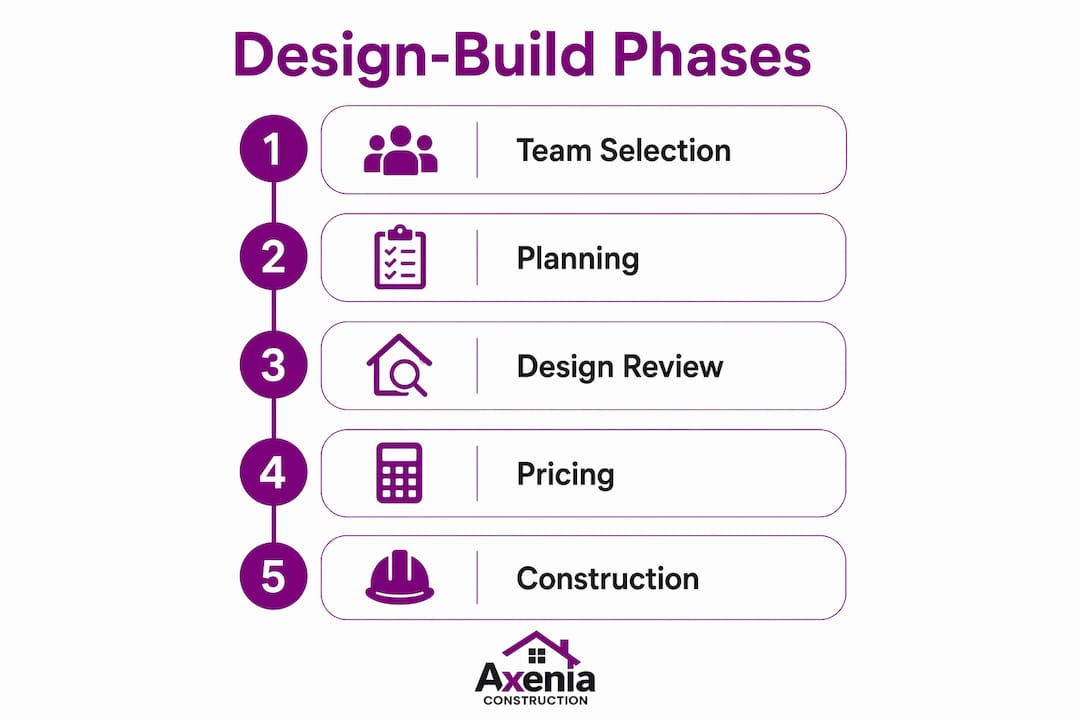
3. Design and constructability review
Architects and engineers develop drawings while the construction team reviews them for buildability and cost in real time. This continuous feedback loop catches expensive problems before they become field issues.
4. Pricing
Most design-build contracts use a Guaranteed Maximum Price (GMP), lump sum, or cost-plus structure. The GMP model is common in commercial work because it caps your financial exposure while allowing some flexibility in scope.
5. Construction and closeout
Phased permitting allows early site mobilization, which reduces overall project duration. The team manages subcontractors, inspections, and punch lists under one roof. Closeout includes commissioning, documentation, and owner training on building systems.
Pro Tip: Ask your design-build team for a phased permitting plan during the planning phase. Approving foundation permits before full construction documents are complete can shave weeks off your schedule.
How does design-build differ from traditional design-bid-build?
The traditional design-bid-build model uses separate contracts for design and construction. You hire an architect, approve drawings, solicit bids from contractors, and then manage both parties through construction. That structure creates natural friction. When problems arise, the designer and contractor often point at each other.
Design-build eliminates that adversarial dynamic by placing both parties under one contract. Problems belong to the integrated team, not to you. That shift in accountability changes how the team behaves on site.
| Factor | Design-build | Traditional design-bid-build |
|---|---|---|
| Contract structure | Single contract with owner | Separate design and construction contracts |
| Schedule | Overlapping phases, faster delivery | Linear phases, longer timeline |
| Risk allocation | Team owns design and construction risk | Owner manages risk between two parties |
| Owner involvement | High in early phases, lower during construction | High throughout all phases |
| Cost certainty | GMP or lump sum available early | Final cost known only after bidding |
| Design oversight | Owner or representative monitors quality | Independent architect advocates for owner |
The most important practical difference is your role. In design-bid-build, you are the referee between two separate parties. In design-build, you define the goals early and then manage one relationship. That shift requires strong upfront engagement but reduces day-to-day friction significantly.
What are the key benefits and challenges of design-build?
Benefits worth knowing
- Faster delivery. Overlapping design and construction phases compress schedules by 20–30% compared to traditional methods. For commercial developers, that means earlier occupancy and faster return on investment.
- Single accountability. One team owns every outcome. Budget overruns, design errors, and schedule delays all land on the same desk. That clarity reduces disputes and simplifies your oversight.
- Integrated cost control. Early collaboration integrates cost, schedule, and buildability from the start, improving predictability. You get real cost feedback during design, not after bids come in.
- Reduced conflict. Design-build fosters collaboration and reduces opposition between design and construction teams, leading to better outcomes on site.
Challenges to plan for
- Loss of independent design oversight. In traditional methods, your architect is your advocate. In design-build, design oversight responsibility shifts to you or your representative. Many owners hire bridging consultants or owner’s representatives to fill that gap.
- Value engineering risks. Design-build teams may propose material or system substitutions to protect their margins. Value engineering changes may sometimes prioritize profit over owner savings, so require clear documentation and lifecycle cost analysis for every substitution.
- Scope definition pressure. Vague scope at the start leads to change orders later. The design-build model rewards owners who invest time upfront in defining exactly what they want.
Pro Tip: Hire an owner’s representative if you are managing a commercial project above $1 million. They review submittals, attend site meetings, and protect your interests without disrupting the design-build team’s workflow.
How can owners work effectively with design-build teams?
Getting the most from the design-build method requires active participation, especially in the first two phases. Passive owners who hand over a budget and disappear tend to get buildings that meet the contract but miss the vision.
Start with a clear program document. List every space, its function, its size, and its technical requirements. For commercial developers, this includes MEP (mechanical, electrical, and plumbing) loads, occupancy classifications, and any tenant-specific needs. The more specific your program, the fewer assumptions your team has to make.
Understand your contract type before you sign. A lump sum contract gives you cost certainty but limits flexibility. A cost-plus contract gives you transparency but exposes you to budget risk. A GMP contract balances both. For complex projects, progressive design-build involves selecting teams on qualifications first, then collaboratively defining scope and budget before locking in price. That model reduces scope creep and aggressive cost cutting on technically demanding work.
A few practices that protect your interests throughout the process:
- Request weekly written updates on budget, schedule, and open design decisions.
- Require a change order log that tracks every scope change and its cost impact.
- Demand lifecycle cost analysis for any value engineering substitution, not just the upfront price difference.
- Establish a clear escalation path for disputes before construction starts.
- Review the contractor’s role and responsibilities in writing so expectations are aligned from day one.
Early continuous collaboration is one of the strongest predictors of successful project delivery in design-build. Owners who engage deeply in planning and stay connected during design consistently report better outcomes than those who disengage after signing the contract.
Key Takeaways
The design-build process delivers faster, more accountable construction by uniting design and construction under one contract, but it requires strong owner engagement in early phases to succeed.
| Point | Details |
|---|---|
| Single contract model | Design and construction are managed by one team, eliminating split accountability. |
| Five core phases | Team selection, planning, design review, pricing, and construction each require owner input. |
| 20–30% faster delivery | Overlapping phases compress schedules compared to traditional linear methods. |
| Owner oversight is critical | Hire an owner’s representative or bridging consultant to monitor design quality. |
| Progressive design-build reduces risk | Selecting teams on qualifications before locking in price suits complex or technical projects. |
What I’ve learned from watching owners succeed and struggle with design-build
By Arienne
After working on both residential renovations and commercial projects through Axeniaconstruction, I’ve seen a consistent pattern. The owners who get the best results are not the ones with the biggest budgets. They are the ones who show up prepared in the first two phases and stay engaged throughout design.
The biggest misconception I encounter is that design-build means handing everything over and waiting for keys. That is not how it works. The method shifts risk to the team, but it does not remove the owner from the equation. Your decisions in the planning phase set the ceiling for what the project can achieve.
I am also cautious about value engineering conversations that happen without lifecycle cost data. A cheaper HVAC unit or a substitute roofing system might save money on paper today and cost twice as much in maintenance over ten years. Owners should demand transparent value engineering documentation and assess every substitution for long-term impact, not just upfront savings.
The trend toward progressive design-build is one I genuinely support for complex commercial work. Decoupling team selection from final pricing gives owners real leverage. You choose the best team, build trust through early collaboration, and then lock in a price based on a fully developed scope. That sequence produces far better outcomes than selecting on price alone.
My honest advice: treat the planning phase like the most important meeting of the project. Because it is.
— Arienne
Axeniaconstruction’s approach to integrated project delivery
At Axeniaconstruction, we bring design and construction together under one roof for both residential and commercial clients across Maryland, Virginia, and Washington DC. Our team manages every phase from initial planning through final closeout, so you always have one point of contact and one accountable team.
Whether you are a homeowner planning a major renovation or a commercial developer managing a complex build, our design-build services are built around transparency, clear communication, and genuine collaboration. We specialize in projects where integrated delivery makes the biggest difference: technically demanding scopes, tight schedules, and budgets that require real-time cost control. Explore our home renovation services or reach out directly to discuss your project goals with our team.
FAQ
What is the design-build process in simple terms?
The design-build process is a construction delivery method where one team handles both design and construction under a single contract with the owner. It replaces the traditional model of hiring a separate architect and contractor.
How long does a design-build project take?
Design-build projects are typically 20–30% faster than traditional methods because design and construction phases overlap rather than run sequentially. Actual timelines depend on project size, complexity, and permitting requirements.
What is design-build in commercial construction?
In commercial construction, design-build means a single firm manages architectural design, engineering, and construction for an office, retail, or industrial project. It is widely used for technical facilities where integrated MEP coordination is critical.
What is the difference between design-build and design-bid-build?
Design-build uses one contract for both design and construction, while design-bid-build uses separate contracts. Design-build is faster and places more risk on the integrated team; design-bid-build gives owners an independent architect advocate throughout the project.
Do I need an owner’s representative for a design-build project?
For projects above a moderate budget or with complex technical requirements, hiring an owner’s representative is strongly recommended. They monitor design quality and protect your interests without disrupting the design-build team’s workflow.