
Yes, you can usually live in your home during a renovation, as long as three conditions hold: the work stays contained to defined zones, no lead or asbestos gets disturbed without certified handling, and your contractor can isolate and ventilate the work area. Before you commit to staying, ask about containment barriers, lead testing or certification for pre-1978 homes, and a written cleaning verification plan.
TL;DR:
- For homes built before 1978, work disturbing more than 6 square feet of painted interior surface requires a certified renovator and cleaning verification before residents return.
- Require taped plastic barriers, sealed HVAC registers, outdoor exhaust, and HEPA vacuuming; keep ventilation running for at least 72 hours after finishes are applied.
- Arrange temporary housing for extensive demolition, suspected asbestos, unmitigated lead disturbance, or household members with asthma or other respiratory conditions.
- Put the phase schedule, work hours, containment and HVAC protections, cleaning responsibility, change order process, and tenant relocation terms in writing before work begins.
- Batch demolition and tile cutting into consecutive days, and plan to leave for a day or two during floor refinishing or cabinet spraying.
Table of Contents
- Getting ready before the first wall comes down
- What day-to-day disruption actually looks like
- Running a household while the crew is at work
- Dust, air quality, and the lead rules you need to know
- What to put in writing with your contractor or landlord
- Deciding whether to stay or relocate, and budgeting for it
- Axenia Construction’s homeowner checklist and resources
- What we see homeowners get wrong most often
- How we help homeowners renovate without losing their home life
- FAQ
- Sources
Getting ready before the first wall comes down
A little preparation before demolition starts saves you weeks of frustration later. We recommend building a phased, room-by-room plan with projected dates, so you always know which spaces are off-limits and for how long. Mark at least one “no-work” zone, ideally a bedroom or living area far from the dust, where daily life can continue undisturbed.
Pack up valuables and anything sentimental, and photograph your rooms before work begins in case you need documentation later. Put together a “daily essentials” box with chargers, medications, toiletries, and a change of clothes so you are not digging through sealed boxes every morning.
If plumbing or kitchen demolition is on the schedule, set up your temporary kitchen and bathing arrangements beforehand, not the week it happens.
Before signing anything, confirm your contractor’s credentials:
- Lead-safe certification if your home was built before 1978, since the EPA’s RRP rule requires certified firms for work disturbing more than 6 square feet of interior painted surface.
- Proof of general liability insurance and worker’s compensation coverage.
- A written description of containment methods for dust and debris.
- A cleaning verification procedure performed before you reoccupy finished spaces.
Pro Tip: Ask your contractor to walk you through their containment plan room by room before work starts, not after you notice dust in your air vents.
What day-to-day disruption actually looks like
Disruption is not constant. It comes in waves tied to each phase of the project, and knowing the pattern helps you plan around it instead of being surprised by it.
- Demolition brings the loudest noise and heaviest dust, usually over a few concentrated days rather than the whole project.
- Rough-in work (plumbing, electrical, framing) is noisy but often less dusty, though it may cut off water or power for stretches at a time.
- Finish work (painting, flooring, cabinetry) is quieter but introduces odors and off-gassing that linger after the crew leaves for the day.
Access limitations follow the same rhythm. Expect closed doors, designated worker routes through your home, and delivery trucks blocking your driveway during set hours. Negotiate specific “quiet hours” for early mornings or late evenings if you work from home or have young children.
Ask your contractor to batch high-disruption tasks like demolition or tile-cutting into a few consecutive days rather than spreading them across weeks. For jobs like refinishing floors or spraying cabinets, plan to vacate for a day or two. A kitchen remodel commonly runs several weeks from demolition to final inspection, with delays most often tied to material backorders or permitting, not the labor itself.
Running a household while the crew is at work
Daily life does not pause for a renovation, so your temporary setup needs to actually function. A kitchen island or folding table can hold a microwave, toaster oven, and electric kettle, and a cooler or mini-fridge keeps perishables safe from dust. Wipe down surfaces before food prep, since construction dust settles everywhere, including inside cabinets you think are sealed.
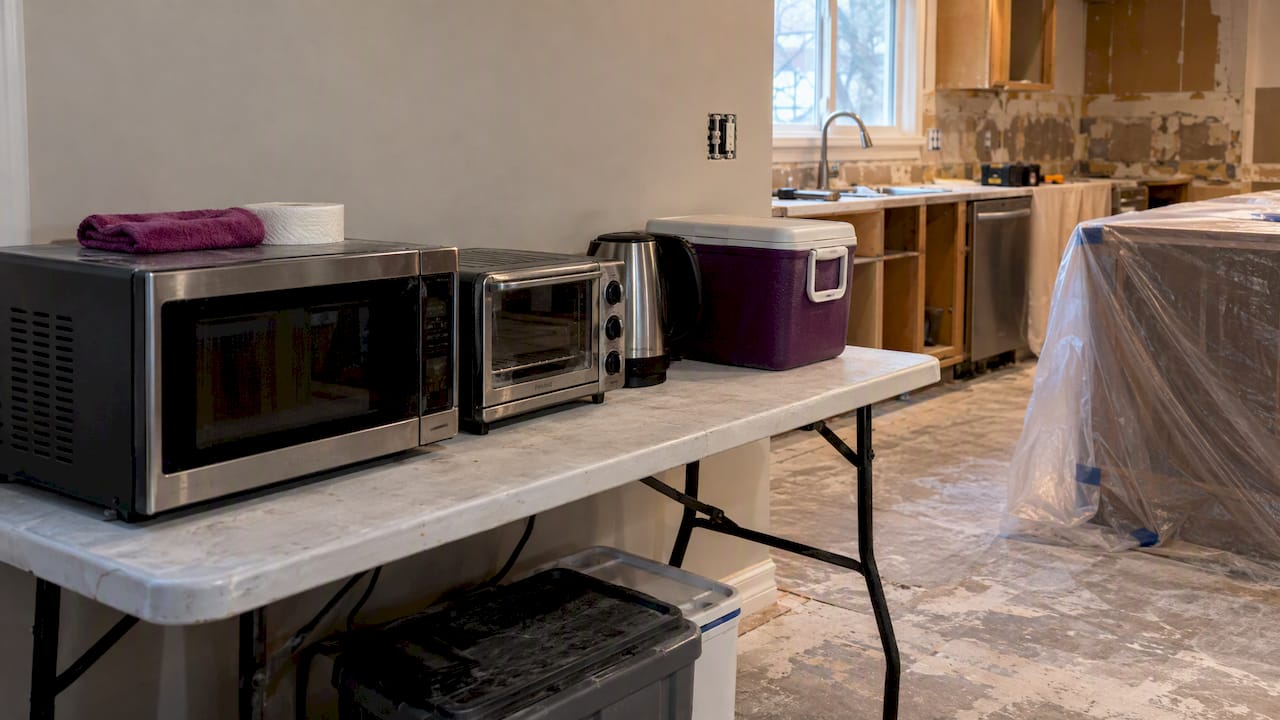
If plumbing is disconnected, a short-term gym membership, a portable camp shower, or a few nights at a nearby extended-stay hotel can cover the gap.
For sleep, choose the room farthest from the work zone and keep a white noise machine or earplugs on hand, especially after heavy sanding days when fine dust can linger in the air overnight.
Other daily essentials to lock down:
- Pets do better in a separate part of the house with food, water, and bedding away from open doors crews use constantly.
- Children should have a clearly marked play zone that never overlaps with tool storage or exposed wiring.
- Seal HVAC registers in the work zone to stop dust from traveling through your ducts into rooms you are still using.
- Choose sealed on-site storage for items you need occasionally, and a short-term storage unit for anything you can live without for a few months.
Pro Tip: Ask your contractor which day debris gets hauled out each week, so your driveway and curb are not permanently blocked.
Dust, air quality, and the lead rules you need to know
Dust control is not just about cleanliness. The EPA recommends taped poly barriers, sealed HVAC registers, exhaust fans venting outdoors, and HEPA vacuuming to keep pollutants from spreading through your living space. NIOSH guidance adds that isolating the work area with negative pressure and increasing housekeeping frequency both reduce occupant exposure during active construction.
Many homes built before 1978 contain some lead-based paint, according to the EPA’s lead renovation rule, which is why any project disturbing old paint on that scale requires a lead-safe certified renovator, containment, and a signed cleaning verification before you move back in.
Insist on these protections if your home qualifies:
- A certified renovator who can produce proof of lead-safe certification and the Renovate Right pamphlet.
- Containment using 6 mil poly sheeting taped over doorways and vents, not loose plastic sheets.
- Continued ventilation for at least 72 hours after finishes are applied, since paints, adhesives, and flooring materials off-gas well past the day of installation.
- A plan for make-up air, so strong exhaust fans do not depressurize your home and backdraft a furnace or water heater.
Relocate temporarily if the project involves large-scale demolition, suspected asbestos, lead disturbance without certified mitigation, or if anyone in your household has asthma or another respiratory condition. A partner resource on asbestos abatement outlines what professional remediation involves when suspect materials turn up mid-project.
What to put in writing with your contractor or landlord
Verbal agreements fall apart under renovation stress, so get the essentials in writing before work begins. A solid contract should spell out the phase schedule, daily working hours, a containment and HVAC protection plan, who performs cleaning verification, and the process for handling change orders.
Tenants should also confirm any relocation terms or temporary housing offers in writing, especially if the renovation displaces you from part of the unit for an extended stretch.
Before signing, ask directly:
- Has the home been tested for lead, and who performs cleaning verification afterward?
- What hygiene practices do workers follow to limit dust tracked through living spaces?
- Where will workers park, and which routes will they use through the house?
- What are the insurance limits if something is damaged?
A contractor who dodges these questions or offers vague answers is a red flag worth taking seriously before you sign anything.
Deciding whether to stay or relocate, and budgeting for it
Think of this as a break-even question. Weigh the cost of staying (lost sleep, reduced work productivity, daily stress) against the cost of relocating (temporary housing, storage, eating out more often). For a kitchen gut renovation, staying often costs more in quality of life than a short-term rental would cost in dollars.
Build these line items into your budget regardless of which you choose:
- Professional cleaning or dust-lead verification after major work phases.
- Portable HEPA air filters for rooms near the work zone.
- A few nights of lodging for the loudest or messiest days.
- A schedule buffer, since material delays are common and rarely the contractor’s fault.
Phased living works well for single-room projects with clear containment. Full relocation tends to be safer and cheaper in the long run for whole-home renovations or anything involving extensive demolition.
Axenia Construction’s homeowner checklist and resources
We built our Home Renovation Project Planning Guide around the same questions occupants ask us most often, condensed into a checklist you can hand directly to any contractor:
- Confirm containment method and HVAC protection before demolition starts.
- Confirm lead testing status and certified renovator credentials for pre-1978 homes.
- Confirm ventilation plan and post-finish off-gassing timeline.
- Confirm who performs cleaning verification and when you can safely reoccupy.
For homeowners who want a managed renovation with these safeguards built in from day one, our home renovation services page outlines how we structure containment, scheduling, and communication for occupied homes.
What we see homeowners get wrong most often
The most common mistake is skipping HVAC protection, which lets dust travel through the whole house instead of staying contained. A close second is underestimating off-gassing after finish work and moving back into a room too soon.
Seal your registers, run your exhaust fans, and set one safe room aside before the first day of work. Those three habits prevent most of the complaints we hear.
— Arienne
How we help homeowners renovate without losing their home life
A managed, safety-first renovation means you get a written containment plan, a certified approach to lead-safe practices, and a project manager who treats your daily routine as part of the job, not an afterthought.

Our design-build approach keeps planning, containment, and scheduling under one roof, so you are not chasing down separate trades for answers. If you would rather avoid heavy demolition altogether for smaller updates, a partner resource on low-dust door replacement shows what a minimal-disruption alternative looks like for targeted projects.
- Request our Home Renovation Project Planning Guide before you finalize any contractor.
- Schedule a consultation with a project manager to review your containment and ventilation plan.
Reach out through our home renovations page to start that conversation.
FAQ
Is it safe to live in a house while renovating?
It can be safe if the contractor uses proper containment, seals HVAC registers, and follows EPA indoor air quality best practices for dust and ventilation. Households with young children, pregnant occupants, or respiratory conditions should weigh temporary relocation during the dustiest phases.
What is the 30 rule of home renovation?
There is no single official budgeting rule recognized by building authorities. Some homeowners use informal rules of thumb, but the safest approach is building your own contingency line items for cleaning, lodging, and schedule buffers, as outlined above.
Can I live in my house while it’s being renovated?
In most cases, yes, provided the work area can be isolated, your home has been tested for lead if built before 1978, and your contractor commits to a cleaning verification process under the EPA’s lead-safe guidelines. Full relocation becomes the safer choice for large-scale demolition or confirmed asbestos.
Is $100,000 enough to renovate a house?
That depends entirely on the scope, your region, and which systems you are touching, since there is no single published figure that applies to every renovation. Get a detailed, written estimate from your contractor that separates labor, materials, and contingency costs before you set a budget expectation.
Sources
- Lead Renovation, Repair and Painting Program | US EPA
- NIOSH: Workplace solutions for building occupant exposures during renovation