Construction cleanup is the professional, phased process of removing all debris, dust, hazardous residues, and surface contamination from a building site at defined intervals during and after construction. It is not a single event. Construction cleanup unfolds as a sequenced series of distinct phases, each tied to specific project milestones, trade activity, and inspection readiness requirements. Getting it right means the difference between a smooth handover and a punch list full of preventable issues.
Here is what the process covers at a high level:
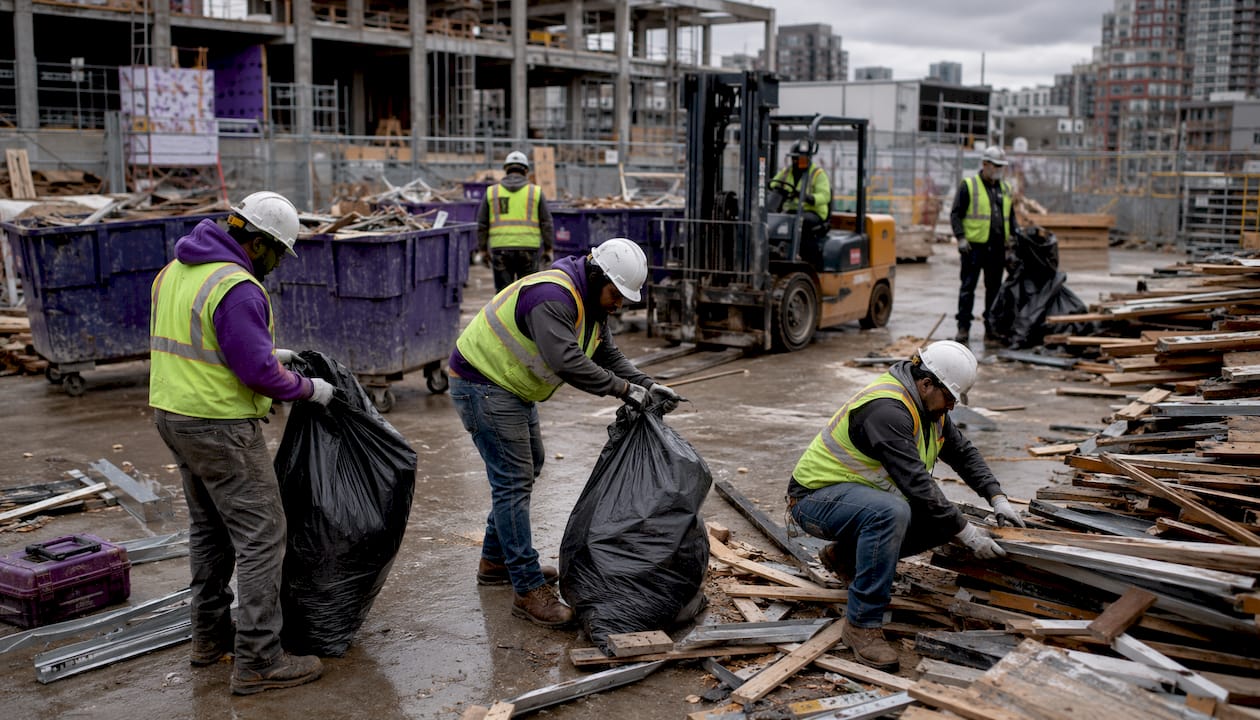
- Debris removal: Hauling away scrap lumber, drywall pieces, packaging, metal offcuts, and bulk waste generated throughout construction
- Dust control: Capturing construction dust using HEPA-filtered vacuums, since fine particulate settles repeatedly and spreads into vents, corners, and surfaces
- Surface cleaning: Removing grout haze, paint overspray, adhesive film, caulk residue, and construction-grade sealants from finished surfaces
- Waste sorting: Separating recyclable, general, and hazardous materials for compliant disposal per EPA and OSHA regulations
- HVAC and vent cleaning: Clearing ductwork and registers before systems are commissioned to prevent dust from circulating through occupied spaces
- Inspection preparation: Delivering a space that meets safety, cleanliness, and functional standards required for certificate of occupancy
- Occupancy readiness: Ensuring floors, fixtures, windows, restrooms, and all high-touch surfaces are move-in ready for tenants or owners
Construction cleanup is categorically different from routine janitorial work. General janitorial crews typically lack the equipment and expertise to address construction-specific contaminants like silica dust, concrete splatter, and adhesive film. Specialized chemicals, HEPA filtration, and a structured sequence are required.
Table of Contents
- What do the phases of construction cleanup actually involve?
- Why scheduling and coordination make or break the cleanup process
- Best practices and common mistakes in construction cleanup
- How professional contractors manage construction cleanup from start to finish
- Key Takeaways
What do the phases of construction cleanup actually involve?
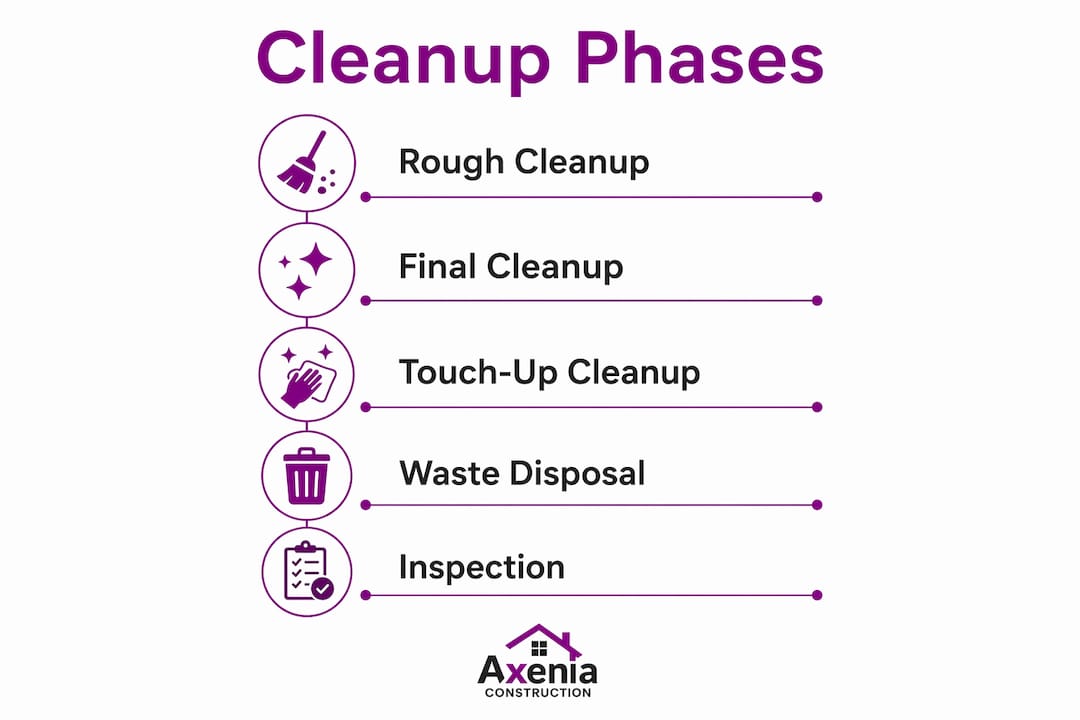
Construction cleanup happens in three recognized phases, each fundamentally different in scope, labor classification, and equipment requirements. Misaligning the cleanup scope with the project phase is a documented source of schedule delays and failed inspections.
Rough cleanup occurs during active construction, typically after framing, MEP rough-ins, and drywall installation, before finish work begins. Its primary function is site safety and workability, not presentation readiness. Treating rough clean as a detailed clean wastes resources and creates rework when trades continue generating debris.
- Remove large debris: scrap lumber, drywall pieces, wire scraps, packaging
- Sweep and vacuum all floors to eliminate trip hazards
- Clear stairwells, corridors, and egress paths
- Stage and label waste streams for haul-out
- Spot-clean spills and adhesive before they cure to finished surfaces
Final cleanup is the comprehensive phase performed after all trades have demobilized. It must achieve a condition suitable for building inspection and owner acceptance. This phase is substantially more labor-intensive and routinely involves specialty equipment including HEPA vacuums, floor scrubbers, and microfiber systems.
- HEPA vacuum all surfaces, including ceiling fixtures, ledges, and cabinet interiors
- Detail clean interior glass, window frames, tracks, and sills
- Scrub and sanitize restrooms, sinks, faucets, and countertops
- Strip, scrub, and finish hard floors per floor type
- Address grout haze on tile using specific chemicals and technique
- Clean and vacuum HVAC vents and registers
Touch-up cleanup is a targeted, limited-scope service performed after final cleanup when punch list work, final fixture installations, or owner walkthroughs reintroduce surface contamination. It is not a full recleaning but a selective remediation of specific surfaces.
| Phase | Timing | Primary goal | Key equipment |
|---|---|---|---|
| Rough cleanup | During active construction, after major trades | Site safety; workable environment for finish crews | Heavy-duty vacuums, wheelbarrows, dumpsters |
| Final cleanup | After all trades demobilize, before inspection | Occupancy readiness; inspection passage | HEPA vacuums, floor scrubbers, microfiber systems |
| Touch-up cleanup | After punch list work, before handover | Spot remediation of post-final contamination | Hand tools, lint-free cloths, polishers |
Why scheduling and coordination make or break the cleanup process
Effective post-construction cleaning is as much about scheduling coordination with the general contractor’s project closeout as it is about cleaning technique. Starting final cleanup before the last trade demobilizes guarantees rework. Cleaning windows before clearing duct debris means cleaning them again.
Poor coordination creates a cascade of problems:
- Premature final cleaning leads to recontamination by ongoing trade activity
- Aggressive cleaning methods applied too early can damage fragile finishes like polished concrete, glass coatings, and painted trim
- Failure to align cleanup phases with the construction schedule results in expensive rework and potential damage to new finishes
- Cleaning before HVAC commissioning without clearing ductwork creates day-one tenant complaints about air quality
The touch-up pass timing is especially critical. Schedule it for the day after the last punch list trade finishes, ideally 24–48 hours before the final inspection or tenant walkthrough. Sending a crew too early means paying for the same work twice.
Pro Tip: Tie cleanup scheduling to project milestones, not calendar dates. When trades run long, a calendar-based cleanup schedule falls apart. Milestone-based scheduling keeps cleanup synchronized with what is actually happening on-site.
Best practices and common mistakes in construction cleanup
The most effective crews follow a top-down cleaning sequence, working from ceiling fixtures down to floors. Construction dust follows gravity. Cleaning floors before dusting overhead surfaces simply resets the job and doubles the labor.
Best practices to follow:
- Always work top to bottom: ceiling fans, door frames, and light fixtures before floors
- Use HEPA-filtered vacuums for fine dust removal; standard shop vacs recirculate fine particulate back into the air
- Apply construction-specific chemicals for grout haze, paint overspray, and adhesive film rather than general-purpose cleaners
- Clean HVAC vents and registers before the system is commissioned
- Detail window tracks and frames, not just the glass; debris in channels releases the first time a window opens
- Wipe inside every cabinet and drawer individually; drywall dust settles in every enclosed space during construction
Common mistakes that create rework:
- Treating construction cleanup like routine janitorial service and deploying general cleaning crews without specialized equipment
- Skipping the rough clean phase and jumping straight to final cleanup, leaving bulk debris that contaminates detailed surfaces
- Completing final cleanup while trades are still active on-site
- Ignoring floor edges and corners where construction debris collects beyond the reach of standard mopping
- Overlooking light fixtures and ceiling areas where dust heats up and creates odor problems after occupancy
Environmental compliance adds another layer. Some demolition waste, including varnish, adhesives, and certain sealants, is hazardous and cannot be disposed of in regular trash containers or down drains. Proper waste sorting and disposal per EPA guidelines protects both the site crew and future occupants. When asbestos or lead-containing materials are present, certified technicians wearing full-face respirators and appropriate PPE must handle removal under strict federal and state regulations.
How professional contractors manage construction cleanup from start to finish
The general contractor is responsible for delivering a clean, move-in-ready space, but most GCs subcontract detailed cleaning to a specialist who phases the work around trade activity, brings the right equipment for construction residue, and documents completion for the closeout package. This coordination is where professional expertise pays off most visibly.
At Axeniaconstruction, we manage cleanup coordination as an integrated part of every project’s closeout, not as an afterthought. Our approach to general contracting means cleanup phases are built into the project schedule from day one, aligned with trade milestones so nothing gets cleaned twice unnecessarily.
Professional contractors bring specific advantages to the cleanup process:
- Coordination of phased cleanup with construction milestones to protect newly installed finishes from premature cleaning damage
- Deployment of appropriate equipment, including HEPA vacuums and floor scrubbers, matched to the specific contaminants present on-site
- Waste handling protocols that comply with EPA and OSHA requirements for hazardous residues
- Punch list coordination so touch-up cleaning follows each correction rather than preceding it
- Documentation of completion, including photos and sign-off, for the closeout package
For residential projects, the stakes are just as high. A home renovation that ends with a thorough, properly sequenced cleanup protects the finishes you invested in and ensures the space is genuinely safe for your family from day one. Drywall dust in HVAC vents, adhesive residue on hardwood floors, and grout haze on new tile are all preventable when cleanup is managed by someone who understands the construction process, not just the cleaning process.
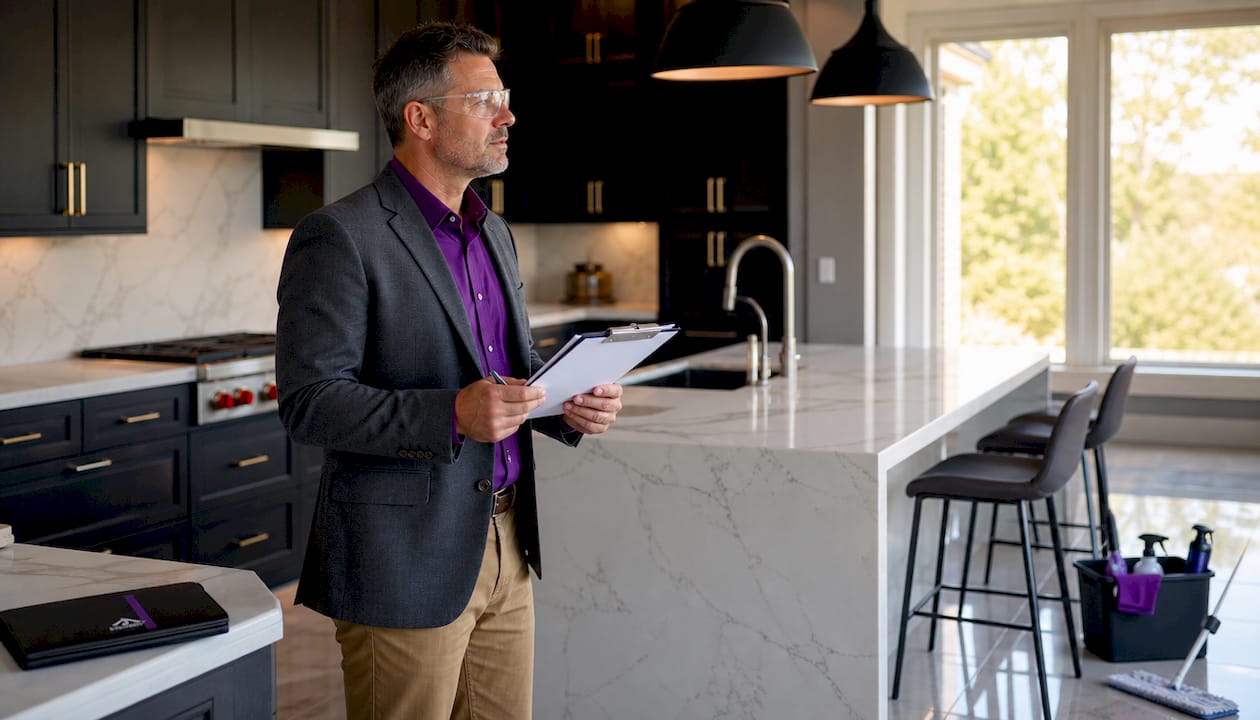
The difference between a contractor who manages cleanup well and one who treats it as an afterthought shows up immediately at the final walkthrough. Clean HVAC registers, spotless window tracks, polished hardware, and dust-free cabinet interiors signal a project delivered with care. That level of detail is what we build toward on every job.
Key Takeaways
Construction cleanup is a phased, sequenced process requiring specialized equipment, milestone-based scheduling, and professional coordination to deliver a safe, inspection-ready space.
| Point | Details |
|---|---|
| Three distinct phases | Rough, final, and touch-up cleanup each serve a different purpose and require different equipment and labor. |
| Scheduling drives quality | Aligning cleanup with trade milestones, not calendar dates, prevents rework and protects new finishes. |
| Top-down sequence is mandatory | Cleaning from ceiling fixtures to floors prevents dust from resettling on already-cleaned surfaces. |
| Specialized equipment required | HEPA vacuums, floor scrubbers, and construction-specific chemicals address contaminants general janitorial crews cannot. |
| Hazardous waste needs compliant disposal | Certain construction residues require EPA and OSHA-compliant handling and cannot go into standard trash containers. |