
Whether your kitchen remodel needs a permit in Maryland comes down to one question: are you changing the structure or systems, or just the surfaces? Swapping in new cabinets and countertops usually needs no permit. Moving a wall, relocating a gas line, or adding electrical circuits almost always does. Before you start, check your county’s ePermits portal and confirm your contractor’s MHIC license status.
TL;DR:
- Cosmetic updates and same location fixture swaps usually need no permit; gas work is rarely exempt, and public water or sewer connections may involve WSSC.
- Projects that relocate plumbing or gas, add circuits, alter walls, or change the footprint need permits; overlapping trades may require a combined application.
- Submit a work scope, scaled drawings for structural changes, contractor registration, and trade details together; incomplete plans and missing details drive resubmission delays.
- Montgomery County’s FY27 alteration filing minimum is $329.59 or 50% of the permit fee, whichever is greater, before trade fees; fees vary by county.
- For many Montgomery County projects, WSSC must approve plumbing and gas rough work before county inspectors approve work behind closed walls or conduct final inspections.
Table of Contents
- Which kitchen projects require permits in Maryland
- Which kitchen updates typically skip the permit process
- How to apply for a kitchen remodel permit in Maryland
- What a kitchen remodel permit costs in Maryland
- Inspection order and how WSSC fits into the timeline
- How licensed contractors keep your permits on track
- What actually slows down a Maryland kitchen permit
- Let us manage your kitchen remodel permits in Maryland
- FAQ
- Sources
Which kitchen projects require permits in Maryland
Maryland counties draw a clear line between cosmetic refreshes and work that touches your home’s structure or systems. Montgomery County’s residential alterations guidance requires permits for reconstruction, structural alterations, and any relocation of plumbing, gas, or electrical systems. That standard holds across most Maryland jurisdictions, even when the specific forms and fees differ.
If your remodel touches any of the following, plan on a permit and likely a plan review:
- Removing or adding a wall, or changing a window or door opening’s size
- Installing or relocating plumbing or gas lines for a new sink, dishwasher, or range
- Adding new electrical circuits, upgrading your panel, or rerouting wiring
- Changing the footprint of your kitchen or extending it into another space
Projects that cross multiple trades often get more complicated rather than less. In Baltimore City, work involving plumbing, mechanical, gas, and electrical systems together typically falls under combined permit categories such as the One and Two Family Combo Permit, which bundles trade reviews instead of requiring separate applications for each. That bundling can simplify your paperwork, but it also means every trade’s documentation has to be ready before the county moves your file forward. A kitchen remodel that adds a gas range, relocates the sink, and upgrades the panel is a combo-permit project in most Maryland jurisdictions, not three small ones.
Which kitchen updates typically skip the permit process
Plenty of kitchen refreshes fall outside permit requirements entirely. Montgomery County’s permits-required reference list spells out the common exemptions homeowners rely on.
- New cabinets, countertops, paint, or flooring, as long as the layout and footprint stay the same
- Like-for-like door replacements that don’t change the opening size
- Swapping a faucet or an electrical receptacle in the same location
The caveat worth remembering: any plumbing work that reaches a public water or sewer connection may still involve Washington Suburban Sanitary Commission (WSSC) rules, and gas line work almost never qualifies as exempt. When you’re not sure which category your project falls into, a quick call to your county’s permitting office or MC311 settles it faster than guessing.
How to apply for a kitchen remodel permit in Maryland
Most Maryland counties now run their permit intake through online portals, and the process follows a similar pattern whether you’re in Montgomery County or Baltimore City.
- Decide who files. Homeowners can apply for some permits themselves, but Maryland Home Improvement Commission (MHIC) guidance makes clear that major structural, electrical, plumbing, or gas work is usually handled by a licensed contractor, both for code compliance and for your own legal protection.
- Gather your documents. Expect to submit a written scope of work, to-scale drawings for any structural change, your contractor’s registration number, and trade-specific details for plumbing, gas, or electrical work.
- Submit through the county portal. Montgomery County DPS and Baltimore City’s ePermits/ePlans system both let you add a licensed contractor to your application and upload required plans directly.
- Track plan review and respond quickly. Most resubmission delays come from incomplete drawings or missing trade details, not from the review itself.
Pro Tip: Upload every trade’s documentation in your first submission, even if one trade’s work starts later. Partial applications are the single biggest cause of review delays we see.
What a kitchen remodel permit costs in Maryland
Permit fees generally combine a flat filing fee with a per-square-foot or project-value rate, plus separate charges for each trade involved.
Montgomery County’s FY27 fee schedule sets the filing fee for residential alterations at the greater of 50% of the permit fee or $329.59, with an alteration and repair rate based on square footage of the impacted area. That means a typical 200-square-foot kitchen renovation involving structural or systems work would carry a base alteration fee in addition to the filing minimum, before electrical or mechanical fees are added.
A few things to budget around:
- Electrical and mechanical permits carry their own minimum fees on top of the building permit
- Plan review and any required resubmissions can add time and sometimes additional review fees
- Fees vary by jurisdiction, so Baltimore City or other Maryland counties will differ from Montgomery County’s figures
Confirm final numbers with your county’s permitting office before you lock in your renovation budget. For comparison, our bathroom remodel cost guide walks through a similar fee structure for another high-permit-traffic trade.
Inspection order and how WSSC fits into the timeline
Permits get you started, but inspections are what actually close out your project. The sequence matters because each stage depends on the one before it.
- Trade rough-ins come first, including plumbing and gas rough-in, which in many Maryland counties requires sign-off from WSSC before anything else proceeds.
- Rough electrical inspection follows once wiring is in place but walls are still open.
- Framing and close-in inspection confirms structural work before insulation and drywall go up.
- Insulation inspection, where applicable, precedes final finishes.
- Final trade inspections and the final building inspection close out the permit.
WSSC’s role is not optional where it applies: county inspectors in many Montgomery County projects will not perform close-in or final inspections without an approved WSSC sign-off first. Failed inspections usually trace back to incomplete rough-in work or mismatched drawings, both of which are easier to avoid with coordinated scheduling from the start.
How licensed contractors keep your permits on track
Working with a contractor who is already registered in a county’s ePermits system tends to move your application faster, since the registration and licensing steps are already on file. We coordinate every submittal, schedule each trade inspection in the right order, and keep you updated while your permit moves through review, so you’re never guessing where your project stands. Before any inspection, we walk the site to confirm it’s ready, which cuts down on the re-inspection delays that catch a lot of homeowners off guard.
What actually slows down a Maryland kitchen permit
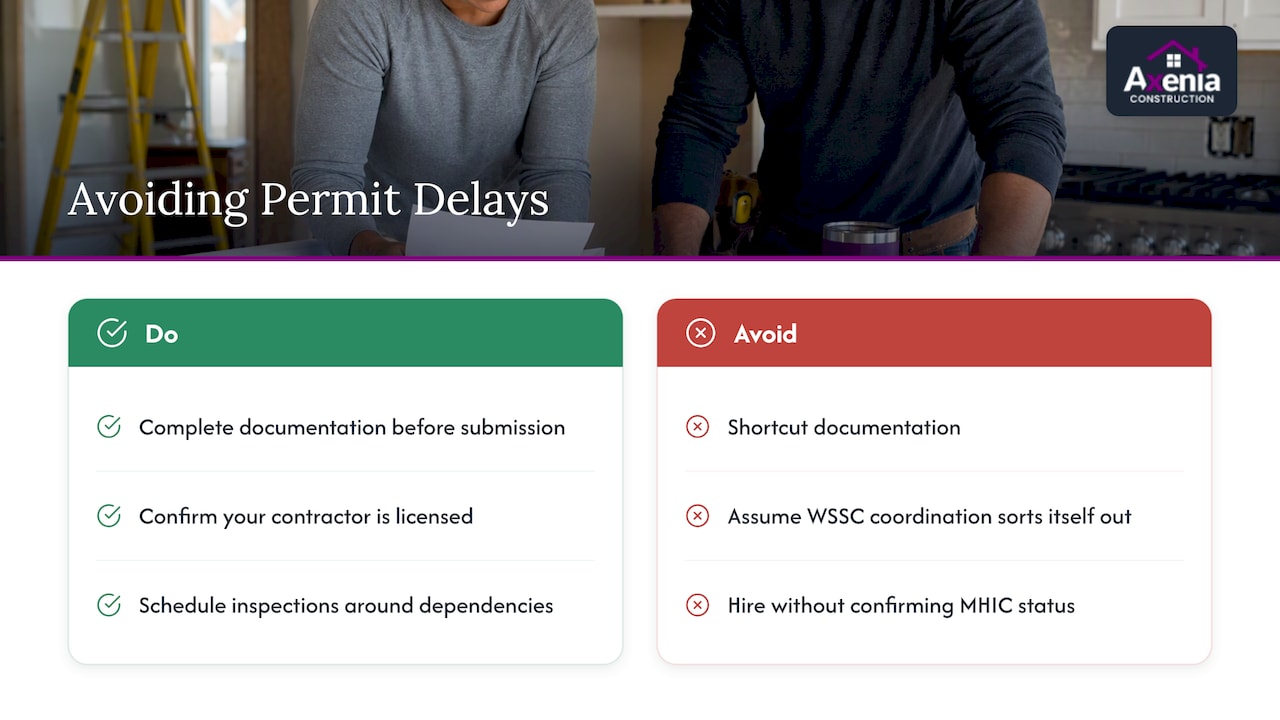
The conventional advice tells homeowners to “just get a permit” as if every project follows the same path. In practice, the projects that stall are the ones where someone tried to shortcut documentation, assumed WSSC coordination would sort itself out, or hired a contractor without confirming MHIC status first. None of those mistakes are really about the permit itself. They’re about underestimating how many moving pieces a combo permit touches once plumbing, gas, and electrical overlap in one kitchen.
If you take one thing from this: sequence your paperwork the way inspections will actually happen, not the way your renovation feels like it should happen. A gorgeous layout means nothing if your WSSC rough-in sign-off is missing when the county inspector shows up. Get your documentation complete before submission, confirm your contractor is licensed, and build your inspection schedule around dependencies rather than convenience. That single habit prevents more delays than any fee schedule or checklist ever will.
— Arienne
Let us manage your kitchen remodel permits in Maryland
As a general contractor, we handle permit filings, plan submissions, and inspection scheduling so you’re not deciphering county portals on your own.

- We register every project correctly in county ePermits systems before work begins
- We coordinate WSSC, electrical, and building inspections in the sequence counties require
- We keep you informed through plan review, so there are no surprises mid-project
If you’re planning a kitchen renovation in the area, visit our Kitchen and Bath Remodels page to request a permit-ready estimate and see how we keep your project moving from application to final inspection.
FAQ
Do I need a permit to finish my basement in Maryland?
Finishing a basement in Maryland typically requires a building permit because it involves adding living space, electrical circuits, and often plumbing. Requirements vary by county, so check your local DPS or ePermits portal before starting work, and our basement permit guide covers the sequencing in more detail.
Is $10,000 enough for a kitchen remodel?
A typical budget generally covers cosmetic updates like new cabinet fronts, countertops, or flooring rather than a full remodel involving structural or system changes. Projects that stay cosmetic also tend to avoid permit fees and plan-review costs, which keeps more of that budget toward finishes.
What happens if I add a bathroom without a permit?
Unpermitted plumbing or electrical work can create problems when you sell your home, file an insurance claim, or need code-compliance verification. It can also void protections under the MHIC Guaranty Fund, which only covers work performed by licensed contractors.
How to get a food permit in Maryland?
A food permit for a commercial kitchen or home-based food business goes through your county health department, not the residential building permit process. Residential kitchen remodel permits and commercial food-service approvals are separate processes with different applications and inspections.
Sources
- Residential Alterations Permit Process – Department of Permitting Services – Montgomery County, MD
- Maryland Home Improvement Commission (MHIC) – Guaranty Fund and licensing guidance
- Permit information by category | Baltimore City
Recommended
- $4K–$55K Bathroom Remodel Costs in Maryland, Permits & Ventilation
- Avoid Permit Delays: Maryland Basement Rules for Counties and GCs
- Luxury Kitchen Remodeling in Potomac, Maryland: Modern Design Trends That Increase Home Value – Axenia Construction
- Permit Expediting Maryland: Cut Delays and Get Approved