If your project is major work, such as new construction, demolition, a front or side addition, or a large rear addition, you need Historic Preservation Review Board (HPRB) review. Minor in-kind repairs usually do not. Your next step is to email the Historic Preservation Office (HPO) at historic.preservation@dc.gov. HPO staff review is quick, while major HPRB review typically takes about 30–60 days.
TL;DR:
- HPO staff can approve minor matching repairs; rear additions require Board review above 250 square feet on one level or 500 square feet across multiple levels.
- Major Board review runs 30 to 60 days after filing, and a hearing cannot be scheduled until the citizen review period of 21 days ends.
- Choose concept review for early design guidance or permit review for full plans; HPO invoices within five days, and monthly deadlines fall at 5:00 PM.
- Applications need contextual exterior photos and two drawing sets; permit review requires full plans, while projects above 20,000 square feet need a narrative.
- Incomplete materials or an Advisory Neighborhood Commission request can defer a case, even when it appears on the Board’s monthly notice of pending matters.
Table of Contents
- 1. What types of work trigger HPRB review in DC?
- 2. How do you confirm whether HPO staff can approve your work?
- 3. How do you file an HPRB application?
- 4. What should your application package include?
- 5. How long does it take, and how does community notice affect scheduling?
- 6. What happens at the HPRB meeting?
- 7. What happens after the hearing?
- 8. Why early coordination with a contractor makes review smoother
- 9. Ready to plan your DC historic preservation project with us?
- FAQ
- Sources
1. What types of work trigger HPRB review in DC?
HPRB review is mandatory for major work on historic landmarks or properties in historic districts that falls outside HPO’s delegated authority, according to the Office of Planning. Expect formal review for:
- Demolition of landmarks or contributing buildings
- New buildings
- Front and side additions
- Large rear additions, meaning more than 250 square feet in footprint or 500 square feet on two or more levels
- Roof additions or decks visible from a street
- Front facade changes, such as new dormers, windows or entrances
- New curb cuts and prominent garages
- Solar installations that do not follow the guidelines
Minor repairs and in-kind replacements, where you swap a worn element for a matching one, can usually be approved by HPO staff. A rear addition that feels small on paper can still require review once its footprint or total area across multiple levels is counted.
2. How do you confirm whether HPO staff can approve your work?
Start with HPO. The District’s process allows an informal consultation with a preservation specialist, which can clarify whether work is approved administratively or forwarded to the Board. HPO’s delegated authority covers some minor work, and response times vary by application.
Send a short project description with a few photos and ask two questions: does this fall under delegated authority, and do you need a site visit or more documentation? HPO also advises owners to consult staff first, because delegated approval saves time and expense compared with a full hearing. An early email can spare you an unnecessary filing and its fee.
3. How do you file an HPRB application?
You file one of two types. Concept review gives early design guidance and works best before full drawings exist. Permit review uses full plans and leads toward permit issuance.
- Prepare your photographs and drawings.
- Email them to historic.preservation@dc.gov. If the files are too large, HPO will make alternative arrangements.
- Wait for HPO’s invoice, which arrives within five days.
- Pay the filing fee under the published fee schedule.
- Post the required public notice placards and notify abutting and confronting property owners.
To be considered for a specific monthly meeting, your submission must reach HPO by 5:00 PM on that month’s filing deadline, per the concept review instructions.
HPO issues the filing-fee invoice within five days of your submission, along with placard instructions. Fees vary by project type and square footage, so check the schedule before you budget.
4. What should your application package include?
HPRB submissions need comprehensive exterior photographs and two sets of architectural drawings sufficient to show the proposed exterior design. Build your checklist like this:
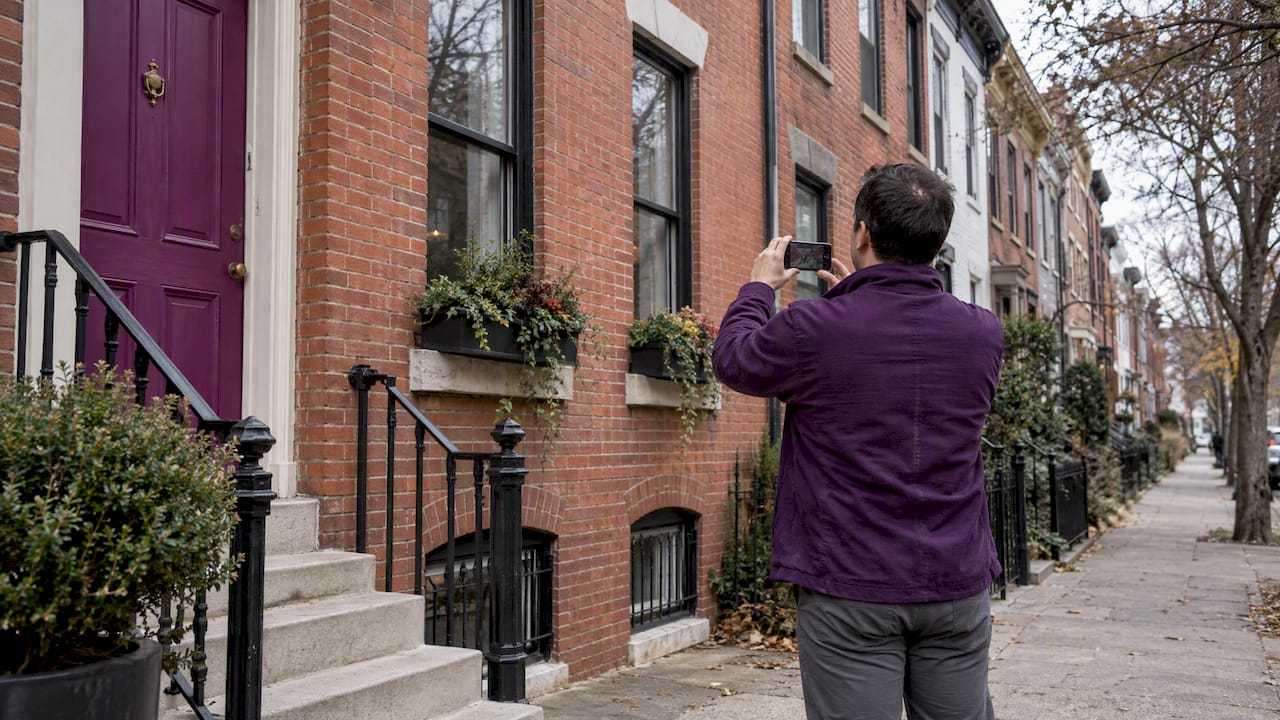
- Exterior photos showing the property beside its neighbors, because Board members judge compatibility from that context
- Drawings sufficient to indicate the proposed exterior design
- Full architectural plans for permit review
- A project narrative for very large projects, since the official application form calls for one above 20,000 square feet
- Presentation materials loaded ahead of time if your hearing runs on WebEx
Caption every photo with a number and a direction, and label each drawing sheet so a reviewer can find it easily. For ideas on organizing a photo record, see this guide to construction photo documentation.
Pro Tip: Keep photo orientation consistent, include clear drawing references, and number each caption so reviewers can cite them easily.
5. How long does it take, and how does community notice affect scheduling?
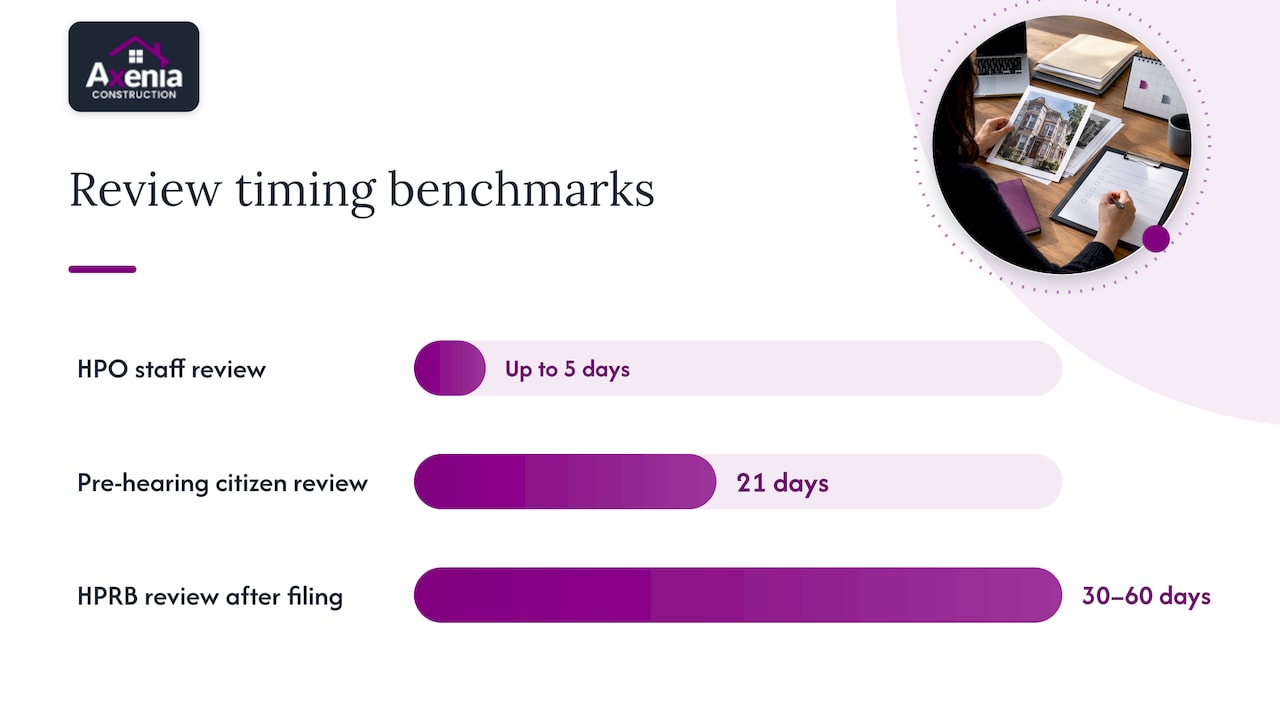
Plan on days for delegated approvals and weeks for the Board. HPO staff review typically takes up to five days, and major HPRB review usually runs 30–60 days after filing.
Community notice shapes the calendar. D.C. law sets a 21-day period for citizen review before a hearing can be scheduled, and affected Advisory Neighborhood Commissions (ANCs) may receive longer notice in practice when they show interest.
Appearing on the Board’s monthly notice of pending matters does not guarantee a hearing that month. Incomplete materials or an ANC request can defer a case, so file complete and early.
6. What happens at the HPRB meeting?
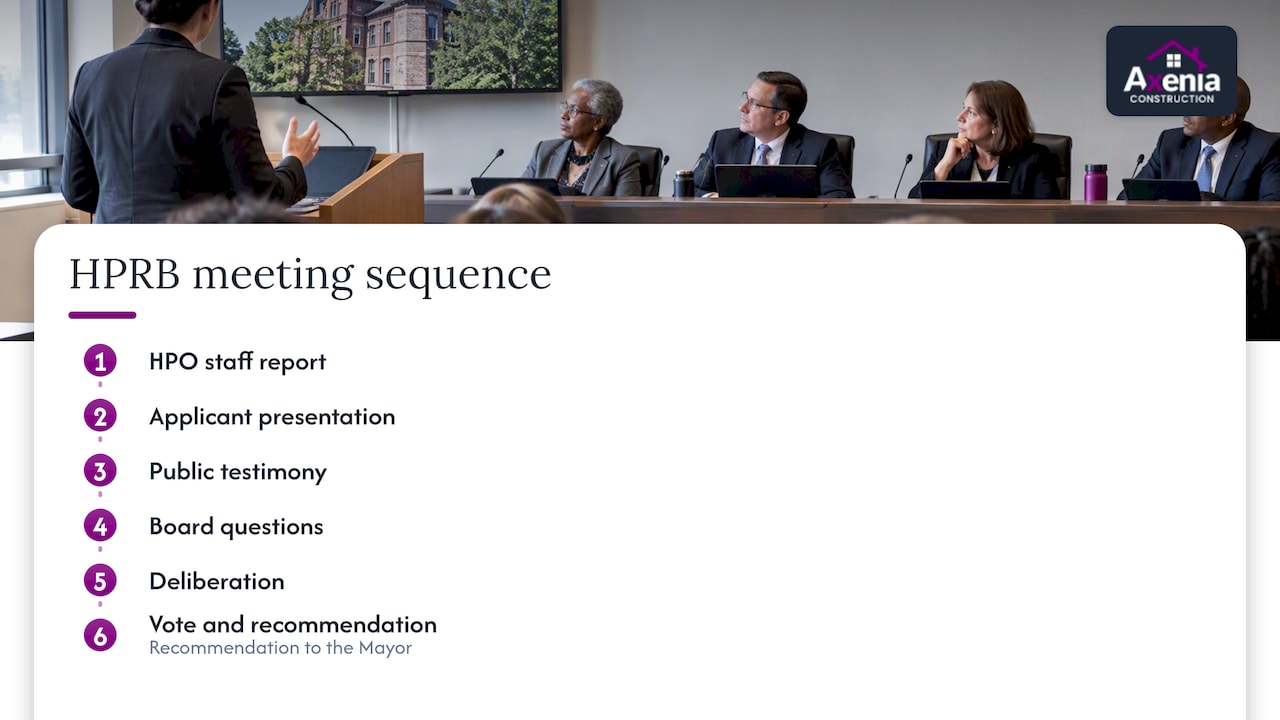
The Board meets in public. A typical case includes an HPO staff report, your presentation, testimony from ANCs, neighbors and others, Board questions, deliberation, and a vote. The Board considers the application and makes a recommendation to the Mayor.
Cases land on one of two tracks. The consent calendar and full agenda are different tracks for Board cases; check the meeting materials to see how a case is scheduled. The agenda is released the Friday before each meeting and posted on the HPO website.
Keep your presentation focused on how the design fits the landmark or district, and consult the relevant agencies about zoning or economic issues.
7. What happens after the hearing?
If the Board supports your project, ask HPO what further review and permit steps are required. The Mayor reviews permit applications affecting historic property and issues permits only if the work is compatible with the character of the district or landmark, unless special merit justifies it.
If the Board recommends denial, check with HPO or the Mayor’s Agent about available next steps. You may also consider revising the design to address the Board’s concerns and resubmitting.
8. Why early coordination with a contractor makes review smoother
Most delays we see start before filing: mismatched drawings, thin context photos, or placards posted late. A contractor who has been through the process coordinates the architect, assembles the photo record, builds permit-ready drawings, posts placards correctly and prepares the packet for a WebEx hearing. Our experience with historic districts, including Alexandria historic district work, has taught us to settle one question first: does HPO’s delegated authority cover this scope? The answer decides whether you file a concept review, a permit review, or nothing at all.
My editorial view is that owners should treat HPO as a free design partner, not a gatekeeper. Call early, bring photos, and shape the application type around what staff tell you.
— Arienne
9. Ready to plan your DC historic preservation project with us?
Axenia Construction is a women-owned general contractor that supports DC owners with preservation-review coordination and construction.
Here is how we support HPRB-affected work:
- Design-build coordination of architects and construction
- General contracting from approved plans through permit issuance
- Home renovations that respect historic requirements
Tell us about your property and we will map the review path with you. Reach out through our services page to get started.
FAQ
Do all work on a DC historic property need HPRB review?
No. HPO staff can approve many projects under delegated authority, including in-kind repairs and minor alterations. HPRB review is generally required for larger projects not delegated to HPO.
Where do I send an HPRB application?
Email it to historic.preservation@dc.gov. If the files are too large for email, HPO will make alternative arrangements, and an invoice with placard instructions follows within five days.
How long does HPRB review take in DC?
Major HPRB review typically takes about 30–60 days after filing, per the District’s review process guide. Deferrals for incomplete materials or ANC requests can extend that.
What if the Board denies my application?
You can request a hearing before the Mayor’s Agent, or revise the design and resubmit. Many applicants revise first, since that is often quicker than an appeal.