
Job Order Contracting (JOC) is a single-award vehicle built for recurring, small-dollar repair and renovation work, priced through a coefficient applied to a unit-price book. An IDIQ (indefinite-delivery/indefinite-quantity) contract is a broader vehicle, single or multiple-award, for projects with variable scope, design requirements, or larger dollar ranges. If you need speed on routine maintenance, lean toward JOC; if your scope is design-driven or uncertain, an IDIQ structured under FAR Subpart 16.5 gives you more room to compete and shape each order.
TL;DR:
- JOC initiation often takes 45–60 days, compared with 90–180 days for traditionally designed projects, when routine work can use standard priced items.
- A JOC coefficient applies across the contract term, so confirm the governing unit price book edition and negotiate the multiplier before award.
- Choose an IDIQ when scope needs architectural or engineering design, varies by order, or benefits from multiple awardees competing under FAR 16.505.
- For multiple award IDIQ orders, document fair opportunity and any written exception; keep each order’s work statement, selection record, and spending file current.
- The contracting officer alone can approve scope or price changes; the COR monitors technical performance, and each order requires its own payroll and performance records.
Table of Contents
- JOC and IDIQ side by side: scope, award structure, and pricing
- How pricing and evaluation actually work under each vehicle
- When should you choose JOC over an IDIQ?
- What are the FAR ordering and competition rules you need to satisfy?
- Who handles compliance once orders are awarded?
- Practitioner checklist: what we look for before bidding JOC or IDIQ work
- Balancing speed, competition, and oversight in practice
- How we support government and commercial clients through JOC and IDIQ work
- FAQ
- Sources
JOC and IDIQ side by side: scope, award structure, and pricing
Both vehicles solve the same problem, how to get work done without running a full solicitation every time, but they solve it differently. JOC works best for facility repair, interior renovations, and site work that repeats across a portfolio of buildings. IDIQ contracts flex wider: they cover everything from simple supply orders to complex, design-intensive construction, which is why GAO found agencies rely on them so heavily to meet varied mission needs.
- Award structure: JOC is almost always single-award per facility or region; IDIQ can be single-award or multiple-award, with FAR 16.505 favoring multiple awards where practical.
- Pricing model: JOC uses a unit-price book, commonly RSMeans, multiplied by a negotiated coefficient; IDIQ pricing is set either at contract award or negotiated order by order.
- Procurement speed: JOC initiation often runs about 45 to 60 days, versus 90 to 180 days for a traditionally designed project.
- Typical dollar range: JOC orders tend to stay smaller and repetitive; IDIQ orders can range from modest task orders to contracts capped at a stated maximum value.
If your requirement looks like a punch list, JOC usually wins. If it looks like a capital project with design unknowns, an IDIQ gives you the latitude to scope it properly.
How pricing and evaluation actually work under each vehicle
JOC pricing starts with a published unit-price book, typically RSMeans, that lists pre-priced construction tasks. Contractors bid a coefficient, a multiplier applied to every line item, and that single number becomes the basis for pricing every job order for the life of the contract. It rewards contractors who can execute efficiently rather than those who pad individual line items.
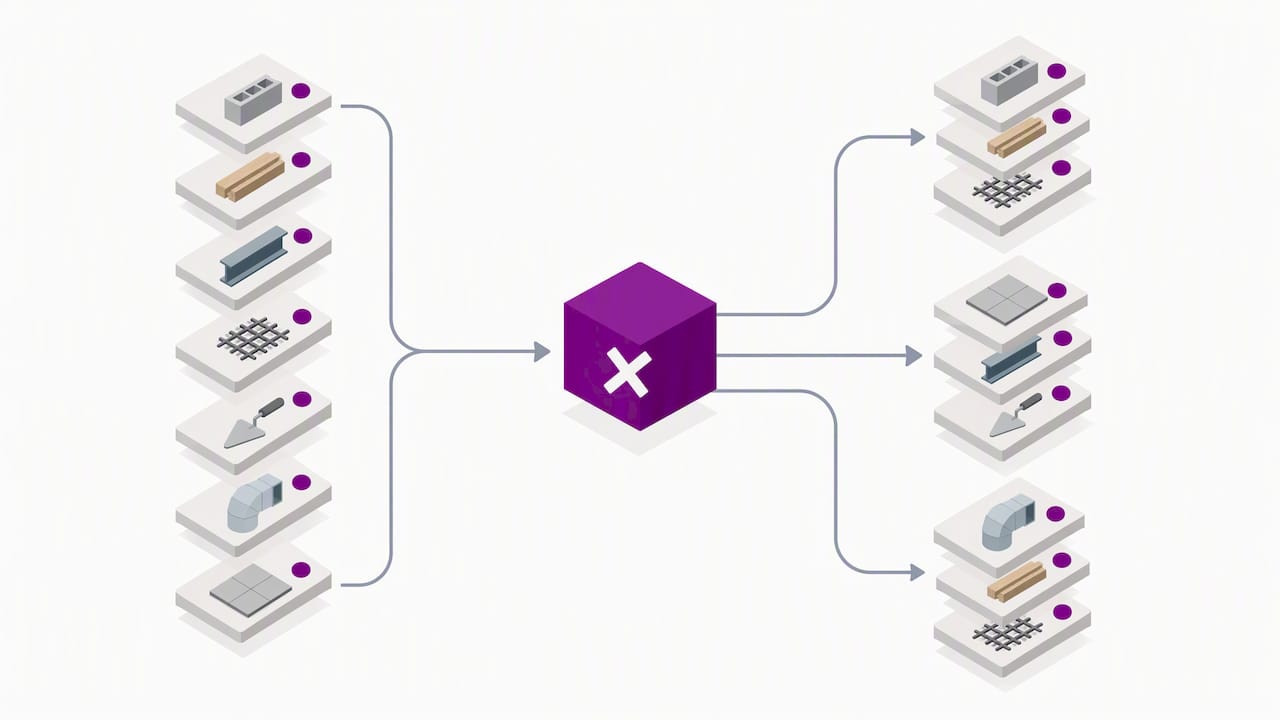
A JOC coefficient negotiated at award effectively locks pricing logic for the contract term, which is why the USACE guidance on JOC stresses getting the coefficient negotiation right up front rather than revisiting it order by order.
IDIQ pricing works differently. You can lock pricing at contract award for catalog-style work, or leave it to be negotiated at the task-order level, which is common when scope varies widely. Evaluation often uses best-value tradeoffs or firm-fixed-price task orders, with government estimates serving as a check against price realism.
- Price realism reviews compare proposed JOC coefficients or IDIQ order prices against independent government estimates.
- JOC relies on one negotiated coefficient; IDIQ may require a fresh pricing conversation on every order.
- Both vehicles depend on a clear statement of work to keep pricing disputes from surfacing later.
When should you choose JOC over an IDIQ?
The decision usually comes down to how predictable and design-light your work is. JOC indicators include repetitive maintenance or repair tasks, small individual dollar values, no formal design phase, and a real need to compress procurement timelines. IDIQ indicators include variable or design-driven scope, larger or more technically complex orders, and a preference for multiple-award competition that opens the field to more contractors over time.
A short checklist helps during acquisition planning:
- Is the work repetitive across multiple sites or buildings?
- Can the scope be described using standard unit-price line items?
- Does the project need architectural or engineering design before construction starts?
- Would your program benefit from competing orders among several awardees?
- How fast do you need the work to start?
Pro Tip: Run your requirement through the checklist before drafting the solicitation. A project that fails even one JOC indicator, like needing design work, usually belongs under an IDIQ instead.
What are the FAR ordering and competition rules you need to satisfy?
FAR Subpart 16.5 governs indefinite-delivery contracts broadly, while FAR 16.505 sets the ordering procedures contracting officers must follow for multiple-award IDIQs, including the fair opportunity requirement and its statutory exceptions. Fair opportunity means every awardee on a multiple-award IDIQ generally gets a chance to compete for each order, unless a documented exception applies.
- Orders must be supported by a clear statement of work and documentation of how the awardee was selected.
- Exceptions to fair opportunity (urgency, sole-source capability, minimum guarantee) require written justification.
- Orders near or above the simplified acquisition threshold typically carry heavier documentation requirements than smaller orders.
- Single-award IDIQs remain common for administrative simplicity even though FAR favors multiple awards, a pattern GAO has flagged in both civilian and defense contracting.
Contracting officers should treat these rules as a checklist item during acquisition planning, not an afterthought once orders start flowing.
Who handles compliance once orders are awarded?
Each task order under JOC or IDIQ functions as its own mini-contract for recordkeeping purposes, with its own order number, payroll documentation, and performance file. That structure matters for audits and for tracking cumulative spending against the contract ceiling.
- The contracting officer (CO) retains authority to modify contract terms, approve exceptions, and make award decisions.
- The contracting officer’s representative (COR) monitors technical performance and flags issues but cannot authorize scope or price changes.
- On-ramping and off-ramping of contractors on multiple-award IDIQs needs the same documentation rigor as the original award, since GAO has noted it can affect competition over the contract’s life.
- Administrative guidance on payroll, recordkeeping, and order tracking is widely available through USACE contractor resources.
Keeping CO and COR roles distinct protects the government’s position if a contractor later disputes scope or payment.
Practitioner checklist: what we look for before bidding JOC or IDIQ work
We built our 7 Point Contract Checklist and Six Step RFI Process around the same discipline that FAR and GAO guidance point to: clear scope, documented pricing logic, and no surprises at closeout. Applied to JOC and IDIQ procurements, that means walking the site before submitting a coefficient, confirming which unit-price book edition governs pricing, and documenting every assumption behind a proposed rate.
- Confirm which RSMeans edition or unit-price book version applies before negotiating a coefficient.
- Request a site visit or scope walk before pricing any order with ambiguous conditions.
- Ask for the government’s independent estimate basis so your pricing conversation starts from shared facts.
Pro Tip: Ask prospective contractors three questions before award: how they handle coefficient disputes mid-contract, how they document field changes on task orders, and who on their team has authority to commit to price on short-notice orders. Subcontractors managing high order volume often rely on bid tracking tools to keep solicitation responses organized across multiple simultaneous task orders.
Balancing speed, competition, and oversight in practice
Speed and documentation pull against each other more often than procurement guides admit. We have found that the fastest JOC orders are the ones where the coefficient and unit-price book were nailed down early, leaving nothing to negotiate when a repair request comes in. That groundwork, done once, pays off on every order after it.
— Arienne
How we support government and commercial clients through JOC and IDIQ work
Public agencies and commercial owners managing JOC or IDIQ work need a contractor who can move fast on small orders without losing the paper trail that audits require. Our government contracting experience, paired with general contracting, design-build, and tenant buildout capabilities, lets us step into task orders of varying scope without starting from zero each time.
- Request a capability statement that maps our services against your JOC or IDIQ requirement.
- Ask for a sample coefficient worksheet to see how we approach unit-price pricing.
- Request references from comparable public-sector or commercial task-order work.
If you are scoping an upcoming requirement, reach out through our government contracting page or explore our general contracting services to see where we fit your acquisition plan.
FAQ
What does IDIQ mean in business?
IDIQ stands for indefinite-delivery/indefinite-quantity, a contract type defined under FAR Subpart 16.5 that lets a buyer order supplies or services as needed, within a minimum and maximum quantity, without negotiating a brand-new contract for every order.
Are construction bids binding?
A construction bid becomes binding once it is accepted and incorporated into a signed contract or task order; before acceptance, most bids can generally be withdrawn depending on the solicitation terms. Procurement rules under FAR require documented acceptance before performance obligations attach.
What is the difference between a contracting officer and a contracting officer representative?
The contracting officer (CO) holds legal authority to award, modify, and terminate a contract, while the contracting officer’s representative (COR) monitors day-to-day technical performance on the government’s behalf. Only the CO can approve scope or price changes.
What are the four types of procurement contracts?
Common federal procurement contract types include fixed-price, cost-reimbursement, time-and-materials, and indefinite-delivery contracts such as IDIQ. Job Order Contracting is generally structured as a specialized form of indefinite-delivery contracting rather than a separate category.
Sources
- FAR Subpart 16.5
- FAR 16.505
- Job Order Contract process expedites project initiation and increases efficiency for FED customers — U.S. Army Corps of Engineers
- Federal Contracts: Agencies Widely Used Indefinite Contracts to Provide Flexibility to Meet Mission Needs | U.S. GAO