
A bathroom renovation scope of work is the detailed written description of every trade task, material, and finish required to complete your remodel. Without it, contractors interpret vague instructions differently, costs spiral, and timelines collapse. The scope covers everything from demolition and plumbing rough-ins to waterproofing, tile, and fixture setting. Think of it as the contract between what you expect and what actually gets built. Getting this document right is the single most effective way to protect your budget and your sanity.
What should be included in a bathroom renovation scope of work?
A complete scope of work lists every trade task and finish item touching the bathroom, including demolition, framing, plumbing, electrical, ventilation, waterproofing, tile, painting, trim, fixture installation, cleanup, and punch list. It also names what is explicitly excluded. That exclusion clause is what prevents a contractor from billing you for work you assumed was already covered.
Here is what a thorough bathroom remodeling checklist covers:
- Demolition and debris removal: Specify which walls, fixtures, flooring, and ceilings come out. Name the disposal method and who pays for the dumpster.
- Framing and structural changes: If you are moving a wall or widening a doorway, call it out with dimensions.
- Plumbing tasks: List every supply line, drain, and fixture connection. Name the toilet, vanity, shower valve, and tub by model number.
- Electrical work: Specify new circuits, GFCI outlet locations, exhaust fan wiring, and lighting fixture placements.
- Waterproofing and ventilation: Define the waterproofing membrane system for the shower and tub surround, and confirm the exhaust fan CFM rating.
- Substrate preparation: Describe backer board type, thickness, and installation method for walls and floors.
- Tile work: List tile size, layout pattern, grout color, and linear footage of trim tile.
- Painting: Name the paint brand, sheen, and number of coats for each surface.
- Trim and fixture installation: Include towel bars, toilet paper holders, mirrors, and shower doors with model numbers.
- Punch list and final cleanup: Define the walkthrough process and who signs off on completion.
Specifying model numbers and finishes in the scope prevents contractors from substituting inferior materials without your knowledge. A scope that says “chrome towel bar” leaves room for a $12 builder-grade bar. A scope that says “Moen Glenshire 24-inch towel bar in chrome, model YB5486CH” leaves no room at all.
Pro Tip: Add a section titled “Work Not Included” to your scope. List items like painting adjacent hallways, replacing the vanity light fixture in the adjacent bedroom, or patching drywall outside the bathroom footprint. This one addition eliminates the most common billing disputes.

How to manage budgeting and risk through your renovation scope
Line-item budgeting is the foundation of cost control on any bathroom renovation plan. Organizing costs by category gives you a clear picture of where money goes and where overruns are most likely to occur.
A practical cost breakdown follows this structure:
- Demolition and disposal: Labor to remove existing finishes, fixtures, and debris.
- Rough trades: Plumbing relocation, new electrical circuits, and HVAC or exhaust fan work.
- Waterproofing and substrate: Membrane systems, backer board, and moisture barriers.
- Tile and flooring: Materials plus installation labor, including setting, grouting, and sealing.
- Fixtures and finishes: Toilet, vanity, faucets, shower valve, tub, mirrors, and accessories.
- Labor and project management: General contractor markup, supervision, and coordination.
- Permits and inspections: Fees paid to the local jurisdiction.
Allowances are a common source of budget confusion. An allowance is a placeholder dollar amount for a material you have not yet selected. If your scope says “$500 tile allowance” and you choose $800 tile, you owe the difference plus any additional labor. Get allowances in writing and ask your contractor how overages are billed.
Material delay and substitution rules belong in every scope. A well-written scope specifies what happens if a fixture is backordered beyond a set number of days and prohibits substitutions without your written approval. This protects your schedule and prevents a contractor from swapping your selected vanity for whatever is available at the supply house.
Change orders require signed written approval documenting the scope change, cost impact, and timeline adjustment before any new work begins. Verbal agreements on job sites are the leading cause of billing disputes. Require a written change order for every deviation, no matter how small.
| Risk | Prevention in Scope |
|---|---|
| Fixture substitution | Name model numbers; prohibit swaps without written approval |
| Allowance overruns | State billing method for overages and credits upfront |
| Scope creep | Include a detailed exclusions clause |
| Material delays | Define response timeline and substitution approval process |
Pro Tip: Ask your contractor to show you the markup percentage applied to allowance overages before you sign. Some contractors apply a 20% markup on top of the material cost difference. Knowing this upfront helps you budget accurately.
What permits and inspections are typically required?
Permits are required when plumbing is relocated, new electrical circuits are installed, or structural changes are made. Cosmetic work that does not disturb existing trade systems may be exempt, but this varies by jurisdiction. In Maryland, Virginia, and Washington DC, even replacing a toilet in a new location triggers a plumbing permit.
Tasks that typically require permits in a bathroom remodel:
- Moving or adding supply lines, drain lines, or vent stacks
- Installing new electrical circuits or adding outlets
- Relocating or adding an exhaust fan on a new circuit
- Any structural wall removal or modification
- Converting a tub to a walk-in shower that changes the drain location
Typical inspection stages follow this sequence:
| Inspection Stage | What Gets Checked |
|---|---|
| Rough plumbing | Supply lines, drain lines, and vent connections before walls close |
| Rough electrical | Wiring, boxes, and GFCI circuit before walls close |
| Waterproofing | Membrane installation before tile goes down |
| Final inspection | Completed fixtures, ventilation, and code compliance |
Permit responsibilities must be explicitly assigned in your scope document. State who pulls the permits, who pays the fees, who schedules each inspection, and who carries the required insurance. Leaving these items undefined creates liability gaps and schedule delays when an inspector shows up and no one has filed the paperwork.
Scheduling inspections at the right time is critical. Passing rough-in and waterproofing inspections before closing walls or setting tile is an interdependent checkpoint. Skipping it means tearing out finished work if the inspector finds a code violation.
How to plan and sequence your bathroom renovation project
Bathroom remodel timelines generally run 4–8 weeks for construction, plus 2–4 weeks of pre-construction for design, material ordering, and permit filing. That pre-construction phase is where most projects fall behind before a single tile is set.
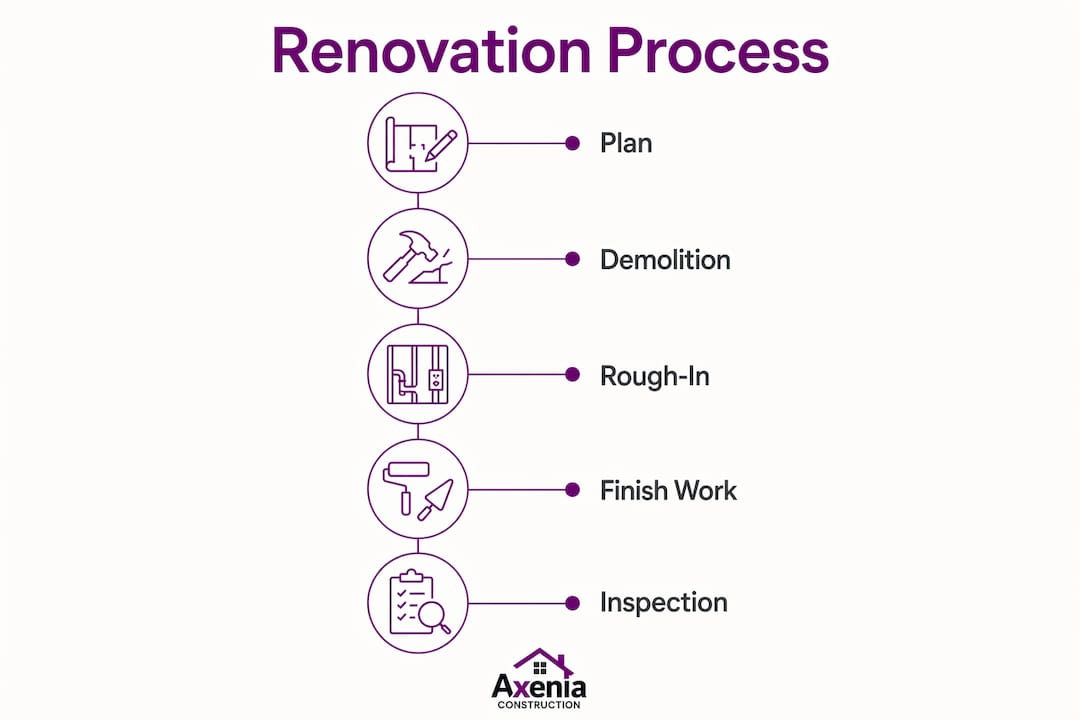
A well-sequenced renovation follows this order:
- Pre-construction: Finalize design, order all materials, pull permits, and confirm trade schedules.
- Demolition: Remove existing finishes, fixtures, and any structural elements. Dispose of debris daily.
- Rough-in work: Complete plumbing relocation, electrical rough-in, and exhaust fan installation. Schedule rough inspections.
- Post-demolition scoping: Inspect plumbing and ventilation conditions after walls open to document hidden defects. Issue change orders with photo evidence before proceeding.
- Waterproofing: Install membrane systems in the shower and wet areas. Schedule waterproofing inspection.
- Substrate and backer board: Install cement board or equivalent on walls and floors.
- Tile installation: Set floor tile, wall tile, and trim. Allow cure time before grouting.
- Painting: Complete wall painting before fixture installation to avoid masking and touch-up work.
- Fixture and trim installation: Set toilet, vanity, faucets, shower valve, mirrors, and accessories.
- Punch list and final walkthrough: Walk the space with your contractor, document any incomplete or deficient items, and confirm final sign-off.
Daily cleanup and site protection belong in the scope. Specify that the contractor covers flooring in adjacent areas, removes debris at the end of each workday, and secures the work zone. These details prevent damage claims and keep your home livable during construction.
Pro Tip: Order all fixtures and tile before demolition starts. A single backordered item can halt a project for weeks. Confirm delivery dates and have materials on-site before your contractor swings the first hammer.
Key Takeaways
A detailed bathroom renovation scope of work is the most effective tool for controlling costs, preventing disputes, and keeping your project on schedule from day one.
| Point | Details |
|---|---|
| Define every task and exclusion | List all trade work and explicitly state what is not included to prevent billing disputes. |
| Specify model numbers and finishes | Name exact products to prevent contractors from substituting inferior materials. |
| Require signed change orders | Document every scope, cost, and timeline change in writing before work begins. |
| Assign permit responsibilities | State who pulls permits, pays fees, and schedules inspections in the scope document. |
| Sequence inspections before closing walls | Pass rough plumbing, electrical, and waterproofing inspections before tile or drywall goes in. |
What I’ve learned from watching scopes succeed and fail
After years of working through residential renovations in the DC, Maryland, and Virginia area, the pattern is clear. Projects that go sideways almost always trace back to a vague scope, not a bad contractor. A contractor who seems trustworthy will still interpret “update the bathroom” in their own favor when the document gives them room to do so.
The most underused section in any renovation work description is the exclusions clause. Homeowners focus on what they want done and forget to write down what they do not want touched. That omission is how a $15,000 bathroom remodel becomes a $22,000 conversation about who authorized the extra work.
I also see homeowners skip the post-demolition scoping step, which is a real mistake. Once walls open, you often find corroded pipes, inadequate venting, or water damage that was invisible before. Documenting those findings with photos and issuing a signed change order before proceeding is the professional standard. It protects both you and your contractor.
My honest advice: treat your scope document the way you treat a legal contract, because it is one. Read every line. Ask what each item means. Push back on vague language. A contractor who resists specificity is telling you something important about how they plan to manage your project.
— Arienne
Axeniaconstruction is ready to manage your bathroom renovation
Planning a bathroom renovation is straightforward when you have the right team handling the details. Axeniaconstruction is a licensed, women-owned general contractor based in Rockville, MD, specializing in residential renovations across the DC, Maryland, and Virginia region. We build detailed scopes, manage permits, coordinate trades, and keep your project on schedule and within budget.

Whether you are planning a full gut renovation or a targeted upgrade, our team brings the same attention to detail and transparent communication to every project. Start with our residential renovation guide to understand the full process, or explore our kitchen and bath remodeling services to see how we approach scope, scheduling, and execution. Contact Axeniaconstruction today for a consultation tailored to your bathroom project.
FAQ
What is a bathroom renovation scope of work?
A bathroom renovation scope of work is a written document that lists every task, trade, material, and finish required to complete a remodel. It also defines what work is excluded to prevent billing disputes.
What trades are typically included in a bathroom scope of work?
A complete scope covers demolition, plumbing, electrical, waterproofing, substrate preparation, tile, painting, and fixture installation. Each trade should be described with enough detail to prevent ambiguous interpretation.
Do I need permits for a bathroom remodel?
Permits are required when plumbing is relocated, new electrical circuits are added, or structural changes are made. Cosmetic updates that do not disturb existing trade systems may be exempt, but requirements vary by jurisdiction.
How long does a bathroom renovation typically take?
Most bathroom remodels take 4–8 weeks for construction, plus 2–4 weeks of pre-construction for design, ordering, and permitting. Material delays and inspection scheduling are the most common causes of timeline extensions.
What should a change order include?
A change order must document the specific scope change, the cost impact, and the revised timeline. Both the homeowner and contractor must sign it before any additional work begins.