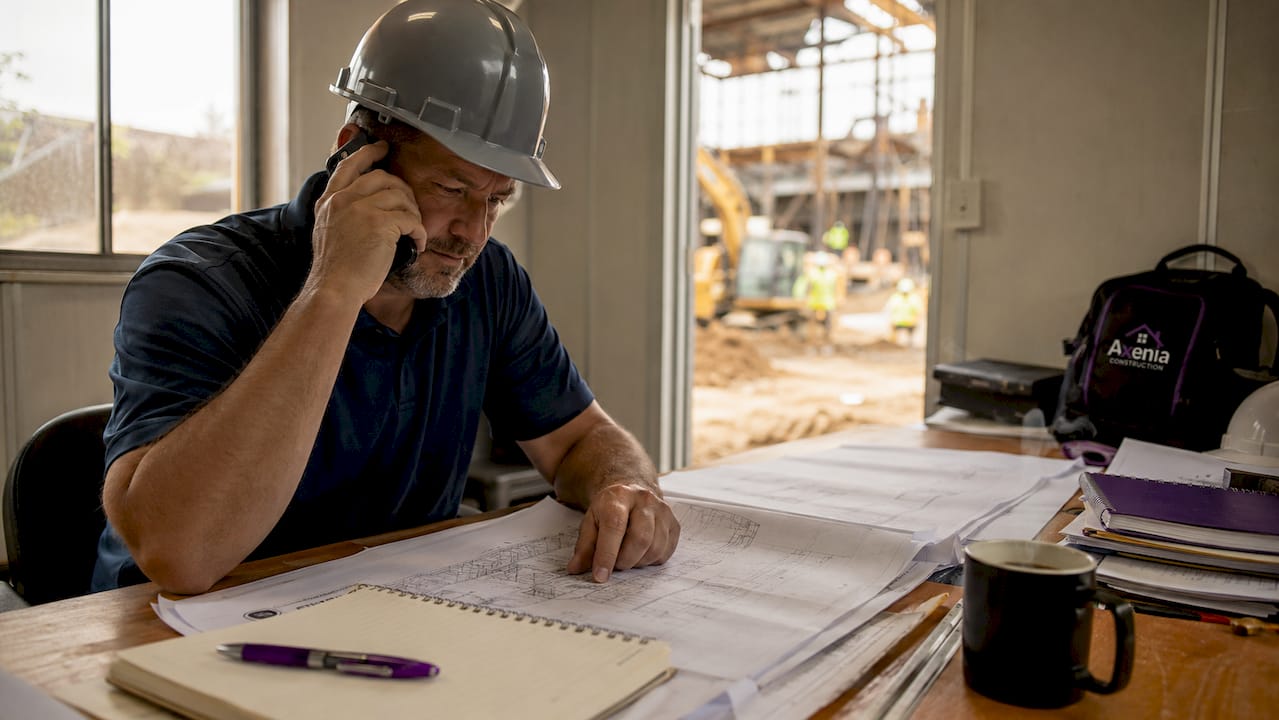
A general contractor is the licensed professional who manages every trade, permit, schedule, and budget on a construction project from the first day of work through final inspection. As the single point of accountability to the property owner, the GC holds the prime contract and assumes full legal and financial responsibility for delivering the project. Whether you are planning a kitchen remodel, a commercial office build-out, or a full ground-up development, understanding this role helps you make smarter decisions, avoid costly mistakes, and choose the right partner for your project.
What is a general contractor and what do they do?
A general contractor, often called a GC, is the primary professional responsible for executing a construction project according to the approved plans, budget, and timeline. The term “prime contractor” is the formal industry designation you will encounter in contracts and legal documents. Both terms describe the same role: the person or company that signs the owner’s contract, hires the trades, and delivers the finished product.
The GC does not typically perform the physical construction work themselves. Instead, they act as the central coordinator who assembles the right team of specialists, sequences their work correctly, and keeps every moving part aligned. Think of the GC as the conductor of an orchestra. Each musician knows their instrument, but without a conductor setting the tempo and cuing each section, the performance falls apart.
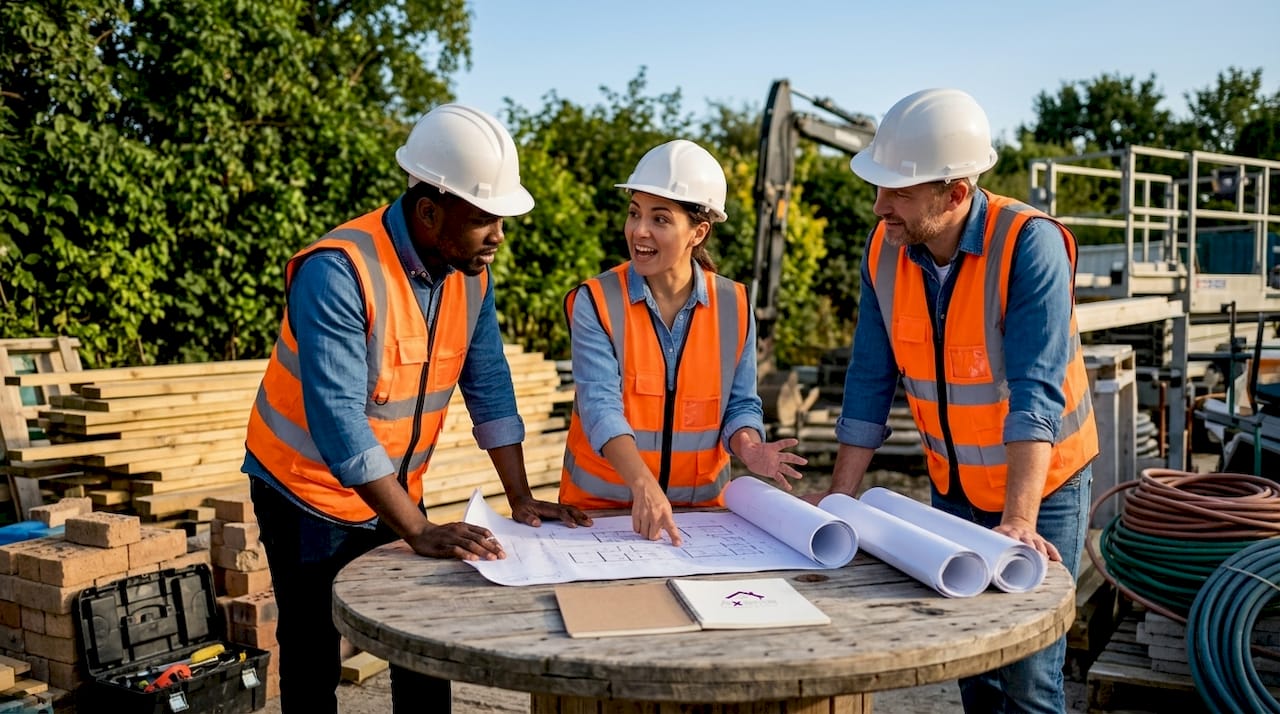
On a typical commercial project, a GC coordinates 15 to 25 specialized subcontractors covering trades like electrical, plumbing, HVAC, framing, masonry, and finish carpentry. That number alone illustrates why a single, accountable manager is not optional. It is the only way a project stays coherent.
What are the key responsibilities of a general contractor?
The role of a general contractor spans six core areas, each of which directly affects whether your project finishes on time and within budget.
- Subcontractor management: The GC solicits bids, selects qualified trades, writes subcontracts, and monitors performance on site every day. A weak subcontractor does not just slow one phase. It creates a chain reaction that delays every trade scheduled after them.
- Permitting and inspections: The GC secures all required permits before work begins and schedules municipal inspections at each required phase. Skipping or delaying a permit is one of the fastest ways to receive a stop-work order that freezes your entire project.
- Schedule management: The GC builds and maintains the master project schedule, sequencing trades so that framing is complete before drywall, rough-in inspections pass before insulation, and so on. A well-managed schedule is the difference between a six-month project and a nine-month one.
- Budget oversight: The GC tracks costs against the approved budget, flags potential overruns early, and manages the change order process when scope adjustments are needed. Transparent financial reporting at this stage protects you from surprise invoices at the end.
- Quality control: The GC enforces adherence to building codes, project specifications, and workmanship standards across every trade. This includes reviewing submittals, inspecting completed work, and rejecting anything that does not meet the standard before it gets covered up.
- Safety compliance: The GC is responsible for maintaining a safe job site under OSHA standards. This means daily safety briefings, proper signage, fall protection, and incident reporting. A site injury does not just harm people. It can halt the project and expose the owner to liability.
Pro Tip: Ask any GC candidate how they handle a subcontractor who falls behind schedule. Their answer tells you more about their management style than any portfolio photo ever will.
How does a general contractor differ from a construction manager?
Many owners confuse the general contractor with a construction manager, and the distinction matters because it changes who carries the financial risk on your project.
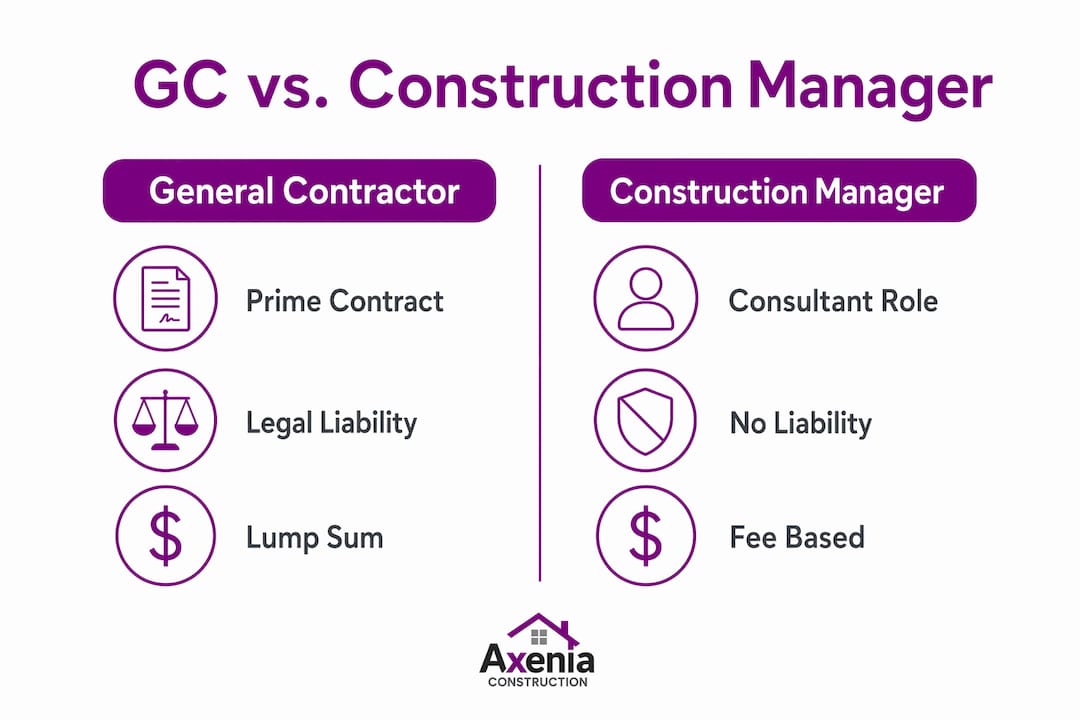
General contractors hold the prime contract and assume direct financial and legal liability for the work. If a subcontractor defaults or a site incident occurs, the GC is responsible. A construction manager, by contrast, typically acts as the owner’s agent. They coordinate and advise, but the owner often holds direct contracts with each trade, meaning the owner absorbs more of the financial exposure.
| Role | Contract holder | Liability | Compensation model |
|---|---|---|---|
| General contractor | Holds prime contract with owner | Full financial and site liability | Lump sum or cost-plus fee |
| Construction manager | Acts as owner’s agent | Limited, advisory role | Fixed management fee |
| Subcontractor | Contracted by GC | Responsible for their trade only | Per-trade contract |
The delivery model also shapes the GC’s role. Under a lump-sum contract, the GC prices the entire project upfront and absorbs cost overruns. Under a cost-plus arrangement, the owner pays actual costs plus a GC fee. Exploring design-build vs. traditional delivery can help you decide which model fits your project’s risk tolerance and timeline.
The practical takeaway: if you want one entity accountable for the outcome, you want a general contractor, not a construction manager.
What should you consider when hiring a general contractor?
Hiring the right GC is the single most consequential decision you make on any construction project. Here is a structured approach that protects you from the most common mistakes.
- Verify the license and insurance. Every GC must hold a valid state contractor’s license and carry general liability insurance plus workers’ compensation. Ask for certificates directly from the insurer, not just a copy from the contractor. An unlicensed or uninsured GC leaves you personally exposed to claims.
- Confirm project-specific experience. Residential and commercial projects differ significantly in regulatory complexity, engineering requirements, and supply chain management. A GC with strong residential experience is not automatically qualified for a commercial tenant improvement. Ask for references from projects that match your scope.
- Review past project portfolios. Look for completed projects similar to yours in size, type, and budget range. Ask to speak with past clients directly. A reputable GC welcomes those conversations.
- Understand the fee structure. GC fees typically range from 10% to 20% of total project value, depending on complexity, delivery model, and location. A fee at the lower end of that range is not automatically a bargain. It may signal that the GC is cutting corners on supervision or overhead.
- Evaluate communication and transparency. Your GC will be your primary contact for months. If they are slow to return calls during the bidding phase, that behavior does not improve once the contract is signed. Prioritize contractors who communicate proactively and explain their process clearly.
- Watch for red flags. Avoid any GC who requests a large upfront payment before work begins, cannot provide verifiable references, or pressures you to sign quickly without time to review the contract.
Pro Tip: Before signing, ask the GC to walk you through their subcontractor vetting process. A GC who cannot name their preferred trades or explain how they qualify them is a GC who is winging it.
For additional guidance on choosing the right contractor for your specific project, Axeniaconstruction has published a practical checklist that covers the full evaluation process.
What does a general contractor do at each project phase?
The GC’s involvement begins well before the first shovel hits the ground and continues until the last document is signed. Each phase carries distinct responsibilities.
Pre-construction
During pre-construction, the GC reviews the architectural drawings for constructability, identifies conflicts between structural, MEP (mechanical, electrical, plumbing), and architectural elements, and develops a detailed cost estimate. Early GC engagement during this phase can save 5% to 10% of total project costs by catching design conflicts before they become expensive change orders in the field. The GC also solicits subcontractor bids, builds the master schedule, and submits permit applications so approvals are in hand before mobilization.
Construction phase
Once work begins, the GC manages daily site operations. This includes holding weekly owner-architect-contractor meetings, tracking schedule progress against milestones, reviewing and approving subcontractor pay applications, and conducting quality inspections at each phase of work. Safety compliance is active and ongoing, not a checklist completed once at the start.
Project closeout
Closeout is where many projects stall, and a skilled GC prevents that. The GC compiles the punch list, assigns each item to the responsible trade, and tracks completion. Retaining a portion of payment until punch list items are resolved is a standard and effective tool for maintaining quality through the final stretch. The GC also coordinates final inspections, obtains the certificate of occupancy, and assembles the warranty and operations manual package for handover to the owner.
| Project phase | GC’s primary focus | Key output |
|---|---|---|
| Pre-construction | Constructability review, budgeting, permitting | Approved permits, finalized budget |
| Construction | Site management, schedule, quality, safety | Completed work per specifications |
| Closeout | Punch list, inspections, documentation | Certificate of occupancy, warranty package |
Key takeaways
A general contractor is the licensed prime contractor who holds full legal and financial accountability for delivering a construction project on time, within budget, and to code.
| Point | Details |
|---|---|
| GC as prime contractor | The GC holds the owner’s contract and assumes all site liability, unlike a construction manager. |
| Subcontractor coordination | Commercial projects require managing 15 to 25 specialized trades simultaneously. |
| Hiring criteria | Verify license, insurance, project-specific experience, and fee structure before signing. |
| Early engagement saves money | GC involvement in pre-construction can reduce total project costs by 5% to 10%. |
| Closeout quality control | Retainage tied to punch list completion is the most reliable tool for a clean project finish. |
What I’ve learned about GCs that most articles won’t tell you
The general contractor’s most undervalued skill is not scheduling or budgeting. It is risk anticipation. The best GCs I have worked alongside spend as much time thinking about what could go wrong as they do executing what is going right. They are active risk managers who sign the prime contract knowing they are absorbing financial and operational liability for every trade on site.
Here is something most owners do not realize until it is too late: the GC’s subcontractor relationships are often more important than their own staff. A GC with deep, long-standing relationships with reliable electricians, plumbers, and HVAC contractors can pull favors, accelerate schedules, and resolve problems quietly. A GC who is constantly working with new or unfamiliar subs is constantly managing unknowns.
I also believe strongly in early GC involvement during design. Most owners treat the GC as someone you hire after the drawings are done. That is backwards. Bringing a GC into the design phase means the drawings get built, not just drawn. Conflicts between structural and MEP systems get resolved on paper, where they cost nothing, instead of in the field, where they cost everything.
Finally, do not underestimate the punch list. Owners often celebrate when the building looks done, but the punch list phase is where quality is actually proven. A GC who manages it with discipline, using retainage as leverage and tracking every item to closure, delivers a finished product you can be proud of. A GC who lets it drag on for months is telling you something about how they managed the rest of the project too.
— Arienne
Ready to work with a trusted general contractor?
At Axeniaconstruction, we bring licensed expertise, transparent communication, and genuine commitment to every project we take on. Whether you are a homeowner planning a renovation or a business owner preparing a commercial build-out, our team manages every phase from permitting through closeout so you never have to wonder what is happening on your project.

Explore our general contracting services to see how we approach residential, commercial, and government projects with the same level of care and accountability. If you are thinking about renovations that add lasting value, our guide to home renovations in 2026 is a strong starting point. We are locally owned, women-led, and built on the belief that great construction starts with a great relationship.
FAQ
What is a general contractor in simple terms?
A general contractor is the licensed professional who manages a construction project from start to finish, coordinating subcontractors, permits, schedules, and budgets on behalf of the property owner.
What is the difference between a general contractor and a subcontractor?
The general contractor holds the prime contract with the owner and manages the entire project, while subcontractors are specialists hired by the GC to perform specific trades such as electrical, plumbing, or HVAC work.
How much does a general contractor charge?
GC fees typically range from 10% to 20% of the total project value, depending on project type, delivery model, and location. Cost-plus and lump-sum contracts each carry different risk and cost implications for the owner.
Do I need a general contractor for a home renovation?
For any renovation involving structural changes, permits, or multiple trades, a licensed general contractor is the most reliable way to protect your investment and meet local building code requirements.
What is a commercial general contractor?
A commercial general contractor specializes in non-residential projects such as office build-outs, retail spaces, and industrial facilities, where regulatory compliance and engineering complexity are significantly greater than in residential construction.