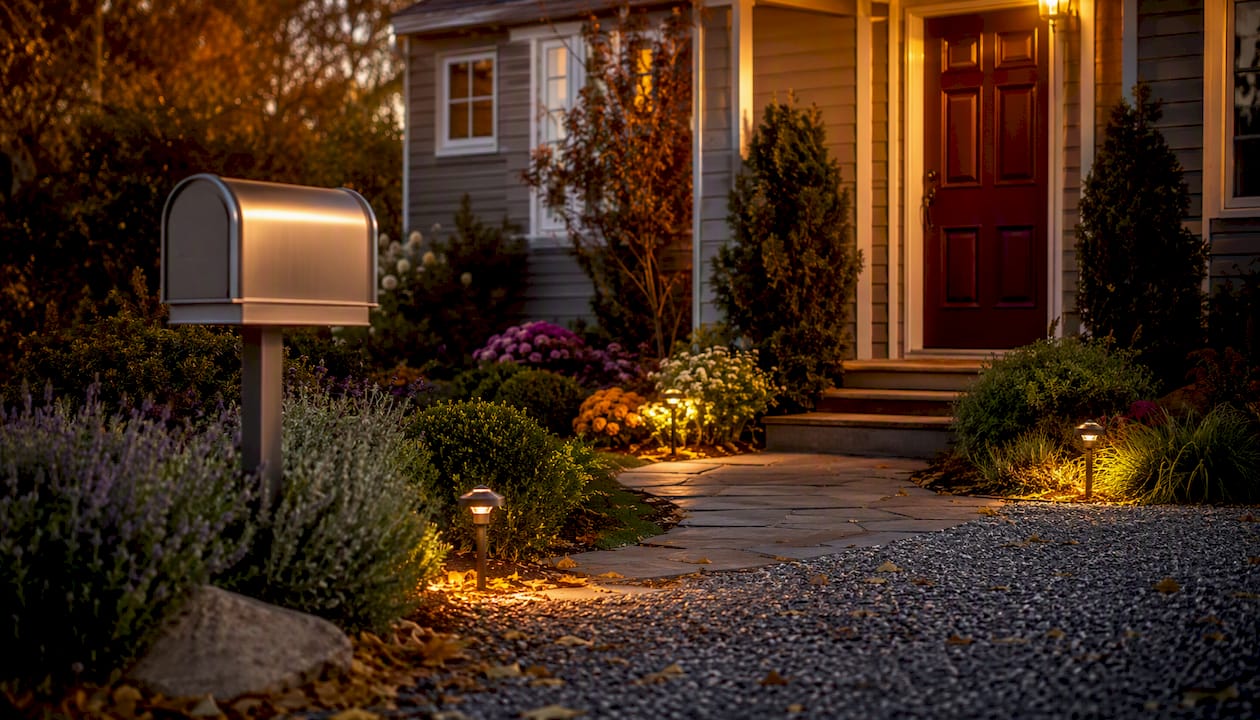
The most effective examples of curb appeal improvements you can start today are also the most affordable: paint the front door a bold, welcoming color, lay a fresh layer of mulch of typical recommended depth in defined beds, replace outdated house numbers, pressure wash the driveway and walkways, add pathway lighting, swap the mailbox, set out seasonal container plants, and trim overgrown shrubs back to clean lines. Those eight changes alone can transform how a home reads from the street, and most cost under $200 combined.
For a quick-scan overview, here is how these improvements break down by effort level:
One-hour jobs: Replace house numbers, swap the doormat, add a potted plant flanking the entry, clean light fixtures.
Weekend DIY: Paint the front door, install solar pathway lights, lay fresh mulch, trim and edge beds, pressure wash surfaces.
Contractor work: Garage door replacement, new entry door installation, porch rebuild, siding repairs, major electrical fixture upgrades.
One of the highest-ROI structural moves is garage door replacement, which industry data consistently ranks among the top exterior projects for resale return. Front door replacement follows closely. Both are worth planning if you are preparing to list.
Table of Contents
- How much should you spend? Curb appeal ideas by budget tier
- Cleaning and repair examples that refresh the exterior fast
- Lighting and hardware swaps that sharpen the facade
- High-ROI structural upgrades worth the investment
- Which curb appeal tasks can you DIY, and when should you hire?
- Axeniaconstruction’s contractor checklist for curb appeal projects
- When is the best time of year for curb appeal improvements?
- Sustainable and environmentally conscious curb appeal options
- Key Takeaways
- The curb appeal advice most homeowners overlook
- Axeniaconstruction handles the projects that go beyond the weekend list
- Useful sources and further reading
How much should you spend? Curb appeal ideas by budget tier
Matching your project list to your budget prevents the most common mistake homeowners make: spending $800 on a single ornamental tree while the gutters are sagging and the driveway is cracked. Here is a practical breakdown of what each spending tier realistically delivers.
| Budget Tier | Example Projects | Expected Visual Return |
|---|---|---|
| Under $100 | New house numbers, fresh doormat, potted annuals, mailbox paint, porch stencil | High — immediate, visible from the street |
| $100–$1,000 | Front door repaint, new light fixtures, window boxes, solar path lights, driveway reseal | High — cohesive refresh across the facade |
| $1,000+ | Garage door replacement, new entry door, porch rebuild, professional landscaping, siding touch-ups | Very high — structural and lasting ROI |
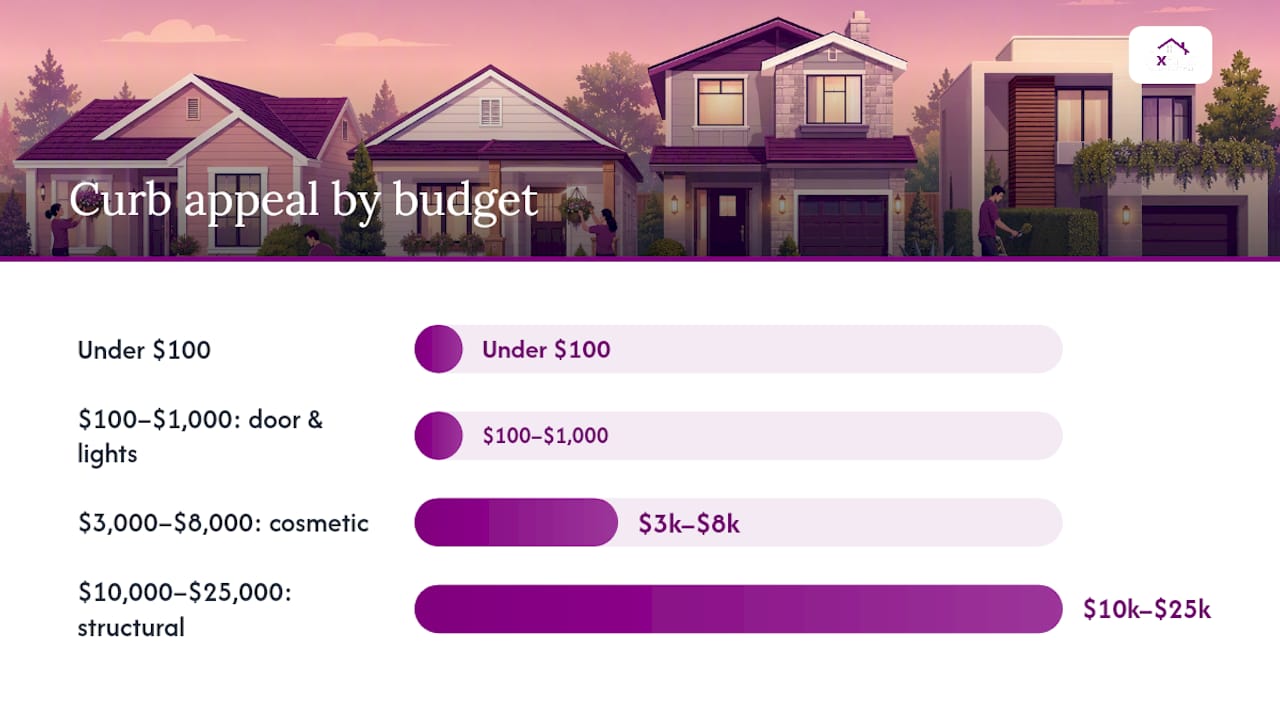
Under $100. BobVila’s curb appeal roundup confirms that house numbers, planters, and porch stencils all deliver major visible impact for minimal spend. A $12 can of spray paint refreshes a mailbox post. A $30 set of brushed-nickel house numbers reads as a full exterior update. HGTV’s list of sub-$100 improvements adds pressure washing rental as a standout: renting a unit for an afternoon typically costs a modest fee and removes years of grime from concrete and siding.
$100–$1,000. This tier is where cohesion pays off most. Repainting the front door ($30–$80 in materials, a few hours of labor) combined with new exterior light fixtures ($80–$200 each) and a set of window boxes ($50–$150 installed) creates a coordinated look that reads as intentional design rather than piecemeal updates. Driveway resealing in this range prevents costly repairs later.
$1,000 and above. Cosmetic refreshes in the $3,000–$8,000 range and targeted structural upgrades in the $10,000–$25,000 range are the two main tiers for larger projects, according to exterior makeover guidance from GenRoom. At this level, permits and contractor coordination become part of the equation.
Pro Tip: Instead of one $600 ornamental purchase, combine a $150 door repaint, $80 new house numbers, $120 in pathway lights, and $200 in fresh mulch and seasonal plants. The total is similar, but the result looks like a professional refresh rather than a single accent.
Cleaning and repair examples that refresh the exterior fast
Pressure washing the driveway, walkways, and siding; cleaning gutters; repairing loose trim; and sealing driveway cracks are the fastest perception-changers available to any homeowner. None require a contractor, and most can be completed in a single weekend.
Buyers use exterior maintenance as a proxy for how well the entire home has been cared for. A cracked walkway or sagging gutter signals deferred maintenance throughout the house, even when the interior is immaculate. Extra Space Storage’s curb appeal guidance reinforces this: functional repairs like gutters and uneven walkways are red flags that must be addressed before any cosmetic staging begins.
Practical maintenance checklist:
- Pressure wash concrete driveway, front walkway, and porch (a few hours; rental fees apply)
- Clean gutters and downspouts; check for sagging or separation from fascia (1–2 hours DIY or hire)
- Inspect and re-caulk gaps around windows, doors, and trim (1–2 hours)
- Repair or replace cracked/lifted walkway sections (DIY patch kits for minor cracks; contractor for heaved slabs)
- Reseal asphalt driveway if surface shows oxidation or hairline cracks (half-day DIY project)
- Touch up peeling paint on trim, shutters, and fascia boards
- Check roof for missing shingles or visible damage from the ground
Seasonal maintenance schedule:
- Spring: Clean gutters after winter debris, pressure wash all hardscapes, inspect caulking and trim paint, plant warm-season annuals.
- Summer: Water plantings, weed and edge beds, touch up any paint that blistered over winter.
- Fall: Clean gutters again after leaf drop, overseed lawn bare spots, add fall container plants, inspect roof before winter.
- Annual deep clean: Full pressure wash of siding, driveway, and walkways; gutter inspection; driveway reseal every 2–3 years.
Call a contractor when you find structural cracks in the foundation, significant roof damage, or gutters that have pulled away from the fascia board, as these indicate issues beyond cosmetic repair.
Lighting and hardware swaps that sharpen the facade
Replace dated porch lights, add pathway or step lights, and swap house numbers and the mailbox for cohesive finishes. These changes cost relatively little but shift the entire visual register of the home’s exterior, especially at dusk and in listing photos.
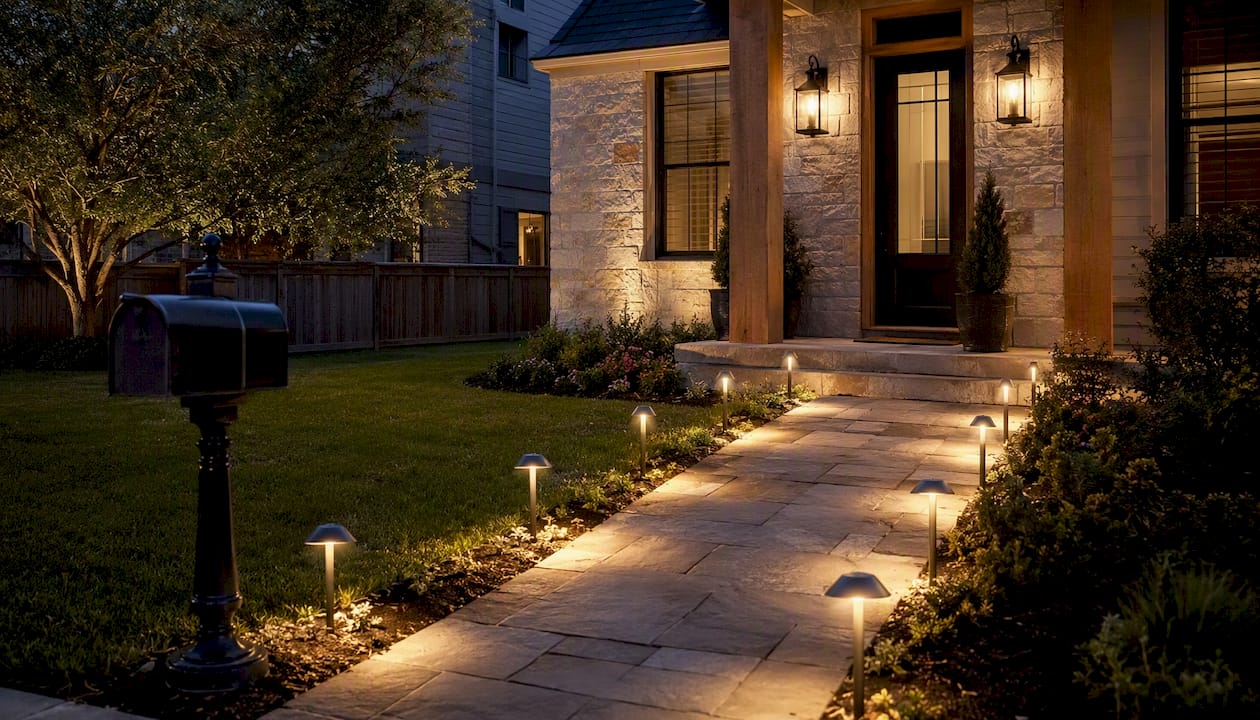
The key principle here is finish consistency. When your porch light is brushed nickel, your door handle is oil-rubbed bronze, and your house numbers are matte black, the facade reads as uncoordinated. Pick one metal finish and carry it across every hardware element: door handle and deadbolt, porch light, house numbers, mailbox post hardware, and any shutter hardware. Redfin’s design guidance specifically calls out cohesive hardware and finishes as a key driver of perceived polish.
Practical hardware and lighting checklist:
- Replace porch light fixture with a style that matches the home’s architecture (lantern for traditional, cylinder or cage for modern/craftsman)
- Install solar-powered pathway lights along the front walk (no electrical work required; sets of 6–10 run $30–$80)
- Add step lights or recessed riser lights if the entry has stairs (low-voltage; DIY-friendly with a transformer kit)
- Swap house numbers for a larger, bolder set in a consistent finish ($20–$60 at most hardware stores)
- Replace or repaint the mailbox; match the post hardware finish to the door hardware
- Update door handle, deadbolt, and kickplate to a single matching finish
For architectural guidance: lantern-style fixtures suit colonial, craftsman, and traditional homes; sleek cylindrical or cage-style fixtures work well on mid-century modern and contemporary facades; carriage-house lights complement farmhouse and cottage styles.
Pro Tip: LED bulbs in warm white (2700K–3000K) make a home look inviting in evening photos and during showings. Avoid cool white (5000K+), which reads as clinical and harsh on a residential facade.
High-ROI structural upgrades worth the investment
Garage door and entry door replacements consistently rank among the highest-ROI exterior projects in industry tracking. The Spruce’s analysis of exterior upgrades places both at the top of the list, with garage door replacement often showing the strongest return of any single exterior project.
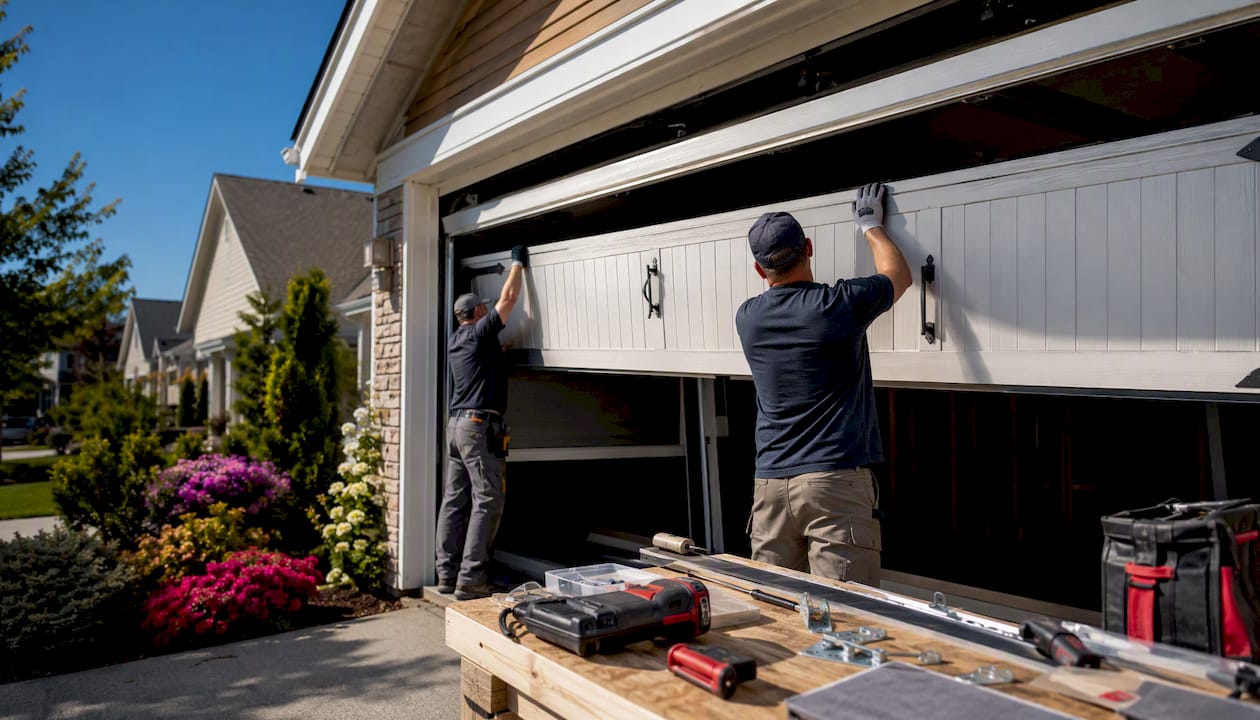
The logic is straightforward: the garage door can occupy 30–40% of a home’s visible facade on a typical suburban property. An outdated or damaged door dominates the first impression. Replacing it with a carriage-style steel or insulated door transforms the entire street view. Front door replacement delivers a similar punch at a lower cost, especially when paired with new hardware and sidelights.
| Project | Typical Low Cost | Typical High Cost | Commonly Reported ROI |
|---|---|---|---|
| Garage door replacement | $1,000 and above | $4,000 | Among the highest tracked |
| Steel entry door replacement | $800 | $3,000–$8,000 | Strong resale return |
| Fiberglass entry door | $1,000 and above | $5,000 | Strong, especially with sidelights |
| Siding replacement (fiber cement) | $8,000 | $10,000–$25,000 | High for buyers valuing low maintenance |
| Porch renovation | $3,000 | $10,000–$25,000 | Moderate to high depending on scope |
Siding replacement is the largest investment in this group, but Ply Gem’s exterior remodeling data shows that buyers consistently value low-maintenance, durable materials like fiber cement and insulated vinyl. A cosmetic paint job on existing siding may suffice if the material is structurally sound; replacement makes sense when siding is warped, rotting, or showing significant moisture damage.
For homeowners focused on renovations that increase property value, structural exterior upgrades are typically the most defensible investments before a sale.
Which curb appeal tasks can you DIY, and when should you hire?
Small cosmetic swaps and light landscaping are typically safe DIY territory. Structural work, electrical upgrades, and anything requiring a permit should be handled by a licensed contractor.
DIY-friendly projects:
- Paint the front door and shutters
- Install solar-powered pathway lights
- Lay mulch and plant containers or small shrubs
- Pressure wash driveways, walkways, and siding
- Replace house numbers, mailbox, and doormat
- Re-caulk around windows and doors
- Reseal an asphalt driveway (with a commercial-grade sealer)
Hire a licensed contractor for:
- Garage door replacement (spring tension systems are dangerous; installation affects structural framing)
- New entry door installation (framing, weatherproofing, and threshold work require precision)
- Siding replacement or major repairs
- Porch rebuild or structural deck work
- Any electrical fixture that requires new wiring or panel work
- Walkway or driveway replacement (not just patching)
- Roof repairs identified during your exterior inspection
Questions to ask any contractor before signing:
- Are you licensed and insured in this state?
- Will this project require a permit, and will you pull it?
- What is the warranty on materials and labor?
- Who will be on-site daily, and how do you handle subcontractors?
Red flags that mean “stop DIY and call a pro”: visible structural cracks in the foundation or porch framing, gutters that have pulled away from the fascia (indicating fascia rot), any electrical work beyond swapping a fixture on an existing circuit, and roof damage beyond a few missing shingles.
Pro Tip: Hiring a licensed contractor for structural work protects your resale value. Unpermitted work can surface during a buyer’s inspection and delay or kill a sale. For residential renovation projects of any meaningful scope, a licensed general contractor is the safest path.
Axeniaconstruction’s contractor checklist for curb appeal projects
The way a professional contractor approaches a curb appeal project differs from how most homeowners plan one. The sequence matters as much as the individual tasks.
Step-by-step contractor assessment process:
- Facade proportion review. Evaluate how the entry, garage, windows, and roofline relate visually. Identify what draws the eye and what detracts.
- Material condition check. Inspect siding, trim, fascia, gutters, driveway, and walkways for structural or moisture issues.
- Safety and drainage first. Confirm grading directs water away from the foundation; check gutter downspout extensions; flag any trip hazards on walkways.
- Materials palette and cohesion. Select a door color, hardware finish, and plant palette that work together before ordering anything.
- Softscape before hardscape. Complete bed prep, grading, and drainage corrections before laying new pavers or installing lighting.
- Final staging. Add containers, seasonal plants, and accessories after structural and landscape work is complete.
Contractor scope template (use this when requesting bids):
- Scope: describe the specific areas (front facade, driveway, entry beds, porch)
- Deliverables: list each task (e.g., “replace garage door,” “install 4 pathway lights,” “rebuild front steps”)
- Timeline: request a start date, milestone schedule, and completion date
- Permit responsibility: confirm who pulls permits and pays associated fees
- Warranty: ask for written warranty on both materials and labor
Before-and-after context: a home with peeling trim, a cracked walkway, and overgrown beds that receives a pressure wash, fresh mulch, trimmed beds, a painted door, and new house numbers typically looks like a different property in listing photos, even without any structural changes. Add a garage door replacement to that package, and the transformation is dramatic. Axeniaconstruction’s curb appeal work in the Washington, DC area follows exactly this sequence: repairs first, cohesive cosmetics second, structural upgrades where the ROI justifies them.
Pro Tip: Always confirm that grading slopes away from the foundation before investing in landscaping. Beds that hold water against the house will cause moisture damage that undoes every cosmetic improvement above them.
When is the best time of year for curb appeal improvements?
Timing affects both the quality of results and the cost of labor. Most exterior projects have an optimal season, and planning around it saves money and prevents rework.
Painting (doors, trim, siding): The ideal window is late spring through early fall, when temperatures stay between 50°F and 85°F and humidity is moderate. Paint applied in cold or damp conditions fails to cure properly and peels within a season. In the Mid-Atlantic, May through September is the reliable window.
Planting: Spring (late March through May) and fall (September through October) are the two best planting seasons across most of the U.S. Fall planting is often underused: soil is still warm, air temperatures are cooler, and new plants establish root systems before winter without the stress of summer heat. Spring planting works well for annuals and warm-season color.
Pressure washing and hardscape repairs: Spring is the natural time, after winter grime and salt residue have accumulated. Fall is a good second pass before listing photos or holiday gatherings.
Structural work (garage doors, siding, porch): Contractors are typically busiest April through September. Scheduling structural projects in late fall or winter often means shorter lead times and sometimes lower labor costs, though weather windows for exterior work narrow.
Driveway resealing: Late spring through early fall, when temperatures are consistently above 50°F and no rain is forecast for 24–48 hours after application.
Sustainable and environmentally conscious curb appeal options
Sustainable exterior upgrades are increasingly practical and often lower-maintenance than conventional alternatives. They also tend to appeal to a growing segment of buyers who factor environmental considerations into purchase decisions.
Native plantings. Replacing high-water-use turf or non-native shrubs with native perennials and grasses reduces irrigation needs significantly. Native plants are adapted to local rainfall patterns, require less fertilizer, and support local pollinators. In the Mid-Atlantic, options like black-eyed Susans, native ornamental grasses, and inkberry holly provide year-round interest with minimal upkeep.
Permeable paving. Replacing solid concrete or asphalt with permeable pavers or gravel allows rainwater to infiltrate rather than run off. This reduces stormwater runoff, prevents walkway erosion, and can qualify for local stormwater credits in some jurisdictions.
LED and solar lighting. Solar pathway lights require no electrical work and consume no grid power. LED porch fixtures use a fraction of the energy of incandescent equivalents and last significantly longer, reducing replacement frequency.
Low-VOC exterior paints. Major paint brands including Benjamin Moore and Sherwin-Williams offer low-VOC exterior lines that off-gas less during application and curing. These are better for air quality around the home and for applicators working in enclosed spaces.
Fiber cement and composite materials. For siding and trim replacement, fiber cement (James Hardie is the most widely specified brand) and composite trim boards resist moisture, insects, and rot without the maintenance demands of wood. Ply Gem’s remodeling data confirms that buyers consistently value low-maintenance, durable exterior materials, making these choices both environmentally sound and commercially smart.
Rain gardens and bioswales. If grading corrections are already on your project list, consider incorporating a simple rain garden at the base of a downspout. A shallow planted depression filled with native moisture-tolerant plants captures runoff and filters it naturally.
Key Takeaways
The highest-impact curb appeal improvements combine low-cost maintenance and landscaping with one or two targeted structural upgrades, producing results that are visible from the street and meaningful at resale.
| Point | Details |
|---|---|
| Start with maintenance | Pressure wash, repair gutters, fix walkways, and seal the driveway before any cosmetic work. |
| Layer landscaping for impact | Use height layering and 2–3 inches of fresh mulch; homes with well-maintained landscaping sell for about 2% more, per Zillow research. |
| Cohesion beats cost | Matching hardware finishes across door, lights, numbers, and mailbox creates more perceived polish than one expensive mismatched feature. |
| Structural upgrades for ROI | Garage door and entry door replacements rank among the highest-ROI exterior projects for resale, per industry tracking. |
| Axeniaconstruction for contractor work | For structural upgrades, siding, porches, and permitted work, Axeniaconstruction handles the full scope as a licensed local general contractor. |
The curb appeal advice most homeowners overlook
Most curb appeal articles tell you to paint the door and add some mulch. That advice is correct, but it misses the deeper principle: the exterior of a home is a system, not a checklist. Every element the eye lands on from the street either reinforces or undermines the overall impression. A freshly painted door on a house with mismatched light fixtures, cracked concrete, and a rusted mailbox still reads as unfinished. The door just highlights the contrast.
What we see consistently in exterior renovation work is that homeowners underestimate the value of cohesion and overestimate the value of any single expensive item. A $4,000 ornamental tree in an otherwise neglected yard does not move the needle the way a $400 coordinated refresh of hardware, lighting, and mulch does. The eye reads the whole picture, not the individual line items.
The other thing worth saying plainly: functional maintenance is not optional staging. Sagging gutters, cracked walkways, and peeling trim are not cosmetic problems. They are signals that tell buyers the home has been neglected, and buyers price that perception into their offers. Fix the functional issues first, every time, before spending a dollar on aesthetics.
Axeniaconstruction handles the projects that go beyond the weekend list

For the curb appeal improvements that require a licensed contractor, Axeniaconstruction brings the full scope under one roof. As a women-owned, locally licensed general contractor based in Rockville, MD, we specialize in residential exterior renovations including garage door replacement, entry door installation, porch and deck construction, siding repairs, and landscaping coordination across the Maryland, Virginia, and Washington, DC area.
The difference between a weekend DIY project and a contractor-managed renovation is not just the labor. It is the permit management, the material sourcing, the sequencing of trades, and the warranty on the finished work. When you are preparing to list or making a long-term investment in your home’s exterior, that process matters.
We offer a free initial consultation to assess your exterior, prioritize the work, and give you a clear scope before any commitment. Whether you are planning a phased refresh or a full exterior renovation, our team can help you get from the project list to the finished result. Request a quote for your home renovation or explore our full range of residential services to see where we can add the most value for your property.
Useful sources and further reading
- 8 Easy Curb Appeal Ideas | Redfin
- Exterior Home Improvements to Help You Sell | Zillow
- The 4 Best Exterior Upgrades for Adding Home Value, According to Home Pros | The Spruce
- 25 Ways to Get Instant Curb Appeal for Less Than $100 — HGTV
- Curb Appeal Updates for Under $100 | BobVila
- Exterior Home Makeover: Complete Guide — GenRoom
- Exterior Home Remodeling Projects That Add Resale Value in 2026 — Ply Gem
- Ways to boost your home’s curb appeal | Extra Space Storage
Recommended
- Curb Appeal Enhancements in Washington, DC: Increase Home Value with Smart Exterior Upgrades – Axenia Construction
- Best Home Renovations to Increase Property Value in 2026 – Axenia Construction
- Top Home Remodeling Tips in Maryland for 2026: Boost Value & Comfort – Axenia Construction
- Renovation Ideas That Increase Home Value Quickly – Axenia Construction