
Residential renovation is the process of restoring, improving, or updating an existing occupied home without significantly altering its fundamental structure or intended use. The industry term is residential renovation, and it sits under the broader umbrella of construction work governed by the International Residential Code (IRC), adopted by 49 states as the baseline regulatory framework. Understanding what separates a renovation from a remodel is not a matter of semantics. It directly determines your permit requirements, project cost, and timeline before a single wall is touched.
Most homeowners use “renovation” and “remodel” interchangeably, but the distinction carries real financial weight. A renovation updates or restores what already exists: new paint, replaced flooring, updated fixtures, or a refreshed kitchen without moving walls. A remodel changes the layout, purpose, or structure of a space, such as converting a garage into a bedroom or relocating a load-bearing wall. Renovations are generally less costly and less permit-intensive than remodels, which means smarter scoping at the start can save you weeks and thousands of dollars.
What is residential renovation and how does it differ from remodeling?
Residential renovation is defined as construction, alteration, repair, or improvement work performed on an existing occupied dwelling that restores or updates spaces without changing their fundamental use or configuration. Remodeling, by contrast, involves altering the structure or layout of a space and typically requires professional help, permits, and inspections at a higher level of complexity. The line between the two is drawn by scope: if you are replacing a vanity, that is a renovation; if you are moving the plumbing to relocate that vanity, you have crossed into remodel territory.
This distinction matters most when you are budgeting and planning. Cosmetic renovations, like repainting walls, installing new hardwood floors, or refacing kitchen cabinets, rarely require permits and can often be completed by skilled DIYers. System upgrades, such as replacing an electrical panel or swapping out HVAC equipment, sit in a middle ground where the work is still classified as renovation but triggers permit requirements under IRC Section R105.1. Knowing which category your project falls into before you hire anyone is the single most effective way to avoid redesigns and inspection delays.

What are the common types of home renovations?
Renovation project types fall into four broad categories, each with different permit implications and cost profiles.
- Cosmetic renovations: Paint, flooring replacement, cabinet refacing, light fixture swaps, and new countertops. These update the appearance of a space without touching its structure or systems. Most cosmetic work does not require a permit, making it the most accessible category for homeowners and investors looking to improve property appeal quickly.
- System replacements: HVAC upgrades, electrical panel replacements, and plumbing fixture changes. These require trade permits in most jurisdictions because they affect life-safety systems. Replacing a water heater, for example, almost always requires a permit and inspection even though the layout of the home does not change.
- Structural repairs: Foundation crack repairs, beam reinforcements, and roof replacements. These protect the integrity of the home and typically require building permits and engineering documentation. Skipping permits on structural work can result in fines or stop-work orders under IRC Section R105.1.
- Interior alterations: Finishing a basement, converting an attic to living space, or adding a bathroom within existing square footage. These projects sit closest to the remodel category and carry the most complex permit requirements.
| Project type | Permit typically required? | Complexity level |
|---|---|---|
| Cosmetic (paint, flooring) | No | Low |
| System replacement (HVAC, electrical) | Yes | Medium |
| Structural repair | Yes | High |
| Interior alteration | Yes | High |
Pro Tip: Before you classify your project, ask one question: does any trade work, meaning plumbing, electrical, or mechanical, need to change? If yes, budget for permits and inspections from day one.
How do permits and regulatory codes affect residential renovations?
The IRC, published by the International Code Council (ICC), establishes the baseline rules that govern residential renovation work across the country. Most states adopt the IRC with local amendments, so the specific requirements in Rockville, MD differ slightly from those in Austin, TX, but the core framework is consistent. Under IRC Section R105.1, a building permit is required before beginning any construction, alteration, or repair work, with only a narrow list of exceptions for minor repairs and maintenance.
One of the most misunderstood rules in residential renovation is the legal nonconformity principle under IRC Section R102.7. This provision allows existing lawful building conditions to remain in place without requiring a full house upgrade when you pull a permit. Only the new or immediately affected work must meet current code standards. This means your 1970s wiring in the untouched rooms does not automatically need replacement because you are updating the kitchen. The exception is life-safety systems: smoke alarms, carbon monoxide detectors, and egress requirements often must be brought up to current standards when any permit is obtained.
Here is how the permit process typically works for a residential renovation:
- Determine permit category. Interior renovation permits have distinct submittal checklists compared to structural alterations or additions. Misclassifying your permit type is one of the leading causes of project delays.
- Submit permit application. Applications include project drawings, scope descriptions, and contractor license information. Some jurisdictions accept digital submissions; others require in-person filing.
- Await plan review. Review timelines vary by jurisdiction, from a few days for simple projects to several weeks for complex alterations.
- Schedule inspections. Inspections occur at defined milestones: rough-in, framing, and final. Work cannot be covered before inspection approval.
- Receive final approval. The certificate of occupancy or final inspection sign-off closes the permit and legally authorizes the completed work.
Pro Tip: Pull permits early in your project timeline. Permit review and inspection scheduling often governs the critical path of a renovation more than the actual construction days.
Homeowners frequently overestimate how much code compliance a permit triggers. The reality is that only the affected areas and life-safety provisions require current standards. Consulting your local building inspector before starting work costs nothing and can save you from expensive redesigns mid-project.
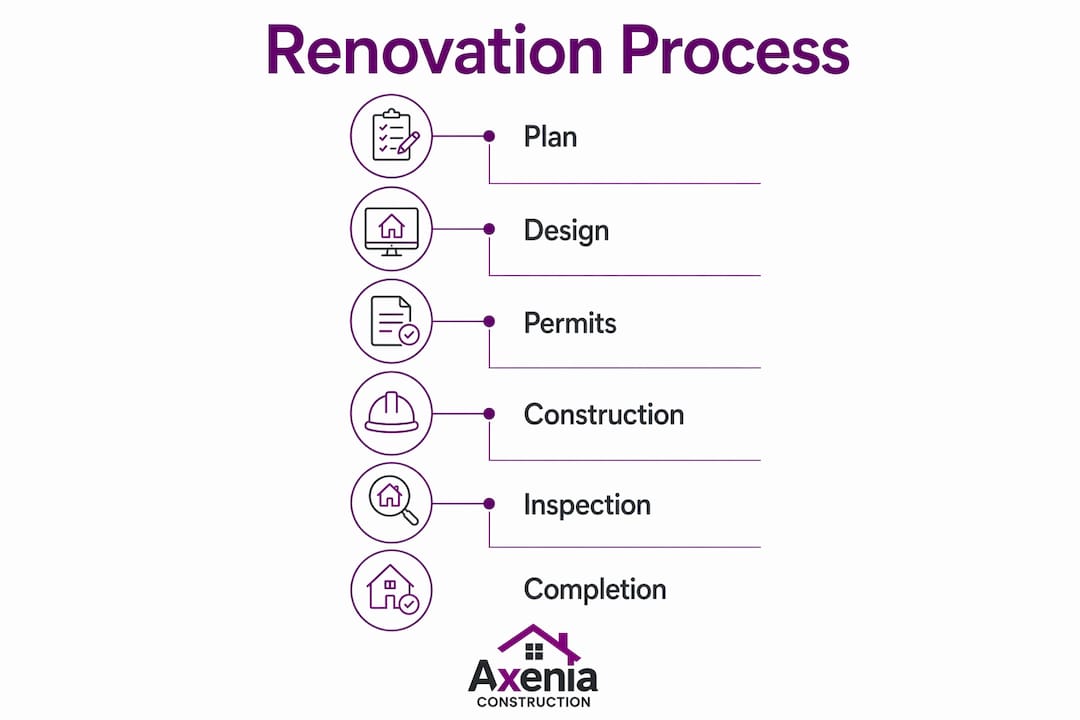
What is the typical home renovation process for homeowners and investors?
A well-run residential renovation follows a defined sequence. Skipping steps, particularly in the planning and permitting phases, is where most cost overruns and delays originate.
- Define your project scope. Classify the work using the four renovation categories above. Determine whether any element of the project involves moving plumbing, altering structure, or changing space use. Moving plumbing fixtures or enlarging door openings can push a project from a simple renovation into a permit-intensive alteration category.
- Set a realistic budget. Factor in permit fees, inspection costs, and a contingency of 10 to 15 percent for unforeseen conditions. For property investors, also model the projected increase in property value against total renovation costs to confirm the project pencils out.
- Engage the right professionals. For cosmetic work, a skilled general contractor or even a capable DIYer may suffice. For system replacements or structural repairs, licensed trade contractors and a general contractor who manages the permit process are non-negotiable. Review a renovation contracts checklist before signing any agreement to protect your interests.
- Apply for permits before breaking ground. Submit applications as early as possible. Permit review timelines at offices like the Boston Permitting Office can extend project schedules by weeks if not anticipated.
- Execute construction in phases. Coordinate trade work so inspections can occur at the required milestones. Covering rough-in plumbing or electrical before inspection approval forces costly rework.
- Complete final inspections and close permits. Open permits on a property can complicate refinancing or resale. Always close every permit before considering the project complete.
For property investors, the home renovation process also includes a post-project assessment: documenting completed work, updated systems, and permit records to support future appraisals and buyer disclosures.
Pro Tip: Treat your renovation scope document as a living contract between you and your contractor. Every change to scope mid-project should be documented in writing with a revised cost and timeline estimate.
What are the benefits and key considerations of residential renovations?
Residential renovations deliver measurable returns when planned strategically. The benefits extend beyond aesthetics.
- Increased home value and equity. Strategic renovations, particularly kitchen updates, bathroom refreshes, and system replacements, consistently rank among the highest-return home improvements for resale value. For investors, even cosmetic upgrades can justify higher rental rates or faster sales.
- Improved living comfort. Replacing an aging HVAC system or upgrading insulation delivers immediate quality-of-life improvements alongside lower utility costs. These are not glamorous upgrades, but they are the ones occupants notice every day.
- Cost-effectiveness compared to full remodels. Because renovations work within the existing layout and structure, they avoid the engineering fees, extended timelines, and higher permit costs associated with structural remodels.
- DIY accessibility for select projects. Cosmetic renovations are among the most accessible home improvement projects for capable homeowners. Painting, flooring installation, and fixture replacement can be completed without a contractor, reducing labor costs significantly.
The considerations are equally real:
- Hidden conditions in older homes, including outdated wiring, asbestos-containing materials, or deteriorated framing, can surface once walls are opened. Budget for discovery costs.
- System upgrades that trigger permits also trigger inspections. Factor inspection scheduling into your timeline, not just construction days.
- Renovation scope creep is common. A bathroom tile replacement that reveals water-damaged subfloor becomes a structural repair. Clear scope definition and a contingency budget are your best defenses.
- For investors, always verify that renovation plans align with local zoning and rental licensing requirements before starting work.
Key takeaways
Residential renovation is defined by scope: work that updates or restores an existing home without changing its structure or use, governed by the IRC, and differentiated from remodeling by its lower permit intensity and cost profile.
| Point | Details |
|---|---|
| Renovation vs. remodel | Renovations update without layout changes; remodels alter structure and carry higher permit requirements. |
| IRC governs the rules | The International Residential Code, adopted by 49 states, sets baseline permit and compliance requirements for all renovation work. |
| Permits are narrowly required | Only construction, alteration, or system work triggers permits; cosmetic updates generally do not. |
| Legal nonconformity protects you | Existing lawful conditions need not be upgraded when you pull a permit, except for life-safety systems. |
| Permit timing drives schedules | Applying for permits early prevents inspection delays from becoming the critical path of your project. |
Why scoping your renovation correctly is the most underrated skill in home improvement
Most homeowners walk into a renovation thinking about finishes: tile colors, cabinet styles, paint swatches. That is the wrong starting point. The decision that determines whether your project runs smoothly or turns into a six-month ordeal is the scope classification you make before anyone picks up a tool.
I have seen projects where a homeowner planned a “simple bathroom refresh” that included moving the toilet 18 inches. That single decision changed the permit category, required a licensed plumber, added a rough-in inspection, and extended the timeline by three weeks. The tile choice was irrelevant by comparison. The renovation versus remodel distinction is not bureaucratic noise. It is the framework that tells you what your project actually costs and how long it actually takes.
The other thing most homeowners miss is the permit conversation with their local building department. That conversation is free. It takes 20 minutes. And it can prevent you from discovering mid-project that your contractor misclassified the work and you need to redesign. At Axeniaconstruction, we start every project with a scope classification review precisely because that conversation changes everything downstream.
One more thing worth saying plainly: the IRC’s legal nonconformity rule is your friend. You do not need to rewire your entire house because you are updating the kitchen. Only the affected work and life-safety provisions need to meet current code. Understanding this removes a significant source of anxiety for homeowners who fear that pulling a permit opens a Pandora’s box of required upgrades. It does not. Know the rule, use it, and plan accordingly.
— Arienne
How Axeniaconstruction supports your residential renovation

At Axeniaconstruction, we work with homeowners and property investors across the DC, MD, and VA region to take residential renovation projects from initial scope classification through final inspection. Whether you are refreshing a kitchen, replacing aging systems, or tackling a structural repair, our licensed team manages the permit process, coordinates trade contractors, and keeps your project on schedule. We believe transparent communication at every phase is what separates a smooth renovation from a stressful one. Explore our home renovation services or browse renovations that increase property value to find the right starting point for your project.
FAQ
What is the difference between renovation and remodeling?
Renovation updates or restores existing spaces without changing their layout or structure, while remodeling involves altering the structure or purpose of a space. Renovations are generally less costly and require fewer permits than remodels.
Do all residential renovations require a permit?
No. Cosmetic work like painting, flooring, and fixture replacement typically does not require a permit. However, construction, alteration, or system work such as electrical panel upgrades or structural repairs requires a permit under IRC Section R105.1.
Will pulling a permit force me to upgrade my entire house?
No. Under IRC Section R102.7, only the new or immediately affected work must meet current code standards. Existing lawful conditions in untouched areas of the home are protected by the legal nonconformity principle, with the exception of life-safety systems.
How long does a typical residential renovation take?
Timeline depends on project scope and permit review speed. Cosmetic renovations can be completed in days to a few weeks, while system replacements or structural repairs with permit requirements typically run four to twelve weeks. Permit review and inspection scheduling often extends timelines more than the construction work itself.
How do I plan a residential renovation as a property investor?
Start with a scope classification to determine permit requirements and true project costs. Then model the projected return against total renovation costs before committing. Use a renovation project planning guide to structure your permit applications, contractor agreements, and inspection milestones from the start.