
Kitchen remodel budget planning is the process of setting a firm spending limit and allocating funds across every cost category before a single cabinet is ordered. The average U.S. kitchen remodel costs approximately $27,000, with minor updates starting around $5,000 and full gut renovations reaching $130,000 or more. Cabinetry and labor are the two largest cost drivers, together consuming 45%–75% of a typical budget. Treating your budget as a design constraint from day one, not a wishlist you adjust later, is the single habit that separates successful remodels from costly overruns. This kitchen remodel budget planning guide walks you through every cost category, prioritization strategy, and money-saving technique you need for 2026.
What does a kitchen remodel cost, and how do you estimate it?
Every kitchen renovation expense guide starts with the same truth: costs vary widely, and the range is wider than most homeowners expect. Mid-range remodels typically run $25,000–$55,000, while luxury projects can exceed $250,000. Per square foot, standard remodels cost $150–$400; high-end finishes push that figure above $1,000.
The major cost categories
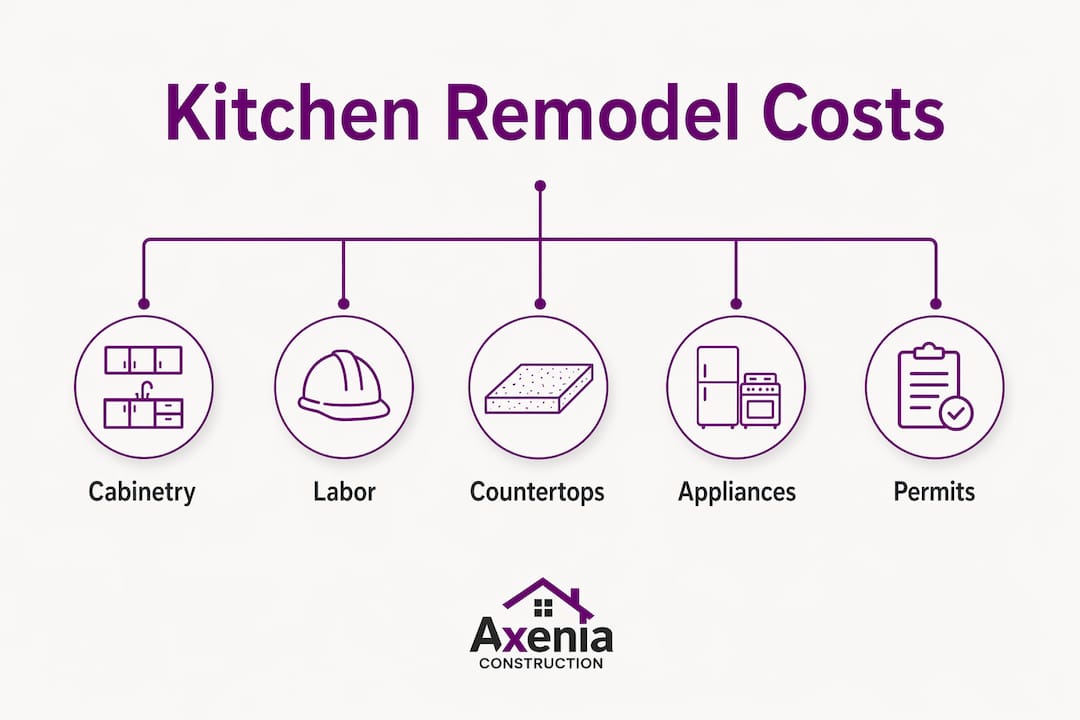
Understanding where money goes is the foundation of solid kitchen remodel financial planning. Here is how a typical mid-range budget breaks down:
| Cost Category | Share of Total Budget | Notes |
|---|---|---|
| Cabinetry | 25%–40% | Largest single expense; tier selection drives cost |
| Labor and installation | 20%–35% | Varies by region and project complexity |
| Countertops | 10%–15% | High visual impact relative to cost |
| Appliances | 10%–15% | Timing purchases to sales saves significantly |
| Flooring, plumbing, lighting, permits | Remainder | Often underestimated in early planning |
Cabinetry accounts for 25%–40% of the total budget, making it the single most consequential decision you will make. Cabinet tier matters enormously: stock or ready-to-assemble (RTA) units run $118–$200 per linear foot, while full custom cabinetry costs $882–$1,500 per linear foot. Semi-custom falls in between and offers the best balance of quality and lead time for most homeowners.
Labor and installation represent 20%–35% of total spend. That percentage shifts based on your region, the complexity of the layout, and whether structural changes are involved. Countertops and appliances each claim roughly 10%–15%, meaning these two categories together can easily consume $5,000–$16,500 on a $27,000 project.
Permits are a line item many homeowners forget. Permits typically range $300–$1,500 and cover plumbing, electrical, and structural work. Skipping permits risks resale complications and insurance problems down the road. Budget for them from the start.
Pro Tip: Get at least three contractor bids before committing. Labor pricing varies more than material pricing, and competitive bids give you real market data, not estimates.
How should you prioritize tasks when budgeting for kitchen upgrades?

Setting your total budget before selecting any finishes is the most effective approach to kitchen remodel financial planning. Budget as a fixed design constraint means every design choice, from cabinet style to countertop material, gets evaluated against a pre-set financial limit. This prevents the common trap of falling in love with a $900-per-linear-foot cabinet line when your budget supports $200.
Follow this prioritization sequence to allocate funds where they matter most:
- Establish your hard ceiling. Decide the maximum you will spend before opening a single catalog or visiting a showroom. This number governs every decision that follows.
- Fix the layout first. Moving the sink, stove, or refrigerator requires relocating plumbing or gas lines, which adds $2,500–$9,500 to your project cost. Keeping the existing footprint is the fastest way to protect your budget.
- Allocate to high-impact categories. Cabinets and countertops define how a kitchen looks and functions. Spend here before allocating to lighting or decorative hardware.
- Weigh cosmetic versus structural upgrades. Minor cosmetic updates deliver 80%–100% ROI, while major renovations often return under 55%. If resale value matters to you, prioritize cosmetic improvements over structural overhauls. You can read more about renovations that increase value to sharpen this decision.
- Reserve a contingency fund. Set aside 10%–15% of your total budget for unexpected costs. Hidden water damage, outdated wiring, and structural surprises are common in kitchens over 20 years old.
Pro Tip: Finalize your full design, including cabinet specs, countertop material, and appliance models, before demolition begins. Changes made mid-project cost two to three times more than changes made on paper.
What are effective cost-saving strategies for an affordable kitchen remodel?
Keeping costs down does not mean accepting lower quality. It means making smarter trade-offs at the right moments. The strategies below can collectively drop a $35,000 remodel to the $22,000–$26,000 range while maintaining quality finishes.
- Keep the existing footprint. Moving plumbing or gas lines adds $2,500–$9,500 to your project. Keeping the sink and stove in their current positions avoids new rough-ins, specialized inspections, and structural repairs.
- Reface instead of replace cabinets. If your cabinet boxes are structurally sound, refacing saves $1,500–$4,000 compared to full replacement, which typically starts at $8,000. New doors, drawer fronts, and hardware deliver a fresh look at a fraction of the cost.
- Choose prefabricated countertop slabs. Custom fabrication adds labor and lead time. Prefab slabs in quartz or granite cost less and install faster, with minimal visual difference for most kitchens.
- DIY demolition. Homeowners who handle their own demo save on labor hours. Removing old cabinets, flooring, and fixtures is physically demanding but requires no specialized license in most jurisdictions.
- Time appliance purchases. Major appliances go on sale during holiday weekends, including Memorial Day, Labor Day, and Black Friday. Buying during these windows can save 20%–30% on refrigerators, ranges, and dishwashers.
- Get multiple bids. Contractor pricing for the same scope of work can vary by thousands of dollars. Three competitive bids give you negotiating leverage and a realistic market rate.
The kitchen remodel checklist from Axeniaconstruction is a practical tool for tracking these decisions before you commit to any contractor or purchase.
What budgeting pitfalls derail kitchen renovation projects?
The most expensive mistakes in kitchen remodeling are not material choices. They are planning failures that compound over time. Recognizing these pitfalls before your project starts is the clearest path to staying on budget.
- Treating the budget as a starting point, not a limit. Homeowners who view their budget as flexible tend to approve scope additions one at a time. Each addition feels small. Together, they routinely push final costs 20%–40% over the original number.
- Underestimating labor costs. Materials are easy to price online. Labor is not. Installation complexity, regional wage rates, and project duration all affect the final labor bill. Always get a written, itemized labor quote before signing a contract.
- Ignoring material lead times. Semi-custom cabinets take 8–16 weeks, and full custom orders can run longer. Ordering late pushes your project timeline out and may force you to pay for temporary kitchen arrangements. Order cabinets as soon as your design is finalized.
- Skipping permits to save money. Permit fees feel like a nuisance. Unpermitted work, however, can block a home sale, void homeowner’s insurance claims, and require costly tear-outs to pass inspection later.
- Changing the design mid-project. Switching countertop materials after the old ones are removed, or moving a wall after framing begins, triggers change orders. Change orders are the fastest way to blow a budget. Lock in every decision before demolition starts.
Understanding the full kitchen renovation phases helps you anticipate when each decision must be made and why late changes cost so much more.
Key Takeaways
A successful kitchen remodel starts with a firm budget ceiling that governs every design decision, from cabinet tier to countertop material, before any work begins.
| Point | Details |
|---|---|
| Set a hard budget ceiling first | Define your maximum spend before selecting any finishes or contacting contractors. |
| Cabinetry drives the largest cost | Cabinets consume 25%–40% of the total budget; choose your tier early and order immediately after design is final. |
| Keep the existing layout | Relocating plumbing or gas lines adds $2,500–$9,500; preserving the footprint protects your budget. |
| Reserve a contingency fund | Allocate 10%–15% of your total budget for hidden damage, permit delays, or material changes. |
| Cosmetic upgrades deliver the best ROI | Minor updates return 80%–100% of their cost; major structural renovations often return under 55%. |
What I’ve learned from watching homeowners budget for kitchen remodels
The single most common mistake I see is not overspending on cabinets or appliances. It is starting the design process before the budget is set. Homeowners visit showrooms, fall in love with a layout, and then try to reverse-engineer a budget around it. That sequence almost always ends in compromise, frustration, or both.
The budget has to come first. Not as a rough range, but as a firm number. Once that number exists, every other decision becomes a filter, not a debate. You are not choosing between quartz and marble. You are choosing which one fits your budget. That shift in framing changes everything.
I also think homeowners underestimate how much cabinet lead times affect the whole project. Order your cabinets the week your design is finalized. Not the week after. Not when demo is done. The week your design is finalized. A 12-week lead time on semi-custom cabinets means your contractor is waiting if you delay. Waiting contractors charge for their time.
The last thing I will say: do not optimize your kitchen entirely for resale. You live there. A kitchen that works well for your daily routine, your cooking habits, and your family has real value that does not show up in an appraisal. Balance resale considerations with genuine usability, and you will be happier with the result for years before you ever think about selling.
— Arienne
How Axeniaconstruction approaches your kitchen remodel budget
Planning a kitchen remodel is one of the most financially significant decisions a homeowner makes. Axeniaconstruction works with homeowners in Rockville, MD, and the surrounding area to build realistic budgets, manage project timelines, and deliver quality results without mid-project surprises. We specialize in budget-conscious design and full project management, from the first estimate through final walkthrough.

Our team brings transparency to every stage of the process. You will know where your money is going, when decisions need to be made, and what trade-offs are available at your budget level. If you are ready to move from planning to building, our kitchen and bath remodel services are a strong starting point. For a full overview of what we offer, visit our services page and connect with our team directly.
FAQ
What is the average cost of a kitchen remodel in 2026?
The average U.S. kitchen remodel costs approximately $27,000, with minor updates ranging from $5,000–$15,000 and full gut renovations reaching $50,000–$130,000 or more.
How much should I budget for cabinets?
Cabinetry typically consumes 25%–40% of the total kitchen remodel budget. Stock cabinets run $118–$200 per linear foot, while full custom options cost $882–$1,500 per linear foot.
Should I keep my kitchen’s existing layout to save money?
Yes. Moving plumbing or gas lines adds $2,500–$9,500 to your project cost. Keeping the existing footprint is one of the most effective ways to control your kitchen renovation cost.
How do I avoid going over budget on a kitchen remodel?
Set a firm budget ceiling before design begins, finalize all selections before demolition starts, reserve a 10%–15% contingency fund, and get at least three contractor bids for competitive pricing.
Do kitchen remodels increase home value?
Minor cosmetic kitchen updates deliver 80%–100% ROI, making them among the highest-returning home improvements. Major structural renovations typically return under 55% of their cost at resale.
Recommended
- Kitchen Remodel Checklist for Homeowners: 2026 Guide
- Kitchen Remodeling in Bethesda, MD: Upgrade Your Home with Modern Design – Axenia Construction
- Kitchen Renovation Phases Explained: A Homeowner’s Guide
- Kitchen Remodeling in Alexandria, VA: Upgrade Your Home with Modern Design & Functionality – Axenia Construction