Repairs are generally deductible now, as current expenses under IRC §162-3). Capital improvements, by contrast, must pass the IRS’s BAR test and get capitalized under §263(a), then recovered slowly through depreciation. That single distinction decides whether a $15,000 roof job saves you money this April or over the next 27.5 years. Safe harbors can sometimes let you deduct work that would otherwise fail that test.
TL;DR:
- Repairs that restore the property to its previous condition can be deducted immediately, while work that Betterments, Adaptation, or Restoration requires capitalization.
- The IRS considers work as a repair or routine maintenance if it doesn’t modify the property’s value, upgrade capacity, or change its use, especially for minor fixes.
- Safe harbors such as the de minimis, routine maintenance, and small-taxpayer rules can exempt small projects from the BAR test, simplifying deductions.
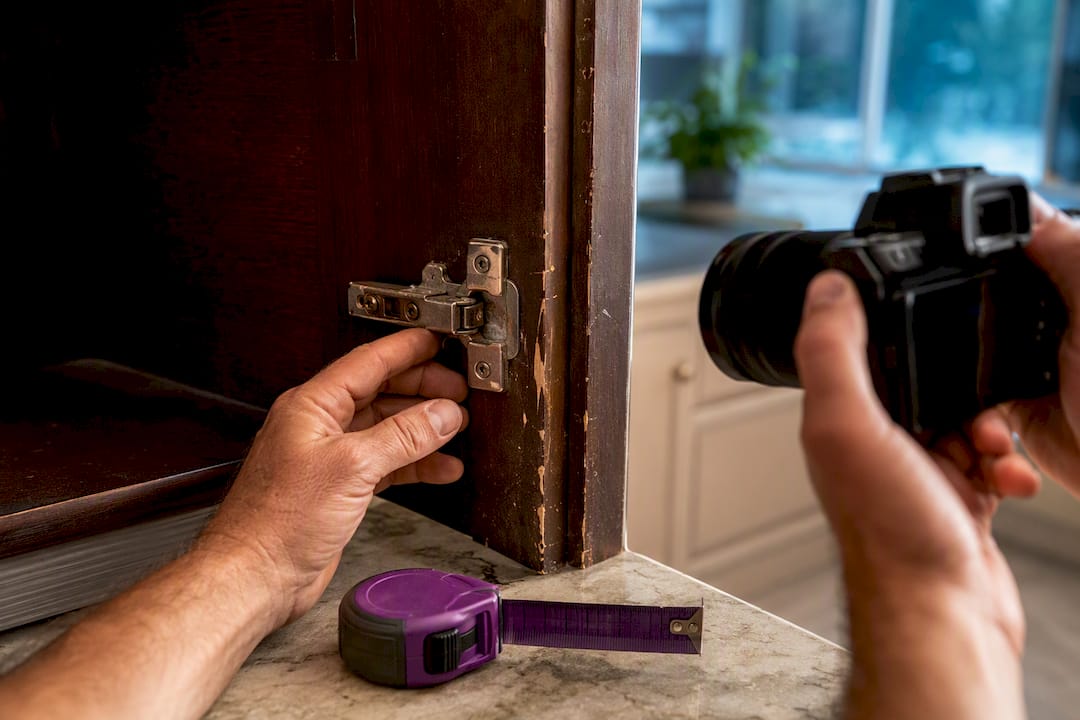
- Proper documentation, including detailed scopes, line-item invoices, and before-and-after photos, is essential to support repair classifications and safe-harbor claims.
- Categorizing work correctly before starting the project reduces audits risk and ensures accurate tax treatment, especially for mixed invoices or major renovations.
Table of Contents
- Capital Improvement vs. Repair: What the BAR Test Actually Checks
- Repair and Routine Maintenance: What IRC §162 Lets You Deduct Now
- Safe Harbors That Skip the BAR Test Entirely
- Roof, HVAC, Windows, and Paint: How the Rules Play Out on Real Jobs
- Depreciation Timelines: What Capitalizing Actually Costs You in Time
- How to Classify an Invoice Before You File
- Why Documentation Starts on the Job Site, Not at Tax Time
- Timing Deductions Against Long-Term Property Value
- Get Documentation That Supports Your Tax Position, Not Just Your Renovation
- Sources
- FAQ
Capital Improvement vs. Repair: What the BAR Test Actually Checks
The IRS decides whether work must be capitalized using three questions, known collectively as the BAR test under Treas. Reg. §1.263(a)-3: does it Better the property, Adapt it to a new use, or Restore it? Meet any one prong, and you capitalize. Miss all three, and you likely have a repair.
Before applying BAR, you have to define the “unit of property.” A rental house isn’t one blob for tax purposes. The regulations break it into systems: the building structure, plus separate systems for HVAC, plumbing, electrical, escalators, and a handful of others. Replace one plumbing fixture, and you compare that work against the plumbing system, not the whole house. That framing keeps a surprising number of projects on the deductible side of the line.
Here’s how each BAR prong shows up in real properties:
- Betterment: fixing a pre-existing structural defect, adding a material capacity increase, or materially raising the property’s value or efficiency (installing a higher-efficiency HVAC unit where none existed before, for example).
- Adaptation: converting space to a new or different use than what you originally intended, such as turning a single-family rental into a group home requiring code upgrades.
- Restoration: replacing a major component, rebuilding a system to like-new condition, or repairing damage after the property has reached the end of its class life for depreciation purposes.
Any one of those triggers capitalization under §263(a), even if the invoice looks routine to the contractor who wrote it.
Repair and Routine Maintenance: What IRC §162 Lets You Deduct Now
A repair keeps the property in “ordinarily efficient operating condition.” It restores function without upgrading capacity, changing use, or replacing a major system component. The comparison point matters here: you measure the finished work against the property’s condition before whatever prompted the repair, not against its damaged state at the moment of the call.
Typical deductible repairs include:
- Patching a section of drywall or a small area of roofing after a leak.
- Replacing a single broken window pane or a worn faucet.
- Fixing a tripped electrical outlet or clearing a clogged drain line.
- Repainting a room or unit between tenants, when done in isolation rather than as part of a larger renovation.
Routine maintenance gets its own protection. If you reasonably expect to perform the same activity more than once over the relevant period, the IRS treats it as maintenance rather than improvement, even when the individual job looks substantial. Gutter cleaning, HVAC filter changes, and periodic inspections all fall into this bucket. The recurring nature of the work, not its dollar size, is what earns the deduction.
Safe Harbors That Skip the BAR Test Entirely
You don’t always need to run the full BAR analysis. The tangible property regulations include three safe harbors built specifically to spare small owners that headache, and each one has its own eligibility rules worth knowing cold.
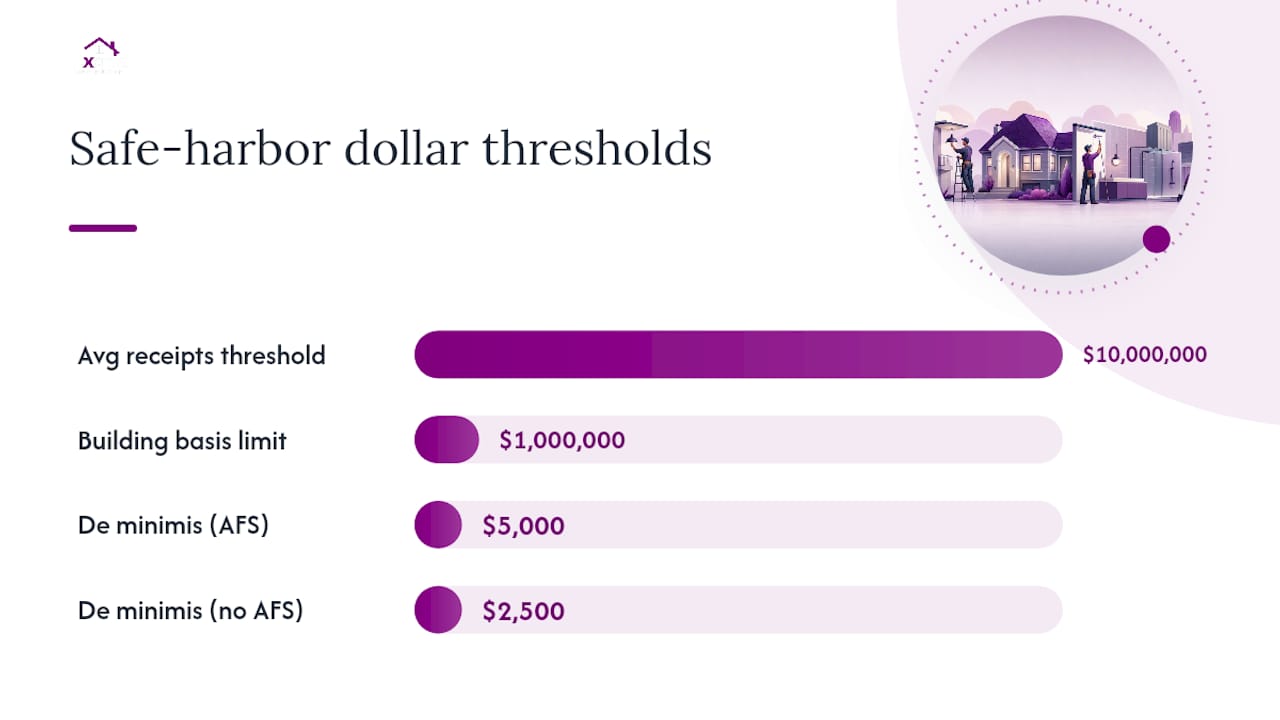
- De minimis safe harbor. If you have an “applicable financial statement,” you can expense items up to $5,000 per invoice or item; without one, the cap drops to $2,500. You must apply the policy consistently across your books, and it needs to exist in writing before the tax year starts.
- Routine maintenance safe harbor. Covers recurring work on buildings and their systems when you reasonably expect to repeat the activity more than once during a 10-year window for building structures and systems. This is the same standard that protects the gutter-cleaning and filter-change examples above.
- Small-taxpayer safe harbor. Available if your average annual gross receipts are $10 million or less and the building’s unadjusted basis is $1 million or less. Your annual cap for repairs and improvements combined is capped at a specific dollar limit or a percentage of the building’s unadjusted basis, whichever is lower.
When none of the three fit, you’re back to running BAR by hand, and that’s when documentation earns its keep.
Pro Tip: Write your de minimis capitalization policy down and date it before January 1 of the tax year you want it to cover. An undated, after-the-fact policy is one of the first things an examiner will challenge.
Roof, HVAC, Windows, and Paint: How the Rules Play Out on Real Jobs
Abstract rules get easier once you see them applied to the jobs landlords actually order. The roof example is the one tax advisers reach for most often, and it maps cleanly onto other systems too.
- Roof: Patching a leak or replacing a handful of shingles is a repair. Tearing off the decking and installing a new roof system is restoration, because you’ve replaced a major component of the building structure unit of property.
- HVAC: Swapping a single condenser or blower motor is typically a repair. Replacing the entire HVAC system, including ductwork and controls, is a restoration and gets capitalized.
- Windows and flooring: Replacing a few damaged windows or a section of flooring generally reads as repair. Replacing all the windows in a building, or the flooring throughout an entire unit, at once, tends to cross into betterment or restoration territory.
- Painting: Is painting a capital improvement on its own? Almost never. Painting alone rarely meets any BAR prong. It becomes capitalized only when it’s bundled into a larger project, like a full unit renovation, where the paint work supports a betterment or restoration already underway.
Mixed invoices are the trickiest case. When one contractor bill covers both a repair (patching drywall) and an improvement (replacing a full HVAC system), you allocate the cost between the two based on the scope of each task. A detailed, line-item invoice makes that allocation defensible; a lump-sum bill for “renovation work” does not.
Depreciation Timelines: What Capitalizing Actually Costs You in Time
Once work is capitalized, you don’t lose the deduction. You just spread it out. Residential rental property depreciates over 27.5 years under MACRS straight-line rules, while nonresidential commercial property depreciates over a long period. A $30,000 capitalized roof replacement on a rental house yields roughly $1,090 a year in depreciation, not a single write-off in the year you paid the bill.
The trade-off in numbers: A repair deducted immediately delivers its full tax benefit in one year. The same dollar amount capitalized as a residential improvement delivers that benefit over 27.5 years under MACRS, a gap that changes how you should think about cash flow on any project above a few thousand dollars.
The placed-in-service date controls when depreciation starts, and each capital improvement gets its own placed-in-service date separate from the building itself. Two planning tools soften the multiyear hit. A partial disposition election lets you write off the remaining undepreciated basis of whatever component you just tore out, so you’re not depreciating a roof that no longer exists on top of the new one. Cost segregation can reclassify portions of a larger renovation into 5, 7, or 15 year asset classes eligible for faster depreciation, which meaningfully improves first-year cash flow after a big capital project.
How to Classify an Invoice Before You File
Run every ambiguous project through the same sequence, and you’ll reduce guesswork to almost nothing.
- Identify the correct unit of property (building structure, or the specific system involved).
- Check whether a safe harbor already covers the cost.
- If not, run the BAR test against that unit of property.
- Weigh materiality: is this a minor fix or a major component replacement?
- Allocate mixed invoices between repair and improvement line items.
Keep detailed contractor scopes, itemized invoices, before-and-after photos, your written capitalization policy, and any evidence of a pre-existing defect that prompted the work. If you used a partial disposition election or a cost segregation study, keep those workpapers with the return they support. Ask your contractor for line-item bids rather than lump-sum quotes, and ask your CPA, before the project starts, which safe harbor you’re likely to qualify for.
Pro Tip: Photograph the damaged or worn component before any repair crew touches it. An examiner comparing “before” and “after” photos is far more likely to accept a repair classification than one working from your description alone.
Why Documentation Starts on the Job Site, Not at Tax Time
Correct classification depends on evidence that gets created during construction, not reconstructed months later from memory. Arienne, who covers renovation financing and contractor bid analysis for this site, has seen how often landlords lose a defensible repair classification simply because the invoice they kept said “renovation” instead of describing the actual scope.
A licensed, women-owned general contractor based in Rockville, Maryland, works across residential, commercial, and government projects. Detailed scopes, itemized component lists, and phase photography aren’t just good project management. They’re the exact records a CPA needs to support a BAR-test conclusion or a safe-harbor election.
Timing Deductions Against Long-Term Property Value
A repair deduction helps this year’s cash flow. A capitalized improvement builds basis you recover later and often signals real value added to the property. Neither choice is automatically better; it depends on where you are in the property’s life and your tax picture that year. Scope your contracts to reflect the actual work, and loop in your CPA before the crew starts, not after the invoice arrives.
— Arienne
Get Documentation That Supports Your Tax Position, Not Just Your Renovation
Some general contractors treat paperwork as part of the build, not an afterthought. Scoped estimates, line-item invoices, and before-and-after component photography can provide evidence to help defend repair or capital improvement classifications.
Every project starts with a written scope that separates repair-level fixes from system replacements, so you’re not stuck reconstructing the story of a $40,000 renovation from a single vague bill months later. That applies whether you’re patching a rental unit between tenants or planning a full commercial renovation. We’re not tax advisers. Always confirm your final classification with a CPA. But we can make sure the paperwork they need actually exists.
Request a scoped estimate through our general contracting services page, and get a documentation package built for your project from day one.
This article is general information, not a substitute for advice from a qualified financial advisor. Consult a qualified financial professional about your own circumstances before acting on anything here.
Sources
- IRS — Tangible property final regulations (overview and safe harbors)
- Journal of Accountancy — Tangible property regulations and BAR test
FAQ
Are repairs considered capital improvements?
No. Repairs and capital improvements are treated as opposites under the tax code: repairs are deducted immediately under IRC §162, while capital improvements must be capitalized and depreciated over time.
When should you capitalize versus expense a repair?
Capitalize when the work meets any prong of the BAR test (betterment, adaptation, or restoration); expense it when it simply restores the property’s prior condition and no safe harbor already resolves the question.
What is the difference between repairs, maintenance, and capital improvements?
Repairs fix something that’s broken, routine maintenance is recurring upkeep you expect to repeat, and capital improvements add value, adapt the property to new use, or restore a major system, requiring capitalization under §263(a).
Do repairs have to be capitalized?
No, unless the specific repair also happens to meet a BAR prong on its own merits; otherwise a genuine repair stays deductible in the year you pay for it under IRC §162.
Is painting considered a capital improvement?
Painting alone is almost always a deductible repair. It only becomes part of a capital improvement when it’s bundled into a larger betterment or restoration project, like a full unit renovation.