
The bathroom remodel process is a structured sequence of construction phases that moves from design and planning through demolition, rough-in work, installation, and finishing. Understanding each phase before you start prevents budget surprises, scheduling delays, and the kind of costly rework that derails even well-intentioned projects. Whether you are updating a powder room in Rockville, MD or gutting a master bath in Bethesda, the sequence stays the same. The steps for bathroom renovation follow a specific order for one reason: each phase creates the conditions the next phase requires.
What are the main steps in a typical bathroom remodel?
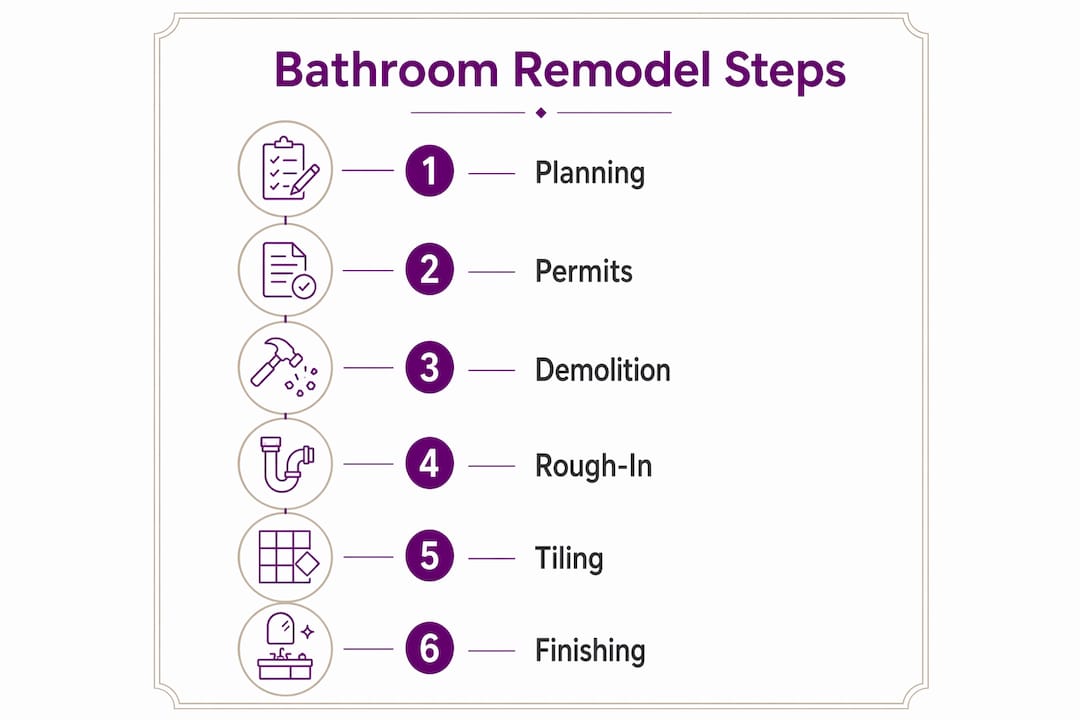
The bathroom remodel process follows six distinct phases. Skipping or reordering them is the single most common source of expensive mistakes.
-
Planning and design. This phase defines your layout, fixture selections, tile choices, and budget. Planning and design typically takes one to three weeks, covering budgeting, layout decisions, and material choices. Decisions made here control every cost downstream, so treat this phase as the most important investment of your time.
-
Permits and material ordering. Your contractor pulls the required permits from your local jurisdiction and places orders for tile, fixtures, vanities, and plumbing components. Permits and ordering can take one to four weeks but vary widely depending on location and custom materials. Custom tile from an overseas supplier or a specialty vanity can stall your entire project if ordered late.
-
Demolition. Once permits are approved and materials are confirmed, the existing bathroom is stripped. Demolition typically takes one to three days, preparing the site for plumbing and electrical work. Short in duration but critical in execution, demolition reveals hidden conditions like water damage, mold, or outdated wiring that affect scope and cost.
-
Plumbing and electrical rough-in. Licensed plumbers and electricians reroute pipes, drains, and wiring to match the new layout. This phase happens before any walls close up, because inspectors must approve rough-in work before drywall goes on.
-
Framing, drywall, waterproofing, and tile. Walls are framed, cement board or moisture-resistant drywall is installed, and waterproofing membranes are applied in wet areas before any tile is set. Correct sequencing, such as waterproofing before tiling and rough-ins before drywall, prevents costly rework and defects. This is the phase where most visible transformation happens.
-
Fixture installation and finishing. Vanities, toilets, faucets, mirrors, lighting, and accessories are installed. Paint, trim, and caulking complete the space. A final inspection closes out the permit.
Pro Tip: Order your fixtures and tile during the planning phase, not after permits are approved. Lead times on popular products can run four to eight weeks, and a delayed vanity will hold up your entire finishing schedule.
How long does each phase of a bathroom remodel usually take?
Realistic timelines are the most underestimated part of how to plan a bathroom remodel. Most homeowners expect a few weeks. The full process almost always takes longer.
| Phase | Typical Duration |
|---|---|
| Planning and design | 1 to 3 weeks |
| Permits and material ordering | 1 to 4 weeks |
| Demolition | 1 to 3 days |
| Plumbing and electrical rough-in | 3 to 7 days |
| Framing, tile, and waterproofing | 1 to 3 weeks |
| Fixture installation and finishing | 3 to 7 days |
Active construction for bathroom remodels runs three to eight weeks, with the total process spanning six to twelve weeks depending on scope and materials. That range is wide because scope drives everything. A small bathroom remodel may wrap in about two weeks total, while a gut renovation can require six to ten weeks of construction alone.
Permitting deserves special attention. Builders recommend factoring two weeks to six months for permitting depending on your locality. In dense urban jurisdictions like Washington, DC, permit queues run long. In suburban Maryland counties, turnaround is often faster. The safest approach is to apply for permits the same week you finalize your design, not after.
What factors influence the bathroom remodel timeline and cost?
Several variables push timelines and budgets beyond initial estimates. Knowing them in advance lets you plan with a realistic buffer rather than an optimistic one.
-
Layout changes. Moving a toilet, shower, or sink to a new location requires rerouting supply lines and drain lines. Keeping the pre-existing layout reduces cost and time by avoiding plumbing relocation. A layout-neutral remodel can save thousands of dollars and weeks of labor compared to a full gut with repositioned fixtures.
-
Material selection and lead times. Stock tile from a local supplier ships in days. Custom stone, imported fixtures, or specialty hardware can take four to ten weeks. Your contractor cannot close walls or set tile until materials are on-site, so late deliveries create cascading delays across every subsequent phase.
-
Permit complexity. Structural changes, electrical panel upgrades, or work in older homes with outdated systems require more detailed permit applications and longer review cycles. A straightforward cosmetic remodel in a newer home moves through permitting faster than a gut renovation in a 1960s split-level.
-
DIY versus licensed contractor. Homeowners who self-manage subcontractors often underestimate coordination time. Licensed general contractors like those at Axenia Construction manage scheduling, inspections, and subcontractor sequencing as a core service, which compresses the overall timeline.
-
Scope creep. Demolition frequently uncovers surprises: subfloor rot, outdated galvanized pipes, or inadequate ventilation. Budget a contingency of ten to fifteen percent of your total project cost to absorb discoveries without stopping work.
A typical full remodel may cost over $10,000, with luxury remodels reaching around $30,000 depending on finishes and structural changes. That figure shifts dramatically based on the factors above.
Pro Tip: Get three itemized bids before signing a contract. Bids that lack line-item detail make it impossible to compare scope, and vague contracts are the leading cause of cost disputes mid-project.
Bathroom remodel vs. renovation: what’s the difference and why does it matter?
The terms “remodel” and “renovation” are used interchangeably in conversation, but they describe different scopes of work with different cost and permit implications.
| Factor | Renovation | Remodel |
|---|---|---|
| Scope | Updates existing fixtures and finishes | Alters layout, structure, or plumbing location |
| Permits required | Often not required for cosmetic work | Usually required for structural or plumbing changes |
| Typical timeline | 1 to 3 weeks | 6 to 12 weeks |
| Cost range | Lower, often under $10,000 | Higher, often $10,000 to $30,000+ |
| Best for | Refreshing a dated but functional space | Changing how the space works |
The core distinction is scope: renovations update existing fixtures, while remodels alter layout and structure. Choosing the wrong category for your project creates problems. A homeowner who budgets for a renovation but actually needs a remodel will hit permit requirements and structural costs they did not plan for. Clarifying this distinction with your contractor before signing anything prevents the most common source of mid-project budget shock.
Axenia Construction’s Bethesda bathroom remodeling projects illustrate this well. Clients who retain their existing plumbing layout and update tile, vanities, and fixtures complete projects in two to three weeks. Clients who relocate the shower or add a double vanity where a single one existed enter full remodel territory with permits, rough-in work, and a six-to-twelve-week timeline.
Best practices for a successful bathroom remodel
Following the right sequence and working with the right team separates smooth projects from stressful ones. These practices apply whether you are remodeling a small bathroom or tackling a full gut renovation.
-
Follow construction order without shortcuts. Rough-in inspections must pass before drywall goes up. Waterproofing must cure before tile is set. Skipping inspections to save time creates defects that require tearing out finished work later.
-
Verify contractor licenses and insurance. In Maryland and Virginia, general contractors must carry valid licenses and general liability insurance. Ask for both before signing. A licensed contractor also carries the permit in their name, which protects you legally if work does not meet code.
-
Plan for temporary bathroom access. If your home has only one bathroom, arrange alternative access during the active construction phase. Discuss this with your contractor before demolition begins, not after.
-
Communicate at every phase transition. Walk the space with your contractor after demolition, after rough-in, and before tile is set. These three checkpoints catch layout errors before they become permanent.
-
Prioritize quality on high-wear surfaces. Tile, faucets, and shower hardware endure daily use for fifteen to twenty years. Spending more on durable materials in these areas and less on decorative accessories is the better long-term investment.
The design-build remodeling model, where one team handles both design and construction, reduces coordination gaps and keeps the project on a single timeline. For complex remodels, this structure consistently outperforms the alternative of hiring a designer and a contractor separately.
Key takeaways
A successful bathroom remodel requires following a fixed construction sequence, with planning and permitting completed before demolition begins and waterproofing confirmed before any tile is set.
| Point | Details |
|---|---|
| Follow the six-phase sequence | Planning, permits, demolition, rough-in, tile, and finishing must happen in order to avoid rework. |
| Budget for the full timeline | The total process runs six to twelve weeks; permitting alone can take two weeks to six months. |
| Retain layout when possible | Keeping existing plumbing locations reduces cost and shortens the construction timeline significantly. |
| Know remodel versus renovation | Remodels alter structure and require permits; renovations update finishes and often do not. |
| Hire licensed professionals | Verified licenses and insurance protect you legally and keep inspections on schedule. |
What I have learned from watching remodels go sideways
After working on residential construction projects across Maryland and the DC metro area, the pattern I see most often is this: homeowners underestimate permitting and overestimate how fast materials arrive. These two factors, more than any other, are responsible for projects that run three months past the original estimate.
The conventional wisdom is to start with design and worry about permits later. That is backwards. The smartest clients I have worked with submit permit applications the same week they finalize their layout. They treat the permit queue as the project’s true start date, not the day demolition begins.
I have also seen the cost of moving a toilet underestimated repeatedly. Clients assume it is a minor plumbing adjustment. In practice, relocating a drain line in a slab foundation or a finished basement ceiling can add $2,000 to $5,000 to a project and two to three weeks to the schedule. Retaining the existing layout is not a compromise. It is often the smartest financial decision in the entire project.
One more thing: the clients who are happiest at the end are the ones who spent more on tile and shower hardware and less on decorative mirrors and towel rings. The surfaces you touch every day matter more than the ones you look at occasionally. Quality craftsmanship on the waterproofed surfaces protects your investment for decades. The decorative layer can always be updated later.
— Arienne
How Axenia Construction guides your remodel from plan to finish
Axenia Construction is a licensed, women-owned general contractor based in Rockville, MD, with hands-on experience managing bathroom remodels across Montgomery County, Bethesda, Silver Spring, and the broader DC metro area. The team handles permits, subcontractor scheduling, material coordination, and inspections so you are not managing those moving parts yourself. Every project starts with a transparent scope conversation, a clear timeline, and a fixed process that follows the construction sequence described in this article. If you are weighing whether your project qualifies as a renovation or a full remodel, or you want to understand what home renovations increase property value most in your market, Axenia Construction is the right starting point.
FAQ
What is the bathroom remodel process, step by step?
The bathroom remodel process moves through six phases: planning and design, permits and material ordering, demolition, plumbing and electrical rough-in, framing and tile work, and fixture installation with finishing. Each phase must be completed and inspected before the next begins.
How long does a bathroom remodel take from start to finish?
The total process typically runs six to twelve weeks, with active construction taking three to eight weeks depending on scope. Small updates may finish in two weeks, while gut renovations with layout changes can take ten weeks or more.
Do I need a permit for a bathroom remodel?
Permits are required whenever work involves plumbing relocation, electrical changes, or structural modifications. Cosmetic updates like replacing a vanity or retiling a floor often do not require permits, but requirements vary by jurisdiction.
What is the difference between a bathroom remodel and a renovation?
A renovation updates existing fixtures and finishes without changing the layout or structure. A remodel alters the layout, relocates plumbing, or makes structural changes, and almost always requires permits and a longer timeline.
How much does a bathroom remodel cost?
A typical full remodel costs over $10,000, with luxury projects reaching around $30,000 depending on finishes, fixture choices, and whether the layout changes. Retaining the existing plumbing layout is the most reliable way to keep costs closer to the lower end of that range.
Recommended
- Bathroom Remodeling in Bethesda, MD: Increase Comfort, Luxury & Home Value –
- Top Home Remodeling Tips in Maryland for 2026: Boost Value & Comfort – Axenia Construction
- Luxury Bathroom Remodel Companies in Potomac, Maryland: What Homeowners Should Know Before Renovating – Axenia Construction
- Silver Spring Bathroom – Axenia Construction