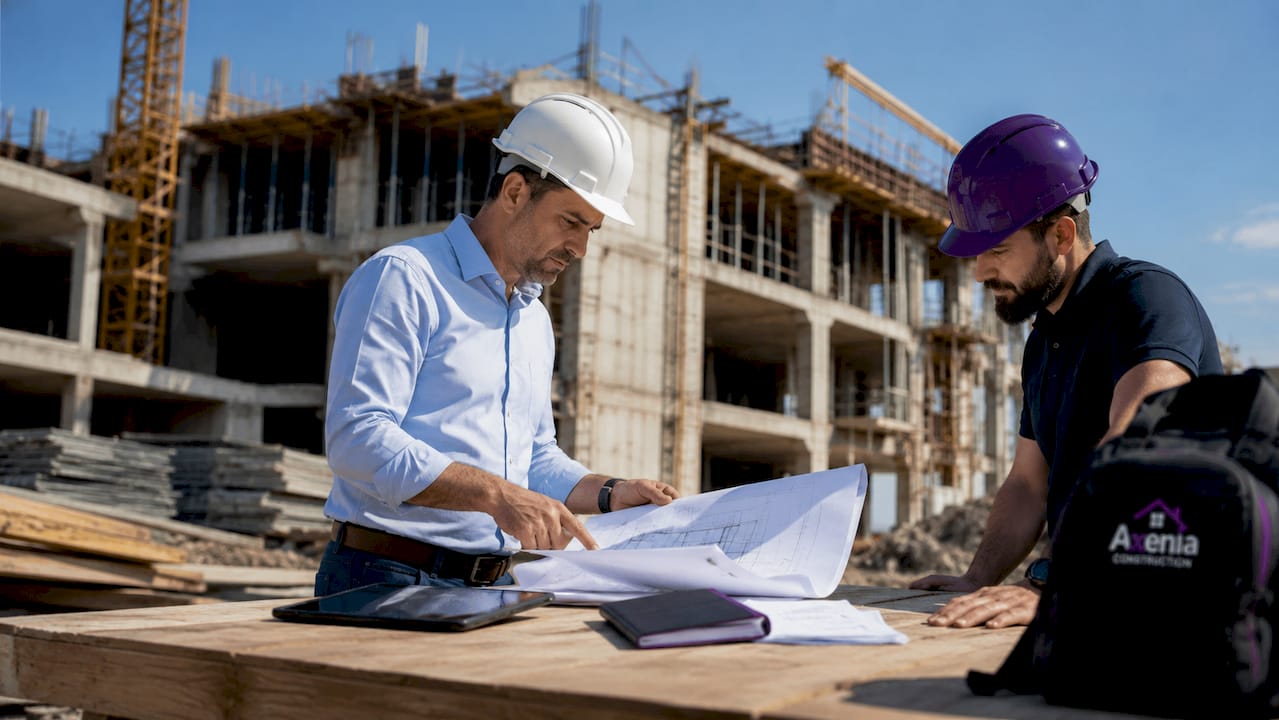
A construction project timeline is defined as a strategic, visual roadmap that plans, sequences, and manages every phase of a build from groundbreaking to final walkthrough. The industry standard term is the “construction project schedule,” though “project timeline” is widely used by owners and developers. Both terms describe the same core tool: a dynamic document organizing tasks, milestones, resource allocation, and dependencies to meet your completion date and budget. Whether you are a homeowner planning a kitchen renovation or a commercial developer managing a multi-story office build, understanding what a project timeline in construction actually contains will change how you communicate with your contractor and protect your investment.
What are the essential components of a construction project timeline?
A construction project schedule is built from five core components. Each one serves a specific function, and missing any one of them creates gaps that cost time and money.
- Work Breakdown Structure (WBS). The WBS divides the entire project into smaller, manageable tasks. Think of it as the project’s table of contents. A bathroom renovation WBS might include demolition, rough plumbing, tile installation, fixture installation, and final inspection as separate line items.
- Task dependencies. Dependencies define which tasks must finish before others can start. The most common type is Finish-to-Start: framing must finish before insulation starts. Task dependencies form a web, not a simple chain, which is why gaps in activity on-site often confuse owners who expect constant visible progress.
- Milestones. Milestones are zero-duration markers that signal a major achievement. Examples include permit approval, foundation pour completion, and certificate of occupancy. They give you and your contractor clear checkpoints to measure progress against.
- Critical path. The critical path is the longest sequence of dependent tasks that determines the project’s minimum duration. Any delay on a critical path task delays the entire project. Experienced developers watch the critical path the way pilots watch altitude.
- Float and buffer time. Float is the amount of time a non-critical task can slip without affecting the end date. Zero float schedules almost always fail because weather, material delays, and site conditions are inevitable. Building buffer time into your schedule is not pessimism. It is professional planning.
Pro Tip: Ask your contractor to identify the top three critical path tasks before work begins. If those tasks have zero float, request a schedule review. Protecting those tasks protects your move-in date.
How does a construction project timeline differ between residential and commercial projects?

The structure of a construction schedule looks similar across project types, but the execution intensity and regulatory demands are very different.
Residential and commercial timelines share the same core components: WBS, dependencies, milestones, and critical path. The differences show up in scale, decision speed, and compliance requirements.
| Factor | Residential projects | Commercial projects |
|---|---|---|
| Decision-making pace | Fast, often owner-driven | Slower, multi-stakeholder approval cycles |
| Crew size | Smaller, tightly coordinated | Larger, multi-trade with phased mobilization |
| Regulatory demands | Local permits, standard inspections | Multi-agency compliance, ADA, fire codes, zoning |
| Typical duration | Weeks to several months | One to several years |
| Timeline complexity | Moderate | High, with compliance checkpoints throughout |
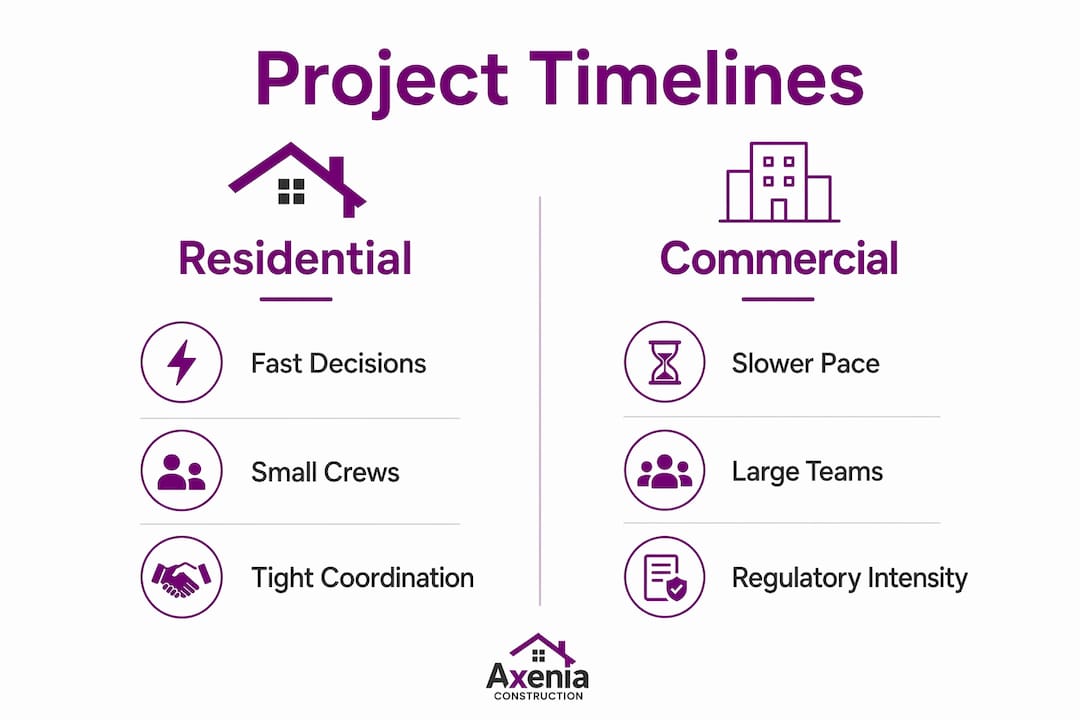
Residential builds feature faster decision cycles and smaller crews that require tight coordination. A single delayed material delivery can idle an entire crew on a small job site. Commercial projects span multi-year sequences with compliance checkpoints, multi-tier stakeholder management, and phased occupancy requirements. A commercial developer managing a tenant buildout, for example, must coordinate MEP rough-in, fire suppression, and city inspections across overlapping trades, all while keeping the master schedule intact. You can read more about that complexity in our commercial renovation process guide.
How to create and manage an effective construction project timeline?
Creating a construction project schedule follows a seven-step process. This standardized approach maintains accountability and transparency between owners and contractors throughout the project.
- Define the scope. Write down every deliverable the project must produce. Vague scope creates vague timelines. If your scope says “kitchen renovation,” your timeline will be incomplete. If it says “demolish existing cabinets, install new cabinetry, replace countertops, install backsplash, and update lighting,” your timeline will be accurate.
- Build the Work Breakdown Structure. Break the scope into individual tasks. Each task should be small enough to assign a realistic duration and a single responsible party.
- Sequence tasks and identify dependencies. Map which tasks must precede others. Use Finish-to-Start relationships as your default, then identify any tasks that can run in parallel to compress the schedule.
- Estimate durations. Assign realistic time estimates to each task. Base estimates on past project data, subcontractor input, and material lead times. Optimistic estimates are the single most common cause of schedule overruns.
- Allocate resources. Assign crew, equipment, and materials to each task. A task with no assigned resource is a task that will not happen on time.
- Identify the critical path. Use your sequenced task list to find the longest path from start to finish. This is your project’s minimum duration. Protect it.
- Integrate milestones. Place milestones at key decision points and phase completions. They serve as early warning signals when the schedule starts to drift.
Once the schedule is built, managing it is equally important. A construction timeline must be treated as a living document that requires regular updates as the project evolves. Failing to update it creates false security and leads to poor decisions. Gantt charts are the most widely used visualization tool for construction schedules because they display task duration, dependencies, and progress in a single view.
Look-ahead schedules covering the next 2–6 weeks complement the master timeline by ensuring trades and equipment arrive on-site exactly when needed. They prevent costly crew downtime and wasted mobilization trips. Think of the master schedule as your project map and the look-ahead as your turn-by-turn directions.
Pro Tip: Never let your schedule sit untouched for more than two weeks. Set a recurring review with your contractor to update task status, flag emerging delays, and adjust the look-ahead schedule. A schedule that is two weeks out of date is already misleading you.
What are the common challenges and best practices in maintaining construction timelines?
The biggest misconception owners hold about construction schedules is that a timeline is a fixed commitment. It is not. A timeline is a dynamic tool that reflects current project reality, and it must be updated as conditions change.
Here are the most common challenges and how to address them:
- Unrealistic deadlines. Owners who demand unreasonably short timelines force contractors to cut corners, which increases costs, reduces quality, and ironically causes more delays. Set your deadline based on the critical path, not on a preferred move-in date.
- Ignoring task dependencies. Owners often see gaps in on-site activity and assume the contractor is behind. Most gaps are planned. Concrete must cure before framing starts. Rough-in inspections must pass before drywall closes the walls. Understanding the dependency web prevents unnecessary conflict.
- Failing to update the schedule. A schedule that is not updated becomes fiction. Review your timeline weekly and document every change with a reason and a revised date.
- Poor communication between owner and contractor. Schedule conflicts escalate when owners and contractors are not aligned on current status. Weekly progress meetings, even brief ones, prevent small slips from becoming major disputes.
- No buffer time. Schedules built with zero float assume nothing will go wrong. Weather delays, back-ordered materials, and failed inspections are not exceptions. They are standard features of construction. Build buffer time in.
“Transparency about task sequencing is essential. When owners understand why certain tasks must wait for others, they become partners in protecting the schedule rather than sources of pressure against it.”
The best practice for homeowners managing a home renovation timeline is to request a written schedule before signing any contract, then schedule a brief weekly check-in to review progress against it.
Key Takeaways
A construction project schedule is a living, dynamic roadmap built from task dependencies, critical path analysis, and buffer time. Protecting the critical path and updating the schedule regularly are the two most effective ways to keep any build on time.
| Point | Details |
|---|---|
| Timeline vs. schedule | A construction timeline is a dynamic management tool, not a static contract document. |
| Critical path focus | Delays on critical path tasks delay the entire project; protect these tasks above all others. |
| Buffer time is required | Zero float schedules almost always fail; build slack into non-critical tasks from the start. |
| Residential vs. commercial | Commercial timelines carry far greater regulatory and stakeholder complexity than residential ones. |
| Regular updates are non-negotiable | A schedule not updated weekly becomes misleading and causes poor decisions. |
What I’ve learned from managing timelines on both sides of the fence
I have worked on construction timelines ranging from single-room renovations to multi-phase commercial buildouts, and the pattern I see most often is this: owners underestimate how interconnected every task is, and contractors underestimate how much explaining that connection requires.
The critical path is the most powerful concept in construction scheduling, and it is also the most underused in owner-contractor conversations. When I walk an owner through the critical path on day one, the entire project dynamic shifts. They stop asking “why isn’t anyone working?” and start asking “what does the critical path need from me right now?” That is a much more productive question.
Buffer time is the second thing I wish every owner understood before signing a contract. A schedule with zero float is not an ambitious schedule. It is a fragile one. I have seen projects with tight, impressive-looking timelines collapse at the first material delay because there was nowhere for that delay to go. The contractors who build in realistic buffer time are not being slow. They are being honest.
The most successful projects I have seen share one trait: the owner and contractor treat the schedule as a shared document, not a contractor’s internal tool. When both parties review it together weekly, problems surface early and solutions come faster. That transparency is what separates a smooth build from a stressful one.
— Arienne
How Axeniaconstruction helps you plan and manage your build
At Axeniaconstruction, we build custom project schedules for every client from the first planning conversation. We are a licensed, women-owned general contractor based in Rockville, MD, and we specialize in both residential renovation services and commercial construction projects. Our team identifies the critical path, builds in realistic buffer time, and shares weekly schedule updates so you always know where your project stands. We believe transparent communication is not a bonus feature. It is the foundation of every successful build. Reach out to Axeniaconstruction to get a project schedule built around your goals, your timeline, and your budget.
FAQ
What is a construction project timeline?
A construction project timeline is a dynamic, visual schedule that organizes every task, milestone, dependency, and resource allocation from project start to completion. It differs from a static schedule by requiring regular updates as the project evolves.
How long does a typical construction project take?
Duration depends on project type and scope. Residential renovations can take weeks to several months, while commercial construction projects often span one to several years due to multi-agency compliance and phased construction requirements.
What is the critical path in a construction schedule?
The critical path is the longest sequence of dependent tasks that determines the project’s minimum duration. Any delay on a critical path task pushes back the entire project completion date.
Why does my contractor need buffer time in the schedule?
Buffer time absorbs delays from weather, material shortages, and failed inspections. Schedules built with zero float almost always fail because uncontrollable delays are a standard part of construction, not rare exceptions.
How often should a construction project schedule be updated?
A construction schedule should be reviewed and updated at least weekly. Treating the timeline as a living document prevents false security and keeps both the owner and contractor aligned on current project status.