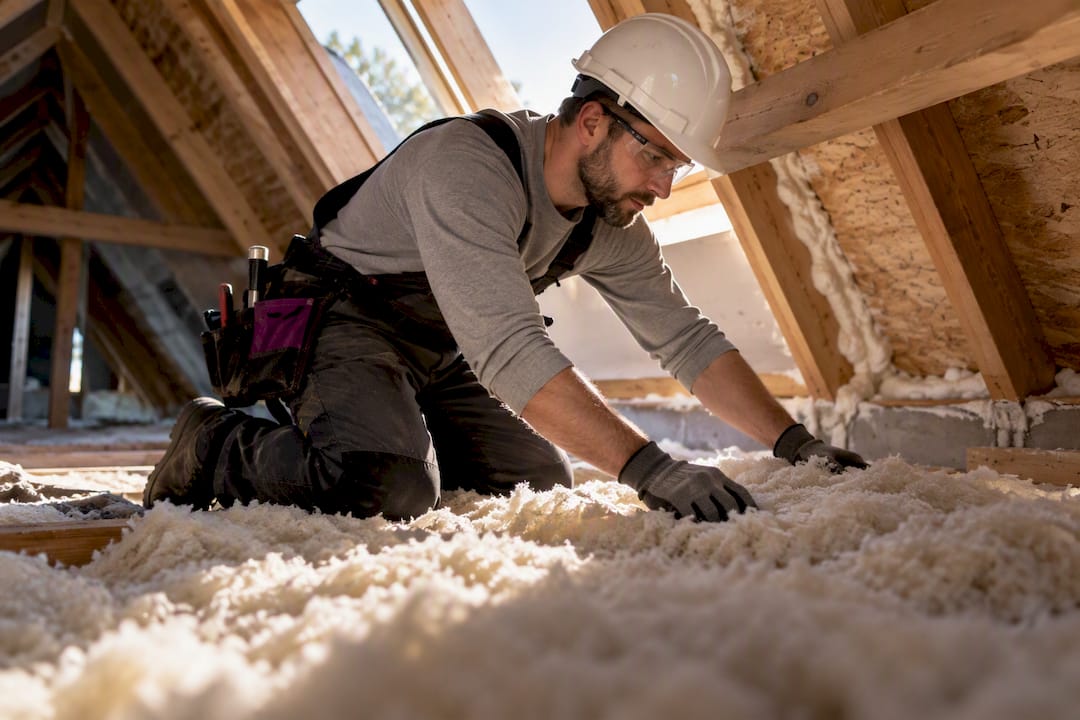
The highest-impact energy efficient remodel upgrades follow a specific order: seal and insulate the envelope first, then fix ducts and right-size or replace HVAC (heat pumps usually win), then switch to a heat pump water heater, then add smart thermostats and LED lighting, and only then consider solar. Windows and doors get replaced when they’re failing, not simply due to age. Federal tax credits and rebates can cut net costs substantially, so check eligibility before you sign a contract.
TL;DR:
- Sealing and insulating the home envelope yields the fastest return on investment, often recouping costs within four to ten years.
- Properly fixing ducts and right-sizing HVAC systems prevents significant energy waste and reduces oversized equipment expenses.
- Upgrades like heat pump HVAC, heat pump water heaters, smart thermostats, and LED lighting provide cost-effective, quick-to-payback energy savings.
- Sequencing remodel work with envelope-first strategies minimizes overspending and improves overall efficiency.
- Obtaining a professional energy audit before remodeling ensures accurate leakage measurement and maximizes rebate eligibility.
Table of Contents
- What Are the Best Energy-Efficient Remodel Upgrades?
- How Should You Sequence Efficiency Upgrades During a Remodel?
- What Do Energy-Efficient Upgrades Cost After Rebates and Tax Credits?
- Building an Efficiency Checklist Into Your Remodel
- Where Energy-Efficient Remodels Go Wrong
- How Axenia Construction Approaches Energy-Efficient Remodels
- Ready to Plan Your Energy-Efficient Remodel?
- Where to Verify Credits and Rebate Details
- Sources
- FAQ
What Are the Best Energy-Efficient Remodel Upgrades?
Every upgrade on this list earns its place because of what it does to your utility bill and your comfort, not because it sounds impressive on a spec sheet.
Air sealing and attic insulation close the gaps where conditioned air escapes and unconditioned air sneaks in. This is consistently the fastest payback measure in a remodel, often recovering its cost in four to ten years, and it’s usually cheaper and less disruptive than window replacement for the average home, according to Building America retrofit research. If your walls or ceilings are already open for a remodel, insulation crews can work faster and cheaper than they would on a standalone retrofit.
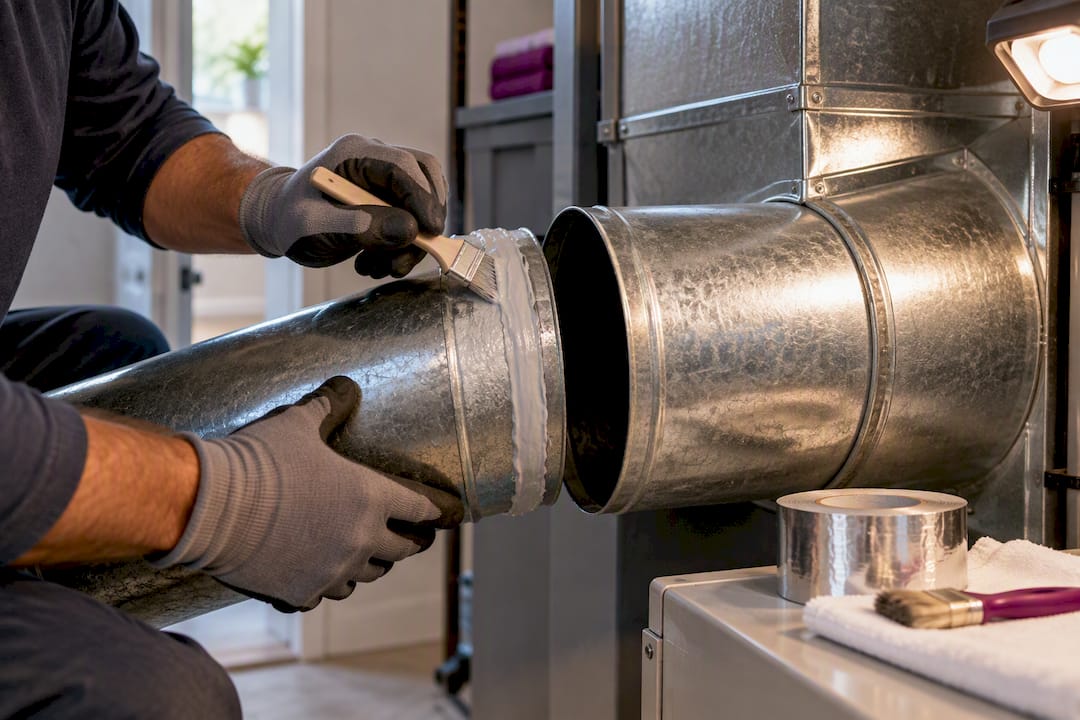
Duct sealing and HVAC right-sizing matter more than most homeowners realize. Leaky ducts can waste a huge share of the conditioned air your system produces before it ever reaches a room, and installing a new furnace or heat pump before fixing ducts means paying to condition air that never gets used.
Heat pump HVAC systems make sense for most climates now, and often replace both a furnace and an air conditioner with one appliance. They pay off fastest in homes with electric resistance heat or aging AC units nearing replacement anyway.
Heat pump water heaters cut water-heating energy use dramatically compared to standard electric tanks, and they qualify for meaningful rebate dollars, covered below.
Windows and exterior doors should get replaced when they’re drafty, damaged, or fogged between panes, not automatically during a remodel. ENERGY STAR-rated windows help, but the payback is typically longer than insulation unless the existing units are in poor shape.
Smart thermostats, LED lighting, and ENERGY STAR appliances are the cheapest upgrades on this list and the fastest to pay for themselves.
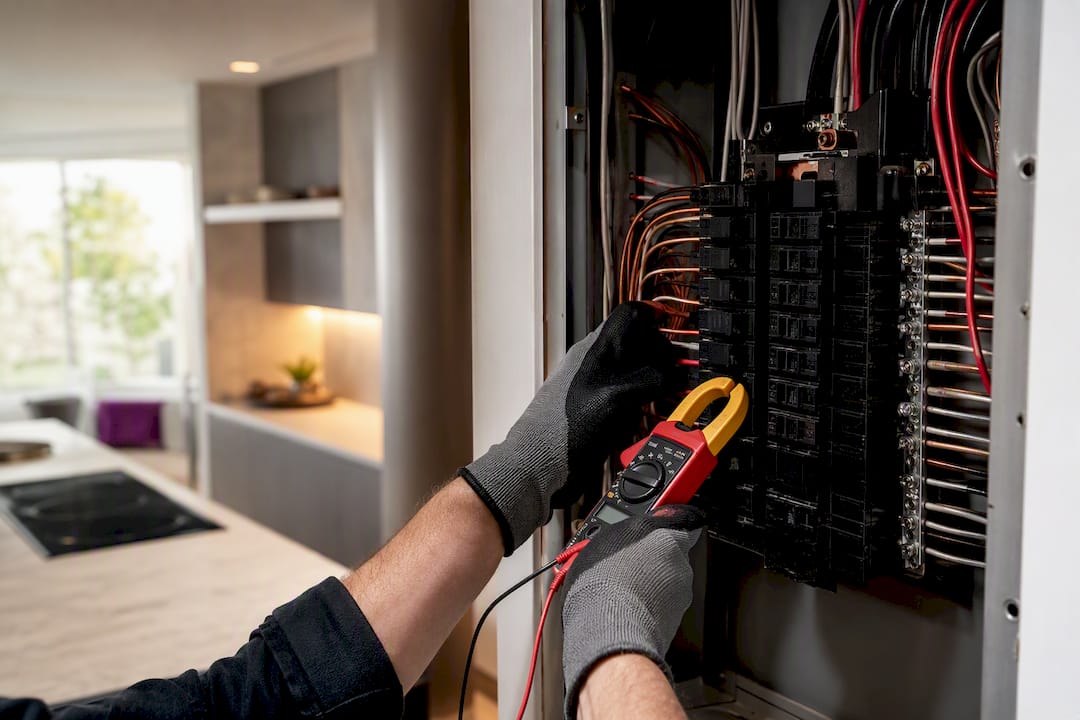
Electrical panel upgrades often get overlooked, but a 100 amp panel can’t support a heat pump, an induction range, and an EV charger at once. Budget for a panel upgrade early if electrification is anywhere in your plan.
How Should You Sequence Efficiency Upgrades During a Remodel?
Sequencing wrong wastes money twice: once on oversized equipment, and again when you have to fix the envelope later anyway. Building science guidance consistently backs an envelope-first approach, because a tighter home lets every downstream system be smaller, cheaper, and more effective.
- Seal and insulate first. Air sealing, attic insulation, and any wall or crawlspace access you have during the remodel come before anything mechanical.
- Fix ducts and right-size HVAC. A tightened envelope usually needs less heating and cooling capacity, so size or replace equipment after the envelope work, not before.
- Electrify water heating and upgrade appliances. A heat pump water heater and ENERGY STAR appliances come next.
- Add smart controls and lighting. Thermostats and LEDs are quick wins that layer on top of the bigger work.
- Consider renewables last. Solar panels sized for a leaky house are oversized and overpriced for a tightened one.
It is recommended to get a professional home energy audit with a blower-door test before finalizing your remodel scope. It quantifies your actual leakage, documents a baseline, and gives your contractor a prioritized list instead of a guess.
Pro Tip: Some rebate programs use your audit’s modeled savings to calculate your rebate amount, so scheduling the audit before demolition can mean more money back later.
What Do Energy-Efficient Upgrades Cost After Rebates and Tax Credits?
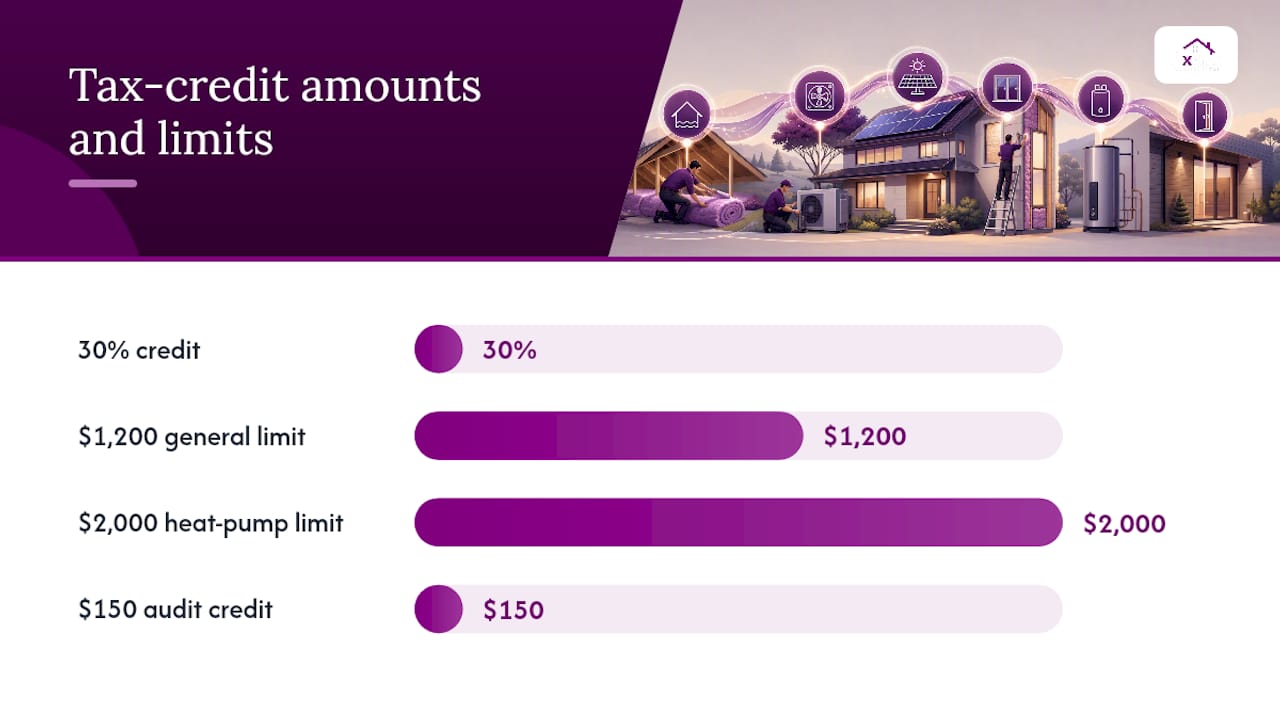
The Energy Efficient Home Improvement Credit covers 30% of qualifying costs, with an annual limit of $1,200 for general improvements like insulation, air sealing, and windows, and a separate $2,000 annual limit for heat pumps and heat pump water heaters. A $150 credit is available for the home energy audit itself. You claim it on IRS Form 5695 when you file.
The Home Energy Rebates program, split into the HOMES and HEEHR pathways, adds another layer. HOMES rebates run up to $8,000 for whole-home efficiency upgrades, while HEEHR rebates for electrification and high-efficiency appliances go up to $14,000. States manage rollout individually, and your rebate amount often depends on household income.
These programs stack, but only if you document everything:
- Keep every invoice and itemized receipt for labor and equipment.
- Record the exact install date for each upgrade.
- Get the manufacturer’s Qualified Manufacturer Identification (QMID) number when a program requires it.
- Contact your state energy office or utility directly, since availability and amounts vary by state and roll out on different timelines.
If your state’s rebates aren’t live yet, don’t put off urgent work. Utility programs, other state incentives, or the Weatherization Assistance Program can help in the meantime, and documenting the expense now protects your eligibility for future programs.
Building an Efficiency Checklist Into Your Remodel
Folding efficiency upgrades into a remodel you’re already doing beats tackling them as separate projects later, mostly because the labor is already priced into the job.
During a kitchen remodel, check whether your electrical panel can support an induction range, confirm the water heater is accessible for a future heat pump swap, and pick ENERGY STAR appliances and LED fixtures while you’re already replacing cabinets and finishes.
Bathroom remodels are a natural point to address water-heating equipment and add proper ventilation, both of which matter more once you start tightening the envelope elsewhere in the house.
Attic and crawlspace work should happen while walls and ceilings are open for other reasons. It’s the cheapest window you’ll get to add insulation and seal air leaks.
Whole-house remodels need a blower-door test and energy modeling built into the permit and inspection schedule from day one, not bolted on afterward.
Hand your contractor an energy audit report, your target R-values, and the ENERGY STAR model numbers or QMID codes for anything you want to claim credits on.
Where Energy-Efficient Remodels Go Wrong
The single most expensive mistake is installing a large HVAC system or solar array on a leaky house. It masks the real problem and locks in oversized, overpriced equipment.
- Skip the blower-door and duct leakage tests, and you’re prioritizing upgrades based on guesswork.
- Tighten the envelope without adding mechanical ventilation like an ERV or HRV, and you risk trapping moisture and pollutants indoors.
- Forget to request the manufacturer’s QMID number, and you may lose your tax credit eligibility after the fact.
- Skip required permits, and rebate programs may deny your claim outright regardless of how good the work is.
Pro Tip: Ask your contractor to write required documentation into the contract itself. It’s much harder to track down a QMID number or inspection record after the crew has moved on to the next job.
How Axenia Construction Approaches Energy-Efficient Remodels
Axenia Construction is a licensed, locally owned general contractor based in Rockville, Maryland, and a women-owned company built around integrity and quality craftsmanship. On a remodel, that means coordinating the energy audit, scheduling blower-door testing and insulation crews in the right order, managing the HVAC subcontractor, filing permits, and organizing the paperwork you’ll need for tax credits and rebates.
— Arienne
Ready to Plan Your Energy-Efficient Remodel?
A general contractor can handle the coordination of remodel sequencing, paperwork for rebate programs, and permits and inspections to help avoid delays. When managing multiple subcontractors, important tests and documentation may be overlooked; a general contractor can help maintain these processes.

If you’re planning a kitchen, bath, or whole-home remodel and want the efficiency upgrades built into the scope from the start, start with Axenia Construction’s home renovation services to schedule a consult. Bring any existing energy audit results, or ask about coordinating one before work begins, so your project starts with an actual baseline instead of a guess.
Where to Verify Credits and Rebate Details
For exact filing rules and dollar limits, check the IRS Energy Efficient Home Improvement Credit page, the DOE Home Energy Rebates program, and ENERGY STAR’s home upgrade guidance.
Sources
- Energy Efficient Home Improvement Credit | Internal Revenue Service
- Home Energy Rebates Program | Department of Energy
- ENERGY STAR Home Upgrade
FAQ
What Are Examples of Energy Efficiency Improvements?
The measures with the strongest track record are air sealing, attic insulation, duct sealing, heat pump HVAC systems, heat pump water heaters, smart thermostats, and ENERGY STAR-certified windows and appliances. Envelope work like sealing and insulation typically delivers the fastest payback of the group.
How Can Home Improvements Increase Home Value by $50,000?
No single upgrade guarantees a specific dollar increase in resale value. Bundling several efficiency upgrades, kitchen or bath remodels, and improved comfort and lower utility bills tends to make a home more marketable and can support a higher asking price.
What Home Improvements Reduce My Energy Bill the Most?
Air sealing and attic insulation usually deliver the biggest reduction for the money spent, followed by duct sealing and switching to a heat pump for heating and cooling. A heat pump water heater and smart thermostat add further savings on top of those bigger structural fixes.
What Qualifies as Energy-Efficient Home Improvements for Tax Purposes?
The Energy Efficient Home Improvement Credit covers insulation, air sealing, exterior windows and doors, heat pumps, heat pump water heaters, and qualifying home energy audits. It pays 30% of costs, up to $1,200 a year for general improvements and up to $2,000 a year for heat pumps, claimed on IRS Form 5695.
Does Axenia Construction Handle Energy-Efficient Remodels?
Yes. Axenia Construction manages home renovations and design-build projects in the Rockville, Maryland area, coordinating trades, permits, and documentation for energy-efficiency upgrades folded into a larger remodel. Pricing depends on project scope and is not published; current details can be found by contacting the contractor directly.