
A home addition is a permanent structural expansion built onto your existing house to create new living space, increase functionality, and raise property value. The industry term is “residential addition,” though homeowners and contractors alike use “home addition” interchangeably. Whether you are adding a bedroom, a full in-law suite, or an accessory dwelling unit (ADU), the process involves architectural planning, permits, and construction that go well beyond a standard remodel. Project costs range from $20,000 for minor conversions to well over $100,000 for multi-room builds. That range reflects how dramatically scope, materials, and site conditions shape every decision you make.
Home addition explained: what types are available?
A full-room addition is the most common starting point for homeowners. It is the most straightforward type to define in terms of use, code requirements, and budgeting. Think of a new primary bedroom, a dedicated home office, or a sunroom built on a new foundation with its own roof tie-in. These additions integrate fully with the existing structure and typically require the most permitting work.
Beyond full-room builds, you have several other options worth understanding before you commit to a direction.
- Bump-out additions: These extend an existing room by a few feet. Kitchen bump-outs typically cover 50–150 square feet and cost significantly less than full additions because they often sit on a cantilevered or shallow foundation rather than a full one.
- Second-story additions: Building up instead of out preserves yard space but demands a thorough structural evaluation. The existing foundation and wall framing must support the added load. Axeniaconstruction’s Bowie two-story addition project illustrates how careful engineering makes vertical expansion achievable on a standard residential lot.
- Garage conversions: Converting an attached garage into living space is one of the fastest ways to add square footage. The shell already exists. You add insulation, HVAC, electrical, and finishes.
- Accessory dwelling units (ADUs): ADUs are self-contained living spaces, either attached to the main house or built as a detached structure on the same lot. They serve as rental income sources, multigenerational living quarters, or long-term guest spaces.
| Addition Type | Typical Scope | Relative Cost | Best Use Case |
|---|---|---|---|
| Full-room addition | New foundation, framing, roof | High | Bedroom, family room, office |
| Bump-out | Extends existing room | Low to medium | Kitchen, dining area |
| Second-story addition | Builds over existing footprint | High | Master suite, multiple rooms |
| Garage conversion | Repurposes existing shell | Medium | Guest suite, home gym |
| ADU | Detached or attached unit | Medium to high | Rental income, in-law suite |
Pro Tip: Before you fall in love with a specific addition type, check your local zoning ordinances. ADUs and second-story builds face the most restrictions in suburban municipalities, and discovering a height limit after you have paid for architectural drawings is an expensive lesson.
How do you plan a home addition step by step?
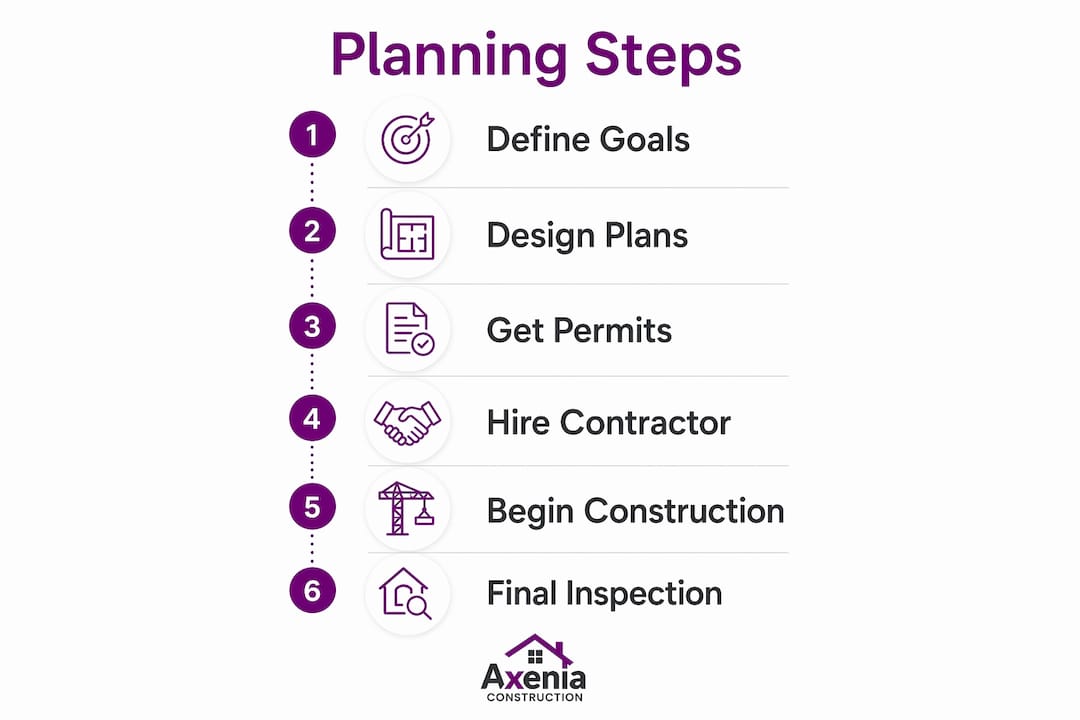
Treat a home addition as a land-use and structural challenge first, not a decorating project. That mindset shift changes how you sequence every decision. Here is the planning process we walk clients through at Axeniaconstruction:
- Define your functional goals. Write down exactly what the new space must do. A bedroom for a teenager has different requirements than a home office or a rental unit. Clearly defined goals improve the accuracy and comparability of contractor quotes, which protects you from apples-to-oranges bids.
- Evaluate your site constraints. Critical early checks include setback requirements, lot coverage limits, height restrictions, and easements. Skipping this step leads to costly design revisions after you have already paid an architect.
- Hire an architect or designer. For anything beyond a simple bump-out, a licensed architect produces construction drawings that satisfy both your vision and local building codes. Firms like uni-cm.com specialize in residential additions and ADU design, which can accelerate the permit-ready drawing process.
- Engage a structural engineer. Structural evaluation must address foundation integrity, framing load paths, and roofing to confirm the new addition is safe and code-compliant. This is non-negotiable for second-story builds and any addition that removes load-bearing walls.
- Submit for permits. Building permits for additions cover foundation, framing, mechanical, insulation, and final inspections. The permitting timeline varies by municipality, but plan for several weeks to a few months in most jurisdictions.
- Begin construction. Once permits are approved, your contractor mobilizes. Architectural plans alone take 4–8 weeks to complete, followed by months of active construction depending on project size.
Pro Tip: Ask your contractor to walk you through the inspection schedule before construction starts. Knowing when foundation, framing, and mechanical inspections occur helps you plan around disruptions and keeps the project moving without costly delays.
What factors drive the cost of home additions?
Cost is where home addition planning gets real. The final number depends on far more than square footage alone. Size and complexity set the floor, but materials, labor rates, site conditions, and soft costs determine where you actually land.
The most common budget mistake homeowners make is pricing only the visible finish work. Accurate budgeting separates finish costs from enabling work like foundation excavation, utility extensions, and inspection fees. That enabling work can represent 30–40% of total project cost and is easy to overlook in early estimates.
Key cost drivers to account for:
- Size and structural complexity: A 200-square-foot bump-out costs far less than a 600-square-foot full addition with a new foundation.
- Materials selection: Matching existing exterior materials, roofing, and windows to your current home adds cost but protects resale value.
- Soft costs: Design fees, permits, and inspections materially impact total budget and timeline. Budget 10–15% of hard construction costs for these line items.
- Site conditions: Poor soil, sloped lots, and limited access for equipment all increase labor and material costs.
- Contingency fund: Set aside 10–20% of your total budget for hidden issues like outdated wiring, unexpected foundation conditions, or material price fluctuations. This buffer is standard practice, not optional padding.
Financing options include home equity loans, home equity lines of credit (HELOCs), cash-out refinancing, and construction loans. Each carries different interest structures and draw schedules. A HELOC works well for phased projects because you draw funds as needed. A construction loan suits larger builds where the full amount is committed upfront. Consult a mortgage advisor before choosing a financing path, since the right structure depends on your equity position and the project timeline.
How do you make a home addition look like it belongs?
The best additions are invisible. A successful addition should feel like an original part of the home through careful attention to rooflines, materials, and window placement. When that harmony is missing, the addition reads as an afterthought, and that perception shows up in appraisals.
Matching rooflines and materials
Roofline continuity is the single most visible indicator of a well-designed addition. A mismatched pitch or an awkward roof transition signals a rushed design. Match the existing roof pitch exactly where possible. When an exact match is structurally impractical, use a complementary design that transitions cleanly rather than clashing.
Exterior materials deserve the same attention. Brick, siding, and stone age differently, so a perfect color match today may look mismatched in five years. Many designers recommend using the same material family with a deliberate contrast, such as a slightly different siding profile, to signal intentional design rather than a failed match.
Window placement and proportion
Window size, style, and spacing should mirror the existing home’s rhythm. Oversized windows on a small addition or mismatched trim profiles are common design pitfalls. Pull the window specifications from your existing home and replicate them in the addition.
“The goal is not to hide the addition. The goal is to make it look like it was always there.” This principle, drawn from residential design practice, applies equally to a 100-square-foot bump-out and a full second-story build.
Energy efficiency is a practical design consideration, not just an environmental one. New additions built to current energy codes with proper insulation, air sealing, and energy-efficient windows reduce long-term operating costs. They also avoid the common problem of an addition that is perpetually cold in winter or hot in summer because it was not properly integrated into the home’s HVAC system.
Key takeaways
A home addition succeeds when planning, budgeting, and design work together from the first conversation to the final inspection.
| Point | Details |
|---|---|
| Define your goals early | Clear functional goals produce accurate contractor quotes and prevent scope creep. |
| Check site constraints first | Setbacks, lot coverage, and zoning rules must be confirmed before any design work begins. |
| Budget for soft costs | Design fees, permits, and inspections add 10–15% beyond hard construction costs. |
| Reserve a contingency fund | Set aside 10–20% of total budget to cover hidden conditions and price changes. |
| Prioritize architectural harmony | Matching rooflines, materials, and windows protects curb appeal and resale value. |
What i have learned after years of home addition projects
The homeowners who have the smoothest addition projects share one habit: they slow down at the beginning. They spend real time defining what they need, walking their property with a contractor, and asking hard questions about zoning before they fall in love with a floor plan. The ones who rush that phase almost always pay for it later, either in redesign fees, permit delays, or budget overruns that could have been avoided.
I have also seen how much difference the right contractor makes. Not just in execution quality, but in how they communicate. A contractor who explains permit timelines, flags potential site issues early, and gives you a realistic budget range builds trust that carries the project through the inevitable surprises. That transparency is not a bonus. It is the baseline you should expect.
One thing I tell every homeowner: your addition does not need to be your dream project. It needs to be the right project for your home, your budget, and your life right now. A well-executed 300-square-foot addition that integrates beautifully with your existing home adds more value, financially and personally, than an overbuilt addition that strains your budget and looks out of place from the street.
Balance your vision with what your structure and site can realistically support. That balance is where the best additions come from.
— Arienne
Ready to start your home addition in maryland?
Planning a home addition is one of the most significant investments you will make in your property. Getting it right requires more than a good idea. It requires experienced hands, transparent communication, and a team that treats your home with the same care they would give their own.
Axeniaconstruction is a licensed, women-owned general contractor based in Rockville, MD, with hands-on experience in custom residential additions, from single-room builds to full second-story expansions. We work with homeowners across Maryland and Northern Virginia to deliver additions that add real value and feel like they were always part of the home. Explore our home renovations that increase value or learn more about home additions near you to take the next step with confidence.
FAQ
What is a home addition?
A home addition is a permanent structural expansion attached to an existing house that creates new living space. It differs from a remodel because it increases the home’s total square footage rather than reconfiguring existing rooms.
How long does a home addition take?
Architectural plans take 4–8 weeks, followed by permitting and then active construction. Most full-room additions take 3–6 months from design to completion, depending on project complexity and local permit timelines.
What permits are required for a home addition?
Permits cover foundation, framing, mechanical, insulation, and final inspections. Requirements vary by municipality, so confirm with your local building department before construction begins.
How much should i budget for a home addition?
Costs range from $20,000 for minor conversions to over $100,000 for large multi-room additions or ADUs. Add 10–20% as a contingency fund and 10–15% for soft costs like design fees and permits.
Does a home addition increase property value?
A well-designed addition that matches the existing home’s architecture and meets current building codes adds measurable resale value. Additions that improve functionality, such as a bedroom or ADU, typically deliver the strongest return on investment.
Recommended
- Home Addition Contractors Near Me: How to Expand Your Home the Smart Way – Axenia Construction
- Home Renovation Project Planning Guide for Homeowners
- Best Home Renovations to Increase Property Value in 2026 – Axenia Construction
- Home Additions in Rockville, MD: Expand Your Living Space with Custom Remodeling Solutions – Axenia Construction