
A whole home renovation is defined as a comprehensive remodeling project that updates 60–100% of a home’s square footage, including structural elements, major systems, and interior design under one coordinated plan. In the construction industry, this scope is also called a full home remodel or complete home remodeling project. Unlike a single-room update or a phased approach, a whole house renovation process transforms your entire living space in one organized effort. This article covers what the process includes, how it compares to phased remodeling, what it costs, and how to plan it well.
What does a whole home renovation include?
A whole home renovation covers every major system and living space in your house. That means kitchens, bathrooms, bedrooms, living areas, flooring, electrical panels, plumbing lines, HVAC equipment, and insulation all fall within scope. According to the National Remodeling Authority, sequencing work by demolition, structural framing, rough mechanical, insulation and drywall, and then finish work is critical to keeping the project on schedule and in compliance with inspections.
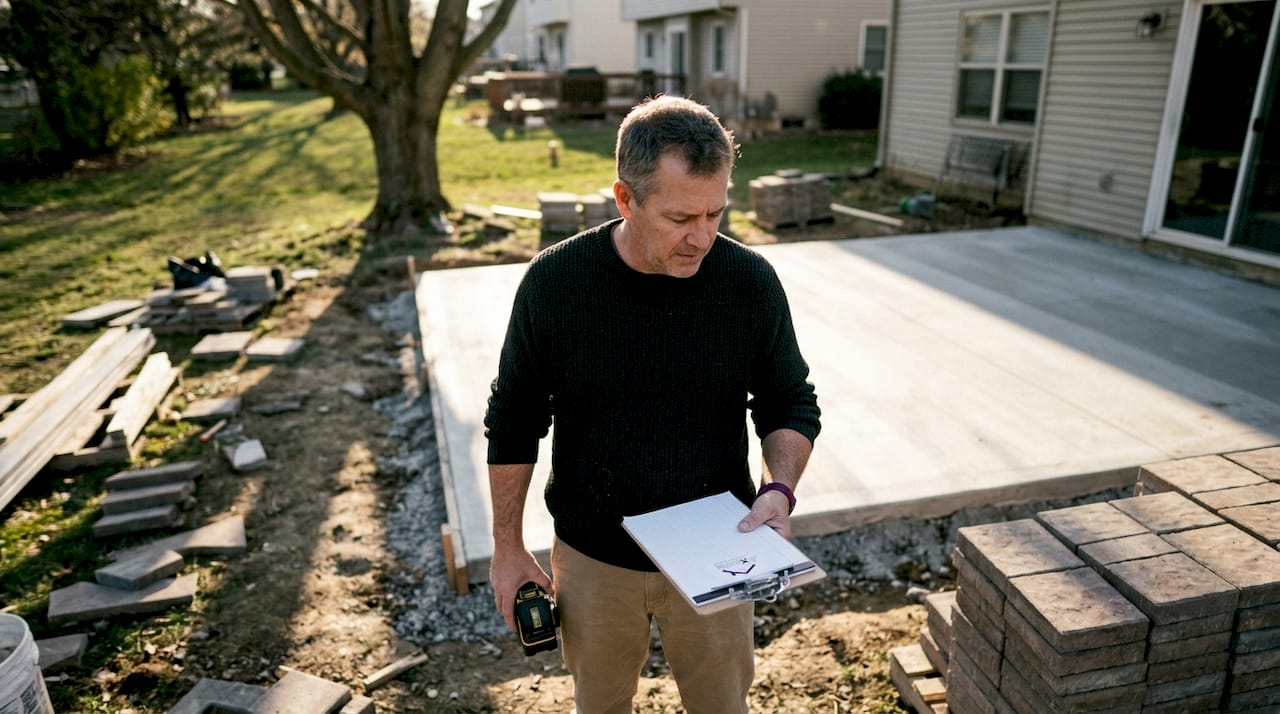
Layout changes are common in full home remodels. Walls get moved, rooms get reconfigured, and floor plans get opened up to match how families actually live today. These structural changes require permits and engineering review, which adds time but also adds long-term value and safety.
Here is what a typical whole home renovation scope includes:
- Structural work: Load-bearing wall removal, foundation repairs, roof framing updates
- Mechanical systems: New electrical panels and wiring, plumbing re-routing, HVAC replacement
- Kitchen remodel: New cabinetry, countertops, appliances, and lighting
- Bathroom remodels: Tile, fixtures, vanities, and ventilation
- Flooring: Hardwood, luxury vinyl plank, or tile throughout
- Interior finishes: Paint, trim, doors, and built-ins
- Lighting design: Recessed lighting, fixtures, and smart controls
Pro Tip: Document every decision in writing before construction starts. A line-by-line detailed workscope is your most important legal protection against cost overruns and scope creep.
Managing this complexity requires a single point of coordination. A licensed general contractor handles trade scheduling, permit applications, inspections, and material procurement. Without that coordination, trades work out of sequence, inspections get missed, and costs climb fast. Our home renovation planning guide walks through how to set up that structure before breaking ground.
Whole home renovation vs. phased remodeling: which costs more?
The answer is clear: phased remodeling costs more. Phased room-by-room renovations extend overall timelines by up to 3 years and typically cost 15–25% more than whole home renovations. That premium comes from repeated contractor mobilization fees, multiple permit applications, and lost bulk purchasing discounts on materials.
The disruption factor also differs significantly. A whole home renovation concentrates all the chaos into one defined period. Phased remodeling means living through construction repeatedly over years. Dust, noise, and displaced routines return every time a new phase begins.
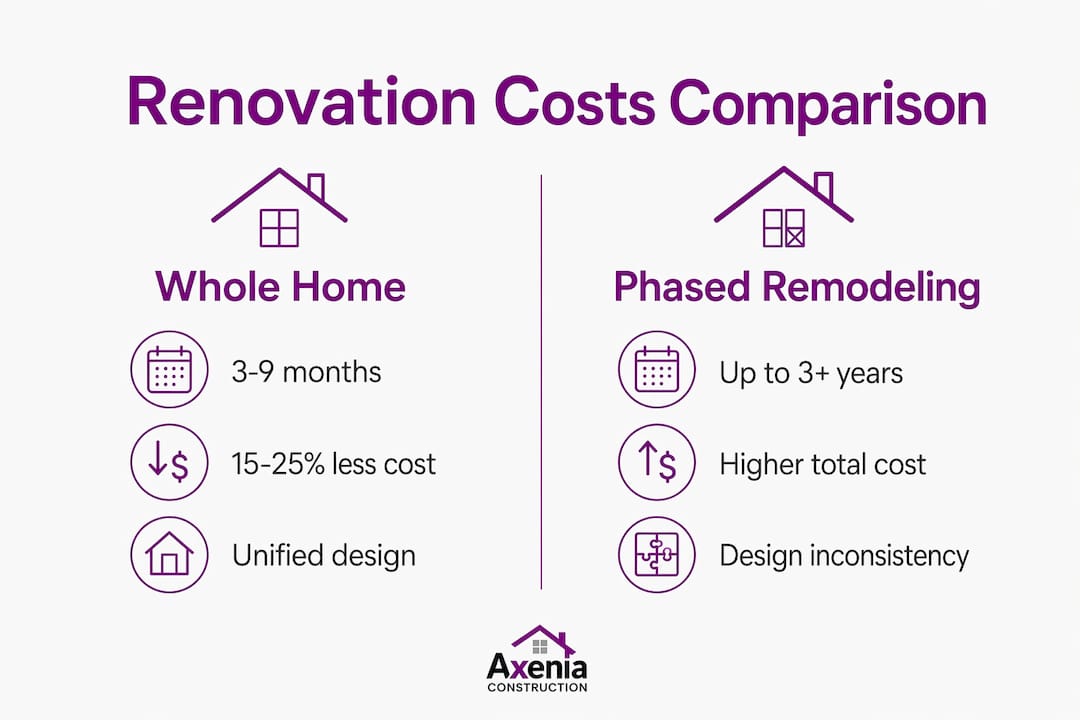
| Factor | Whole Home Renovation | Phased Remodeling |
|---|---|---|
| Total timeline | 3–9 months | Up to 3+ years |
| Relative cost | Lower overall | 15–25% higher |
| Disruption | Concentrated, one time | Recurring over years |
| Design consistency | Unified throughout | Risk of mismatched finishes |
| System upgrades | All at once | Piecemeal, may require rework |
Design consistency is another major advantage. A unified design vision prevents the aesthetic clashes that happen when you update a kitchen in 2021 and bathrooms in 2024 with different contractors and different tile trends. Every finish, fixture, and color palette gets selected together, so the home reads as one cohesive space.
Pro Tip: If budget is the concern driving you toward a phased approach, ask your contractor about a home renovation scope that prioritizes systems first. Upgrading electrical, plumbing, and HVAC in one pass saves money even if cosmetic finishes are phased later.
Whole home renovations also minimize repeat disruption and lock in current material pricing. In a market where lumber, fixtures, and labor costs shift year to year, completing everything at once protects your budget from future inflation.
What is the typical timeline and cost for a full home renovation?
Most whole home interior remodels run 4–9 months from construction start, depending on size, scope, and material lead times. Pre-construction phases, including design, permitting, and procurement, typically add 2–3 months before a single wall comes down. Plan for a total project window of 6–12 months from your first contractor meeting to final walkthrough.
Cost drivers in a complete home remodeling project fall into three categories:
- Structural changes: Moving load-bearing walls, adding windows, or modifying the roofline carries the highest cost per square foot. Engineering drawings and structural permits add to this.
- System upgrades: Replacing electrical panels, re-routing plumbing, and installing new HVAC equipment represents a significant portion of total project cost. These upgrades are not visible in the finished home, but they protect it for decades.
- Material finishes: Countertop material, flooring type, cabinetry grade, and fixture quality create the widest cost variance. A kitchen with stock cabinets and quartz countertops costs far less than one with custom cabinetry and marble.
One regulatory factor that surprises many homeowners: projects affecting more than 50% of a home’s area are classified as Level 3 alterations. This triggers full code compliance requirements for structural, electrical, plumbing, and HVAC systems. If your home has older wiring or outdated plumbing, compliance upgrades become mandatory, not optional. Budget for this early.
Fixed pricing from your contractor matters here. A vague estimate with allowances for materials creates risk. A detailed, line-by-line contract locks in scope and protects you from mid-project surprises. For budget planning frameworks, the custom home budget checklist from Travis Larsen Construction offers a solid starting structure for large-scale residential projects.
Design ideas and planning tips for a successful renovation
The design phase sets the tone for everything that follows. A strong unified design vision means selecting all finishes, materials, and layouts together before construction begins. This prevents the common mistake of choosing kitchen tile in month one and bathroom tile in month four, only to find they clash under the same roof.
Trending design directions worth considering
Current whole home renovation projects in the DC, Maryland, and Virginia region lean toward open floor plans with defined zones, warm-toned hardwood or wide-plank luxury vinyl flooring throughout, and kitchen designs that blend storage with display. Bathrooms are trending toward large-format tile, frameless glass showers, and floating vanities. Lighting design now includes layered approaches: recessed ambient lighting, under-cabinet task lighting, and statement pendants over islands and dining areas.
For ideas grounded in current market value, our guide to renovations that increase home value covers which upgrades deliver the strongest return in 2026.
Planning steps that protect your project
Successful projects follow a clear sequence. Prioritizing sequencing logic keeps construction on schedule and on budget. Here is the order that works:
- Design and documentation: Finalize floor plans, material selections, and specifications before permits are pulled.
- Permitting: Submit drawings and wait for approvals. This step cannot be rushed.
- Demolition: Remove existing finishes, walls, and systems as scoped.
- Structural and rough mechanical: Frame changes, then rough-in electrical, plumbing, and HVAC.
- Insulation and drywall: Enclose walls only after inspections pass.
- Finish work: Flooring, cabinetry, tile, paint, fixtures, and trim.
Pro Tip: Never skip the pre-drywall inspection walkthrough with your contractor. This is your last chance to verify that all rough mechanical work is correct before it gets enclosed in the walls.
Working with a licensed general contractor who manages design, permits, and all trades under one contract is the most reliable way to keep a project on track. The design-build approach in Maryland keeps design intent and construction execution aligned from start to finish, reducing the communication gaps that cause costly errors.
Key takeaways
A whole home renovation costs less and delivers better results than phased remodeling when planned with a unified design vision, a detailed workscope, and a single licensed contractor managing all trades.
| Point | Details |
|---|---|
| Scope definition | A whole home renovation updates 60–100% of a home’s square footage across all systems and spaces. |
| Cost advantage | Whole home projects cost 15–25% less than phased remodeling due to fewer mobilizations and bulk material pricing. |
| Timeline expectation | Construction runs 4–9 months; total project window including design and permits is 6–12 months. |
| Code compliance trigger | Renovating more than 50% of your home’s area requires full code compliance for all major systems. |
| Workscope protection | A detailed, line-by-line workscope contract is the most effective protection against scope creep and cost overruns. |
Why the whole home approach changed how i think about renovation
I have worked through enough renovation projects to say this with confidence: the homeowners who struggle most are the ones who started with a phased plan and switched to a whole home approach mid-project. By then, they had already paid mobilization costs twice, lived through two rounds of disruption, and discovered that the tile they loved in 2022 was discontinued by 2024.
The whole home approach is not just about saving money, though the 15–25% cost difference is real and significant. It is about making decisions once, from a position of full information. When you select every finish at the same time, you see how they interact. You catch the conflict between the warm-toned wood floors and the cool-gray bathroom tile before it gets installed.
The piece of advice I give every homeowner before they sign a contract: read the workscope line by line. Not the summary. Not the proposal letter. The actual scope of work, trade by trade, room by room. That document is where projects succeed or fail. Vague language like “kitchen renovation per plan” protects no one. Specific language like “supply and install 42-inch upper cabinets, soft-close hinges, in finish X, per attached drawing” protects you.
One more thing worth saying: do not underestimate the value of a contractor who communicates proactively. The best projects I have seen share one trait. The homeowner always knew what was happening next. That transparency is not a luxury. It is the standard you should expect.
— Arienne
How Axeniaconstruction supports your whole home renovation
Axeniaconstruction is a licensed, women-owned general contractor based in Rockville, MD, and we specialize in managing complete home remodeling projects from design through final inspection.
We coordinate every trade, handle all permitting, and keep you informed at every stage with transparent communication and fixed pricing. Our team brings the same attention to detail to a full house renovation in Rockville as we do to a commercial build in Washington, DC. Whether you are planning a complete transformation or need help defining your scope, our home renovation services page is the right place to start. Explore our full range of construction services or contact us directly to schedule a consultation. We are here to make your renovation straightforward, well-managed, and worth every dollar.
FAQ
What is the difference between renovation and remodel?
A renovation restores or updates existing elements, while a remodel changes the structure or layout of a space. Whole home projects typically include both.
How long does a whole home renovation take?
Most whole home renovations run 4–9 months from construction start. Including design and permitting, the full project window is typically 6–12 months.
Does renovating more than 50% of my home trigger code upgrades?
Yes. Projects affecting more than 50% of a home’s area are classified as Level 3 alterations, which require full code compliance for structural, electrical, plumbing, and HVAC systems.
Is a whole home renovation worth the cost?
Whole home renovations cost 15–25% less than phased remodeling over time and deliver a consistent design result that increases long-term property value.
Do i need a general contractor for a full home remodel?
A licensed general contractor is the most reliable way to manage trade coordination, permits, inspections, and budget control across a project of this scale. Learn more about what a GC does before hiring.